I recently did an interview with The Brantford Expositor, talking about the The Society of Experience and the recent media attention. Link: here.

Matt Cahill's blog
I recently did an interview with The Brantford Expositor, talking about the The Society of Experience and the recent media attention. Link: here.
Just a quick note to say that there is now a website for my novel – available now and launching tomorrow night in Toronto – The Society of Experience. You can find it here. It comes complete with a streaming audio playlist of songs and artists featured in the novel, as well as a map showing where much of the book takes place. Please enjoy responsibly.
My debut novel, The Society of Experience, is a mere month away from being available in print (the exact date, I’m unsure of). I’m supremely excited. I’m particularly pleased with the two endorsements I received:
“Matt Cahill’s debut novel The Society of Experience explores the dangers of magical thinking in a most entertaining way. Both thoughtful and humorous, twisty and fun, this is transporting storytelling (in more ways than one).”
— Andrew Pyper, author of The Demonologist and The Damned.
“A swirling confident debut, supported by crisp prose without misstep, and containing many more original ideas than books three times its slender size. Sly and slippery fun – I thought of Ben Marcus and JG Ballard… writers who say don’t worry I know what I’m doing as they break from the pack.”
— Tony Burgess, author of Pontypool Changes Everything and The n-Body Problem
I’m going to be presenting The Society of Experience at Toronto’s Word On The Street festival, on September 27th. This year it will be at Harbourfront, which I think is a wonderful new environment for it.
The official launch will be October 8th–details to come. My author site will also have details on this and other works.
So much has happened…
– sold house (add to this: renovated house)
– bought condo (add to this: mourning house, moving)
– moved psychotherapy practice to newly-leased office (add to this: find office space, renovate, move)
– had my application to the College of Registered Psychotherapists of Ontario accepted
– began intense revision process on novel (coming out in September)
So there you have it. I also hope to have a new short story published around the time my novel comes out, so yeah. All hands on deck at the moment.
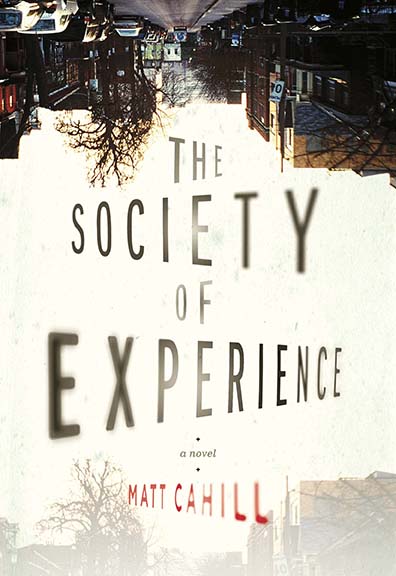
I leave you with the cover for my novel, The Society of Experience:
There is a lot of free advice out there for fiction writers on the Internet. Much of it is vague, subjective (to the point of not being clear who it’s intended for), or just plain bad.
Here’s one that instantly didn’t make sense to me:
“Don’t write your story until you’ve plotted it out and know what it is you’re going to write first.”
It’s entirely possible that someone, for example, who is new to writing may start a story without having a structured narrative in mind and find themselves unable to sort it out.
However, is the problem really not having a preconceived story figured-out beforehand? Or is the problem that you aren’t allowing yourself patience (and perhaps a little bit of outlining on the side)? Depending upon how experienced a writer you are, or how comfortable you are reaching into your imagination, perhaps it’s a question of giving yourself the time (and opportunity) for perspective, say, looking at your piece after a week’s break with a new set of eyes?
Writing fiction, for me, is an exploration. It’s a journey, regardless of what it’s about, even if I happen to know the beginning, middle, and end of the story. What makes it a journey is the discovery of your characters’ depth and how this inflects the arc of the story; it’s developing your idea into something more than two dimensional. Having something planned out does not always necessitate a successful venture. If I knew everything that was going to happen in advance, I’m not sure I would be quite as excited than if I felt there was an unknown variable or challenge to what I was working on. You’re writing a story, not raising a house.
I would wager that, particularly if you are a new or emerging writer, waiting until you have figured out the structure of the story in advance before attacking it only delays your ability to put what you have in your mind into some sort of form (and using that as a starting point). Learn as you go, in other words. Explore.
Note: I mentioned “outlining”. What’s that? Well, sometimes it’s good to have some notes on the go while you are working on a story. These notes can be as simple as the question “What’s it about?” (so that you stay on track and don’t let your story become something too burdened with marginalia or tangential), or maybe the notes keep track of themes and ideas, or characters’ thoughts that you are trying to develop in the piece.
I am extremely happy to announce that my short fiction piece, Snowshoe, is available for purchase and download through Found Press (and via Amazon).
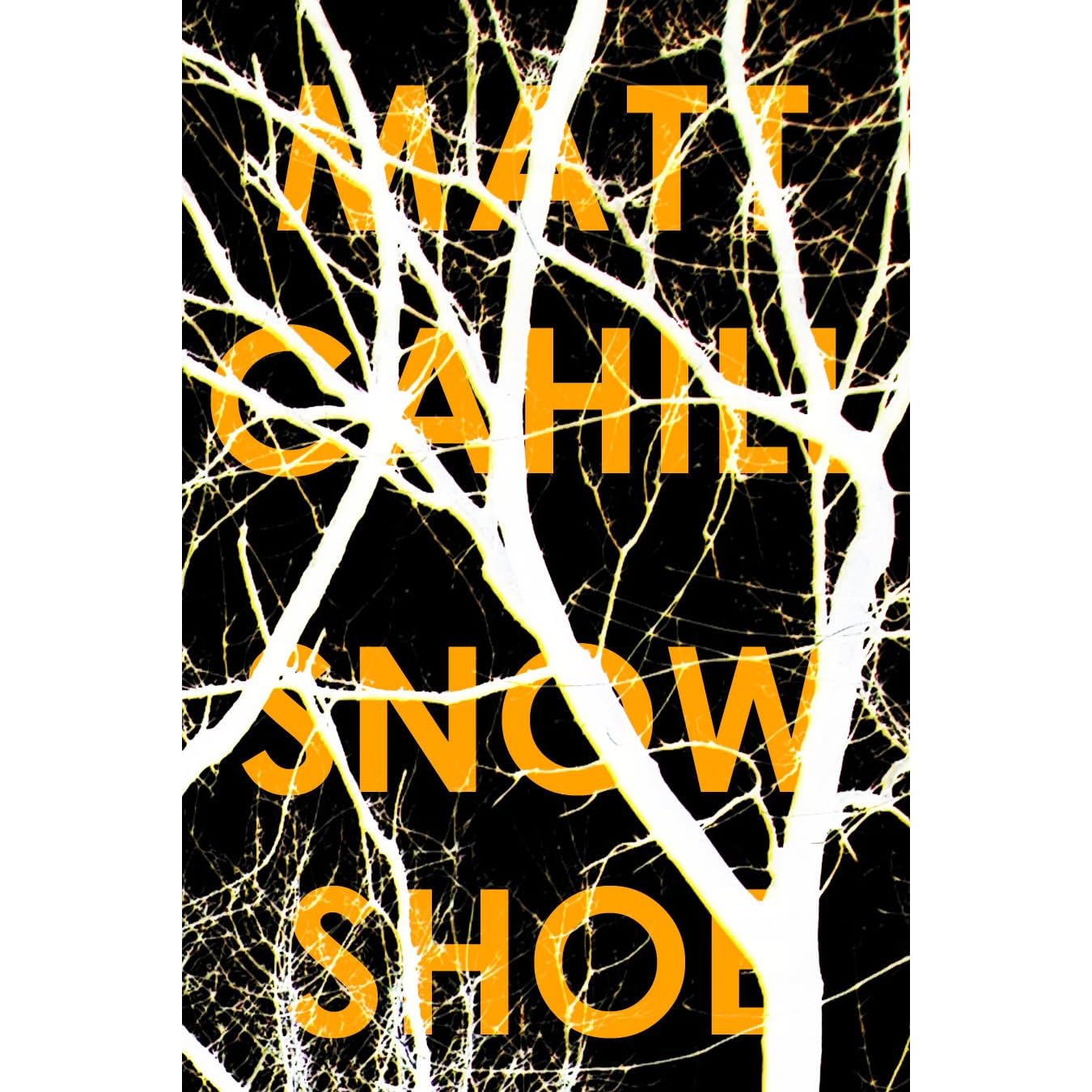
I’m very proud of this story, as it is a concept I’ve been wishing to turn into a story for many years (“decades” is probably appropriate). I finally put pen to paper and out came, quite organically, the resulting story. Working with editor Bryan Jay Ibeas was a great experience in that he and I both seemed to be on the same wavelength, which is perhaps the best that any author can expect.
If you are interested, please (at the very least) check out Found Press’ Snowshoe page. Or, if you are feeling aggressive, go to Amazon and purchase it for the crazy-cheap price of $2 (click here).
2013 was good to me, which is not to say that it was without challenges. I suppose it was a cluttered year, and I will take that over barren, even if I’m feeling exhausted.
I had two articles published, on two topics that I took personal interest in: the shape of Kensington Market, and the 10th anniversary of SARS. They both involve Toronto, but aside from that they don’t hold much in common. I took great pride in writing them and each provided healthy challenges for me as a writer.
The biggest news, for me as a writer and an individual, was having my novel picked up by Hamilton publisher, Wolsak & Wynn. Of course, there is a lot of work to be done until its publication date in 2015, but it’s about the biggest milestone for me as a writer that I could have asked for (a big shout-out to my agent, Kelvin Kong, with The Rights Factory).
And yet it was also a year where my psychotherapy practice grew and broadened. This February will mark the completion of two years of private practice and I could not be happier with it, though like starting anything new and independent there are always going to be challenges. I began working with couples in the summer and found myself liking the dynamic very much, though working with the energy in the room can be taxing.
I’m not completely out of the woods with respect to the film industry. I started work on Bruce McDonald’s new feature, Hellions, as a post supervisor/consultant. It’s difficult juggling this type of work with therapy – two different parts of my brain which don’t always play well: the anticipatory, structure-based, logic-seeking left brain vs the open-ended, empathetic, creative right.
I would like to top 2013, but I don’t know if that will happen in 2014. I would certainly like to complete the first draft of my new novel. But it’s a tough nut to crack and doesn’t want to be rushed. My greatest challenge as a writer with respect to new work will be combining the worlds – and words – of therapy and writing: finding a project in which to write from the viewpoint of a therapist. I see this as an inevitability and I would prefer to jump in the pool rather than be pushed. I look forward to the days to come.
I’ve been sitting on something pretty big for the last while. Rather than tell you in my own words, I will use one of the rare opportunities in my life where a press release does the talking:
Wolsak & Wynn senior editor Paul Vermeersch has acquired North American rights to Matt Cahill’s debut novel, Someone Else and You (working title). The story is about a man whose life changes irrevocably when he volunteers to take part in a secret society’s time-travel experiment. Kelvin Kong of The Rights Factory arranged the deal.
So yes. This. Huge news.
It’s been a very long road, and while it is not yet over (not by many miles more) I’m grateful for the opportunity to have something of mine released into the public. One less writer polishing his stones, wondering whether to keep bothering.
This would not have been possible without representation from The Rights Factory, specifically my agent (extraordinaire) Kelvin Kong. I look forward to working with everyone at Wolsak & Wynn, particularly my editor, Paul Vermeersch.
Onward and upward. Hugely excited.
I am represented by a literary agency now and, without going into great detail, my novel has undergone some major changes. Mainly structural. The story hasn’t changed, most of the plotting is still intact, no new characters. But some major changes were made and these changes happened very quickly, and as a result I don’t think what I surrendered (because no experienced author would willingly call any work “done”) was the best effort I could have made. And so, when I realized the extent to which the book needed first-aid, I told my agent to hit the brakes – stop distributing the book and ask those publishers who have not yet read it to not, please and thank you.
I’m writing this from the perspective of someone who has just finished, if finished may be used about any art form, a necessary revision. I am relatively new to this – not writing, but revising. There is an art to revision which is as unique as the art of writing itself. This may sound alien to many, but to fellow writers – novelists especially because of the weight of material we are burdened with – this is a necessary conversion: the realization that you cannot know everything, do everything in your first, second, or even seventh revision. And that potentially great ideas not only require blending with the rest of the work, but the time and space to be seen again with fresh eyes and, if need be, changed once again.
When you don’t respect the process – of writing, of revision (because the two are intertwined like the snakes on a caduceus) – you risk damaging your gains. I ended up not happy with what went out under my name and I am not the first nor will I be the last reluctant person to go through this sometimes necessary experience. I have spent the past four months rejigging, reconsidering, reaching deeper, and sometimes just removing clutter. I worked on my laptop, and after that I had the manuscript printed so that I could look at it like a real book, so that I could see what you can’t easily see on a computer screen. I’ve switched and changed, shortened and lengthened, pared-down and elaborated for clarity.
I think it’s ready now. If not “done” then “done enough”. Or, at the very least, I’m done. And, corny and cliché though it may sound, lessons have been learned.

