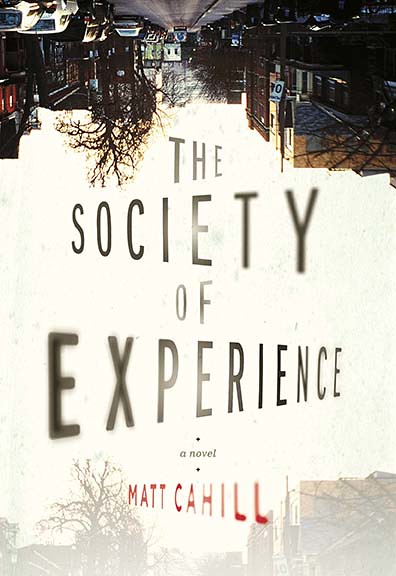
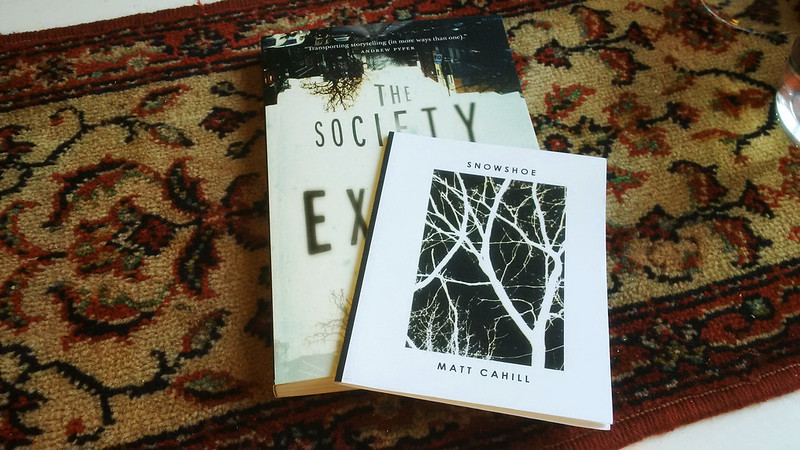
I am honoured to have The Society of Experience shortlisted for the 2016 ReLit Awards. What are they, you ask, and wasn’t 2016 last year?
The ReLit Awards are, to quote the blurb on their site, “to acknowledge the best new work released by independent publishers — may not come with a purse, but it brings a welcome, back-to-the-books focus to the craft.” In other words, rather than being about money and televised coverage, it’s about quality. One distinguishing element of the ReLit Awards is that they select books from the previous year. Thus, the 2016 ReLit shortlist represents fiction, poetry, and short fiction from 2015.
I am with some good company:
The Capacity for Infinite Happiness, Alexis von Konigslow (Buckrider)
All-Day Breakfast, Adam Lewis Schroeder (Douglas & McIntyre)
One Hit Wonders, Patrick Warner (Breakwater)
Split, Libby Creelman (Goose Lane)
Chinkstar, Jon Chan Simpson (Coach House)
Too Much on the Inside, Danila Botha (Quattro)
Martin John, Anakana Schofield (Biblioasis)
Winnie’s Tongue, Nic Labriola (Insomniac)
One Hundred Days of Rain, Carellin Brooks (BookThug)
The Theory of Light at Midnight, Elizabeth Ukrainetz (Tightrope)
A Superior Man, Paul Yee (Arsenal)
A Free Man, Michel Basilieres (ECW)
The Man Who Saved Henry Morgan, Robert Hough (Anansi)
The Hunter and the Wild Girl, Pauline Holdstock (Goose Lane)
The Society of Experience, Matt Cahill (Buckrider)
Where Did You Sleep Last Night, Lynn Crosbie (Anansi)
I expect the selected category winners to be announced in a month’s time.


 I’ve noticed more and more over the last decade that less and less people want to use the phone. I cannot help but draw a correlation between this observation and the ubiquitous rise of digital communication. Email? Sure. Text? Yup. And what’s wrong with this, you might ask? On paper it would objectively appear that text-based communication (particularly including social media) is superior at transferring information without error, if only us pesky humans didn’t make mistakes. And this last part is key: we are not objective, we balance the objective world with our much less easily measurable experiential (or personal) reality; this second reality is informed by our experiences, which are diverse and sometimes punctuated by trauma or loss. When we talk to someone on the phone we are leaving ourselves prone — to fallibility (stammering, going off on a tangent), or having our hesitations read as something we may not otherwise wish to reveal.