

[Sent via BlackBerry]

The Hammer (pt. 1)
When I rented a car and went to Brantford/Onondaga to do some reminiscing and photo-taking, I knew that Hamilton was also, ultimately, on my to-do list.
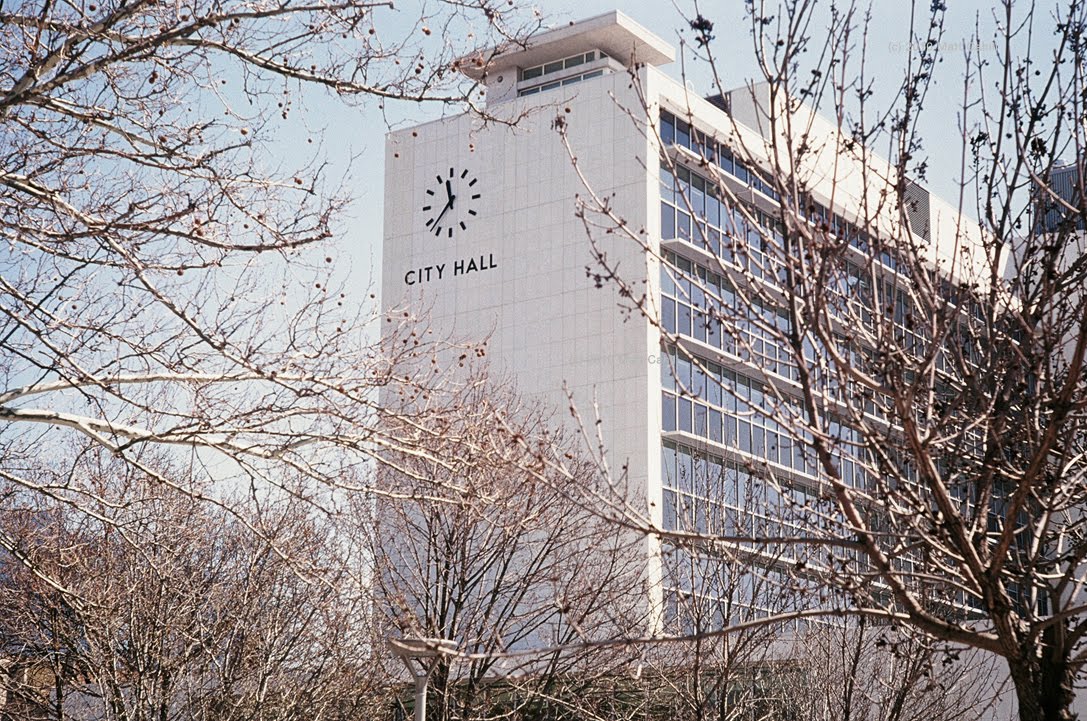
The aim of these trips is not preconceived. This makes it doubly hard to explain to others (friends, strangers, and loved ones) what exactly the hell I’m planning to do. “Taking pictures and stuff.” I’ll say – that’s certainly no lie, but of course there’s more to it. The thing about Zen is this: the second you begin to describe it, it disappears. And so – Art & Zen being the same – there’s always a scaffolding I build around my explanation for these trips. It’s the same scaffolding I use when I go out writing, or to take photos locally: a vague (yet not untrue) reason which allows me to unspoil the inspiration (which itself needs to be vague) while preventing others from thinking I’ve lost my mind. I’m not uncomplicated.

Hamilton, being a place of the past for me, exists in patches of haze – this isn’t to say I did a lot of drinking or drugs when it was a destination, and yet it seems that way: murky. Of course, a good chunk of that time is best forgotten now. The downtown seems more hollowed-out than it did before, with the exception of Gore Park which to this day reminds me what a good idea it is to have spacious downtown promenades.

It was a precursory destination. First, with an ill-fated relationship which spawned a series of bad decisions which I owe to naivety. I am not alone in stating that I owe many mistakes in my 20s to naivety. It all culminated in a brief tenancy at an old apartment building north of St. Joseph’s hospital. In so many ways, it was one of the more excruciating periods in my life – I think the haze I mentioned previously is partially there to protect me from looking too closely at things like this.
The second identity Hamilton had for me happened a few years later when, staying with relatives in Burlington while I studied at college, it became a “big city” to escape to. Toronto was bigger, of course, but it was too far to drive to just to have kicks. Hamilton was perfect and in the early 90s had a great nighttime scene in and around Hess Village. My hang-out was the Bauhaus Café, which sadly (though not surprisingly) no longer exists.
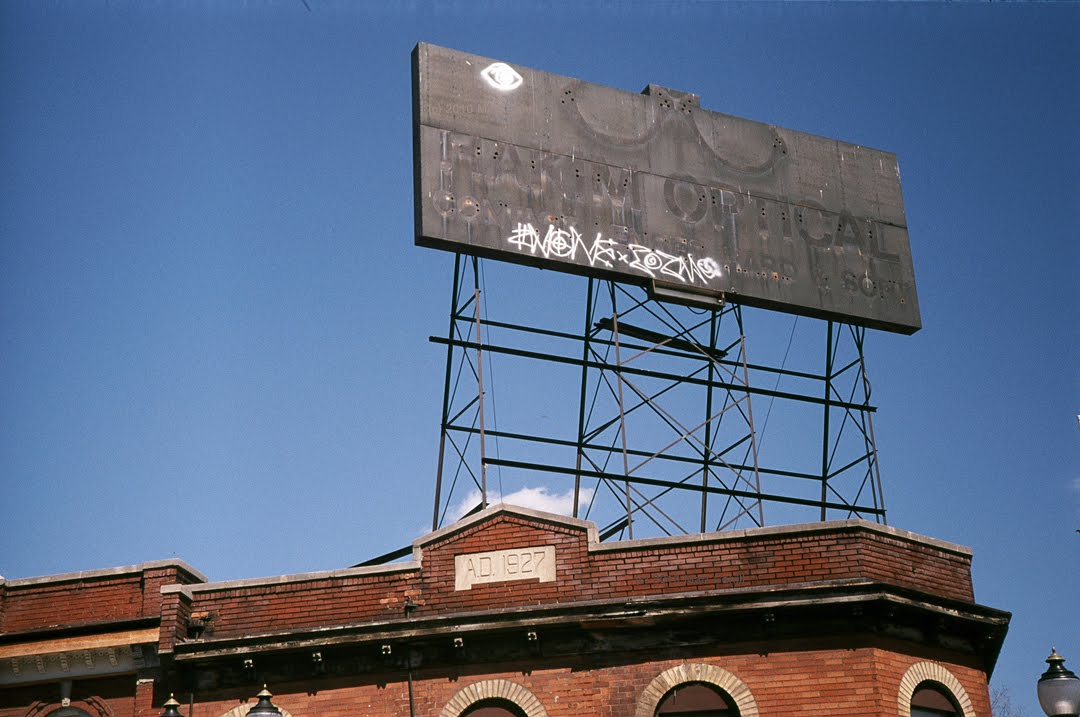
Walking around there now, it seems as if parts of it just gave up. People don’t even want to advertise on billboards. To be fair, I shouldn’t make any judgments without going there again, but on a Friday night – I’m afraid however that these judgments will only skew worse if I do.
Perhaps I have a better understanding of the haze now: it’s there to protect my feelings, it’s there to protect the city from the cold light of an unsympathetic audience.
Honesty, After Dark
A continuous problem I have throughout the social media spectrum, the main culprits being Facebook and Twitter, is that – once you get to the point where you have your sister’s husband as your “friend”, once the guy you barely talked to in high-school is “following” you – you are no longer able to be, well, honest anymore. You cannot post as a status update “Gary is an asshole” without, ultimately, answering to Gary (or his pot-smoking live-in partner, or your co-workers who are largely idiots). You can’t even be vague: “Some guy I know is being an asshole.”. People will know who you’re talking about – context leaves clues people can find. Gary will get mad and want answers.
Oh, you can be honest, alright. You can lay it on the table all you want, but with the inevitable consequence of offending people and getting in trouble for it. In other words, there’s nowhere to hide online. This is why I wish there were Bizarro social media sites like, say, Facebook After Dark and Undercover Twitter. Places where you can say the things you really want to say about the people you’re “friends” with, the people you “follow”, without fear of recrimination. I think we would all be happier as a result.
You reading this, Gary?
(P.S. There is no “Gary”, in case anyone is wondering. I don’t really have co-workers either) – ed
Mobile: March 9, 2010 – Walking

Photo: March 10, 2010 @ 6:45am – Nassau & Spadina

Dreams
(Over on Ward Six, there was a post about dreams and the use of dreams in one’s writing. This is my response/non-response to that post.)
Dreams, without exploding into a cavalcade of pet-theories, feed our experiences back to us as deconstructed information. Familiar objects and people are shuffled, perhaps not randomly, and re-proposed to us. As reality.
I am haunted by dreams still. Dreams I had when I was a child. Nightmares. Fantasies. No wonder. When you are growing up, the easel upon which your dreams are painted is like an IMAX screen: massive, all-encompassing, as close to real as it gets. As you get older, as you obtain experience, as your field of vision and reason begins to vibrate independently – in other words, as you become an individual – dreams cease to take centre stage. They exist and appear just as often as before, but for some reason their weight and impact is lessened.
And yet, a handful of times every year (it’s so hard to pin-down because they disappear into the ether like clear helium balloons) I will have a dream which haunts me throughout the morning (if not the day). It is those dreams I try to write down. Some I make into short stories as realities. Some, I incorporate into long fiction as, well, dreams.
Dreams are language. They vex interpretation, yet I feel there is nothing arbitrary about their construct. I fancy: somewhere in our sleeping minds an architect awakens and sorts through our lives, our goals and fears, our friends and enemies, our passions and hatred. This architect then casts a mold: fluid, non-dimensional, mantic. And it is this we are exposed to in our vulnerable slumber.
We wake up and try, often in vain, to make sense of it. And yet I think the most sense we will ever make of our dreams is by not interpreting them at all but allowing them to stand on their own. Allow them to stand as imponderable totems, sculpted by a subconscious architect: haunting, monolithic riddles. They represent the need for non-linearity in our lives.
I’ll Show You Stupid
Possibly the worst tactical mistake you can make, politically, is to make fun of an opponent’s lack of intelligence. I say this because not only is there an influx of politically active people on the world stage who fall under the category of “lacking intelligence”, but there is an absence of memory about how publicly scorning such people only empowers them (and, most importantly, voters).
It’s hard. When someone says something completely false – and stupid – the well-educated person’s knee-jerk instinct is to say “You’re an idiot”. Fair enough. But, it’s the taunting that backfires. For example, look at Sarah Palin. I think she represents a necessary evil in American politics: a self-elected Voice of The People who campaigns on the rather wispy argument that the US is run by a bunch of elitists who don’t understand “real Americans”. It’s all a bunch of crap (by elite, do you mean they have an education? don’t you want the people running your country to have an education? to have seen something beyond the borders of your own country for sake of perspective? who the hell are ‘real Americans’? does this imply ‘false Americans’?), but it serves its purpose. And what do her critics – who, to be fair, constitute most of the people on the Earth – do? They make fun of her.
She’s an idiot. A moron.
The problem is, she’s a moron who appeals to a growing number of disenfranchised people who are looking for a proud, politically and morally uncomplicated banner to wave proudly over their heads. And yes, we can argue about why this is and who the supporters are, but – not to say that history is a 1:1 reflection of the future, because it’s not – history has shown that history doesn’t give a shit about those questions. Reflection happens in the future – that is, after we politely chortle to ourselves at all the nonsense of Palin, her “Tea Party”, and her scads of uncivilized minions. That is, after they take the next election.
The elitist/commoner non-argument (it’s a ploy, really) is as old as politics itself. We’ve had something very similar (and thankfully, tamer) happen in Canada. Our current government is a coalition of reformer factions who merged in the late 90s/early 00s to take over the Canadian Progressive Conservative Party (this would be the same as if the current “Tea Party” took over the Republican Party). They removed the word Progressive from the name and lead the country as a minority government. They too campaigned (and still do, whilst in power no less) as the party of the People, as an alternative to whomever stands against their policies (aka “the elites”). It’s old hat.
Before they came into power, they – as the Alliance Party – tried very hard to unseat the ruling Liberal government (tangent: can you imagine if the US had a party called the Liberal Party?). Their leader was a man named Stockwell Day, who rode onto the scene (quite literally) on a Sea Doo. He was all charisma and commonality. But as time wore on, people found that his reformist ideas weren’t very deep and a lot of the people in his party were either yahoos or – elitists? – began distancing themselves away from him. The chrome on his veneer began to chip away and the man became a running gag; the Prime Minister of the day, Jean Chretien, joked openly that he preferred having Day in opposition (as to suggest his chances were that much better to win elections against the Alliance). Long story short, all it took was a few years, a “unite the right” movement, and a new leader who could streamline (that is, squelch) internal strife and you had a winner. That is to say, the toppling of a government.
I suppose what I’m saying is this: making fun of people like Sarah Palin because she doesn’t come across as polished, or sophisticated, or well-educated is ineffective. All you manage to do is inflame the passions of people – many of whom may have been too lethargic or apathetic to vote in the first place – so that they start creating local campaign offices. There is nothing like being intellectually offended to raise someone’s ire – anyone’s, no matter where or how they were raised. Raise the ire, that is, so as to make them active agents on behalf of those scorned by the “elites”. Agents of “change”.
George W. Bush was publicly derided by intellectuals and non-intellectuals alike in almost every conceivable medium and venue, yet he served two four-year terms as President of the US. If you want to take down the likes of Palin, take her down as you would take down Reagan or Thatcher – that is, as an opponent worthy of debate, worthy of your concern. To do less would be to knot your own noose.