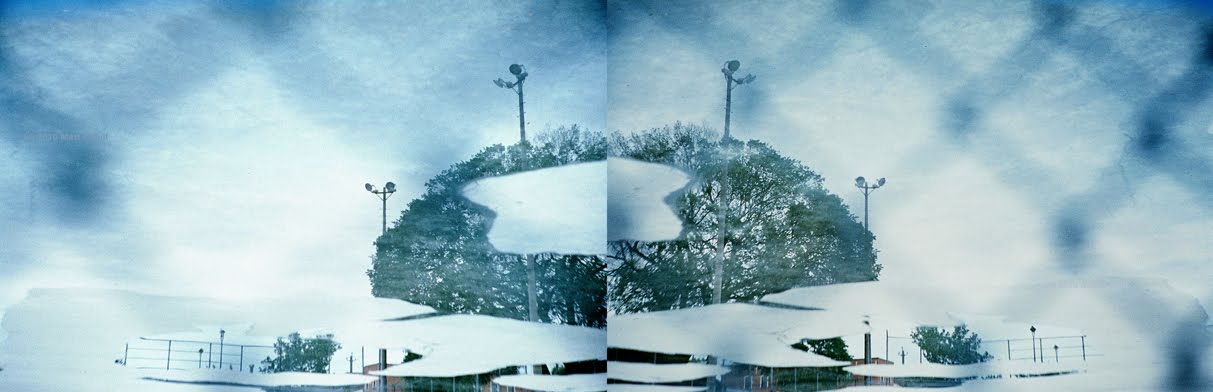
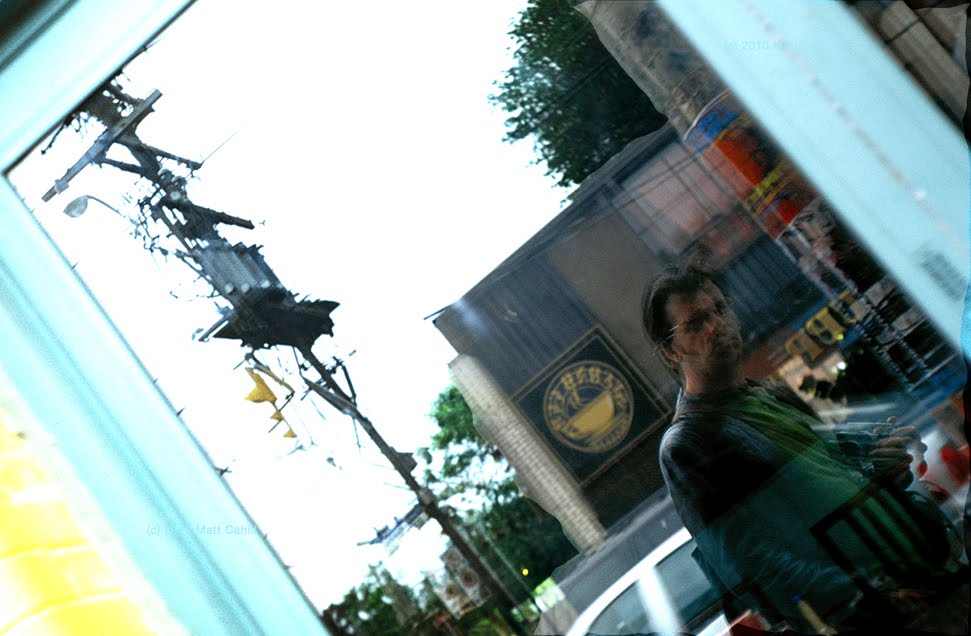
I had a lovely interview with Ellen Moorhouse from the Toronto Star about my low-fi photo project, Conversations With Abandoned Chairs. It’s now online, so please have a look if you’re interested.
More posts coming soon, I swear!
Matt Cahill's blog
I had a lovely interview with Ellen Moorhouse from the Toronto Star about my low-fi photo project, Conversations With Abandoned Chairs. It’s now online, so please have a look if you’re interested.
More posts coming soon, I swear!
It should come as no surprise that my postings have been less frequent, in proportion to the success or lack thereof of the Dutch at the World Cup, which has just (mercifully) ended.
First: I’m happy we made it to the Final.
Second: I’m happy we lost (even though I wanted us to win at the time).
Allow me to explain: I will always support Oranje, but that doesn’t mean I have to suspend my critical faculties while doing so. It also doesn’t mean I am living in a nostalgic cloudbank in which Holland must either play soccer like the Kirov ballerinas dance or else they are “cynical” – a word bandied about by once-every-four-years-I-pay-attention-to-soccer pundits.
In case I haven’t beaten this point enough, my Oranje is the team of 1998. It always will be. They were beautiful to watch (take a look at my Ryeberg essay if you haven’t already) and most aficionados consider that squad the greatest team of the competition, regardless that they lost to Brazil in the semi-finals. The thing is, if you accept that, then you must also accept they were the very same team who flamed-out against Italy in Euro 2000 in the quarters, in perhaps one of the most humiliating games I’ve seen us play: same squad, folks. How’s that for beauty?
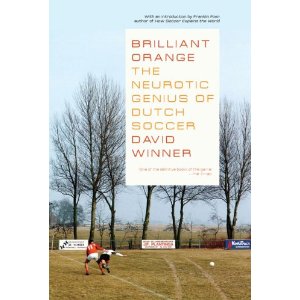
The toughest question in the world if you are a Dutch international soccer player: What can you do when the public, the pundits, the former stars from the Golden Age all want to see you play ballet if playing ballet doesn’t win anything? Don’t get me wrong: I like the Oranje ballet – I am one of those people who can walk away from a loss, still chuffed that we played “as we should”. I do side with author David Winner’s thoughts about Dutch soccer philosophy, as laid out in his (brilliant) book, Brilliant Orange: The Neurotic Genius of Dutch Soccer. But inevitably you want to win something, and the only silverware the Dutch have is the Euro title in 1988.
This brings us to the present. Sadly. Sadly, because for the most part Oranje did not live up to the philosophy we had come to World Cup 2010 expecting. Under the direction of Bert van Marwijk, they took a detour: individual beauty, sure, when necessary, but collectively less a ballet than an assembly line with a very narrow directive: win, above all else. And they did. They were rusty at first and their games, outside of pockets of that ol’ Clockwork Oranje we hoped to see, were not pretty, but they won, and continued to win. Lord, I wanted them to win, too – I was a willing enabler.
When the final against Spain came, I was a nervous wreck. I can only imagine how it must have been in Holland, for those making their way to the Museum Square in Amsterdam where the games were shown for the public. They had come so far, had been through so much, for so many years: 1974, 1978, the glimmer of 1998, the disappointment of missing 2002. So much baggage that you wanted them to win just to shake off the voodoo of the past.
But as I got prepared that morning I visualized what it would be like if we won, if for the first time ever we won the Cup. Instead of tears of joy, I have to tell you, I saw that it would have felt as if we had cheated. As if in winning, we had not done so as ourselves but as a cunning machine, as if someone had invented a “Dutch Soccer Team” to take our place. I cannot describe how difficult it was to deal with that: to stare at a historic vindication within reach of your fingertips, knowing simultaneously there was something inherently inauthentic about it. In fact, had we won, I fear the “victory” would have irrevocably punctured the heart of Dutch soccer, as opposed to the bittersweet reality I live with now: we lost, Dutch soccer is merely dented. Coach van Marwijk’s corporatist approach has been repudiated, that is for sure. What I don’t know is who or what, philosophically speaking, has been vindicated, since we are bridesmaids once again.
Perhaps it is our souls? I can’t speak for yours, but mine is in a better if not exactly comfortable place right now.
Hello all,
As previously mentioned, my first “curated video” essay for Ryeberg is now online. Enjoy.
I should note that I’ve contributed a few pieces of work to an innovative website, called Ryeberg. The conceit of the site is user-contributed curated YouTube videos, narrated by personal essays on a variety of topics. I am in revision-mode currently, but when my stuff gets posted, I’ll let you know. In the meantime, feel free to visit.

Something made the hedge in front of the porch shake, as if shook by a hand reaching out of the ground. I would’ve leaned forward to look closer, but I was exhausted from the previous night. There – it happened again. I could hear dry twigs cracking. The morning sun approached my feet on the floor of the porch, the volume of civilization rising slowly around me: coffee grinders, piano lessons, radios. Yet I couldn’t see a soul. I was alone, focused on the hedge, curious what made it move. I didn’t want the sun to touch me yet.
She left a newspaper behind but I didn’t touch it. It was sitting in the sun. She must have been up earlier than me. Perhaps she’d been up all night until now? I didn’t want her gifts and I didn’t want the troubles of the world to make rain from the cloudy anger hanging in my head. I sat brooding in a Muskoka chair asking myself what exactly I’d expected to have happened the night before, instead of what did.
It was a robin. It ran out from the hedge onto the yard, took one look at me, head cocked to the side, momentarily frozen. It was hunting. It seemed more threatening than I could be, sitting staring at it helplessly, drinking coffee like it was an antidote for paralysis.
I asked myself why I’d gone to bed so early. Why before then I’d drank so much, so quickly. Why I’d bothered making the trip if I was so exhausted in the first place. I couldn’t answer any of it. I wasn’t allowing myself to. It was like staring at long division on a chalkboard: I could see the numbers but didn’t want to understand where they came from.
The bird carried on with its sweep of the yard, unconcerned by my presence. The sunlight crept closer to my feet, my head was stuffed with thoughts, a jumble of unconnected ideas which became words scribbled over each other, my coffee cup was empty and I knew I’d have to creep up the stairs in order to get more. Past her, sleeping. Sleeping, I hoped, alone.

I’m not sure why it hasn’t occurred to me to post this here yet, but perhaps this gives an indication of how stretched my resources are at the moment. Over the last year, whenever I’ve come across an abandoned chair on the side of the road, I’ve taken a picture: a photo which does the abandoned chair justice. This has grown into a small collection of photos (with people submitting their own finds recently). I thought I would share. You can see the collection on my (ugh) Flickr site – just follow this link to see the set Conversations With Abandoned Chairs.