Hey – thanks.

Hello all,

I’ve passed the 50-post mark without much fanfare (I’m saving it for the 100th), and I don’t see Imaginary Magnitude hitting the 10,000 visitor-mark for another couple of months – however I thought I’d just say hello and thanks to all the people who pass-through, whether via BlogMad, StumbleUpon, or any of the myriad ways people find their way here.

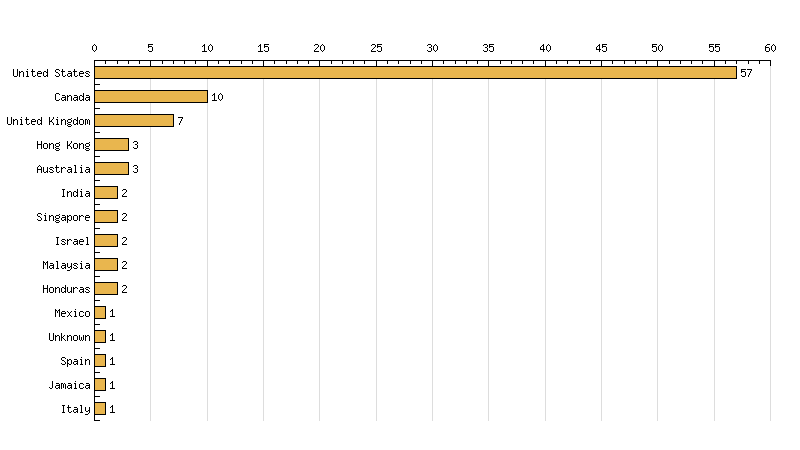
This site gets visitors from across the globe – here’s the latest 100-visitor sample:

Sure, a little Ameri-centric, but every visitor counts.

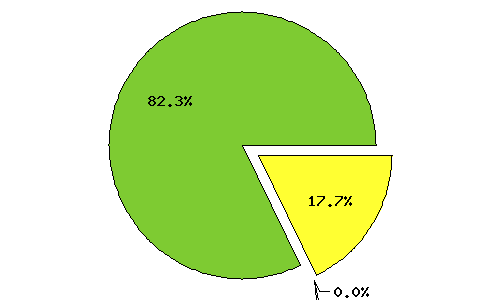
What surprises/impresses me in particular is the number of people who spend more than an hour actually reading the articles I write (either that or staring at the pretty photos…or maybe they just fell asleep and didn’t log-off). From the same sampling, here’s the breakdown:

That’s 17.7% of people spending over an hour here.

On this note, if anyone has any suggestions, please let me know. More photos? More essays? More article/book reviews? Less? Go home? Your blog sucks? Let me know.

Share

Article/Review: Digital Maoism, by Jaron Lanier

[from the I Wanted To Write About This Article a Month Ago Department]:

Jaron Lanier is a contributor and member of edge.org 1 (which I have listed in my sidebar links). Specifically, he offers his perspective on the evolution of technology and the internet and is credited as a “computer scientist and digital visionary”. In an essay posted May 30th, Digital Maoism: The Hazards of the New Online Collectivism, he tackles the rise of aggregator/meta-centric portals such as Wikipedia (which I also have listed in my sidebar links), where individual contribution he argues (and to this extent, responsibility) is obscured by an emphasis on a hive mind approach.

Lanier starts, appropriately enough, by sharing the fact that his Wikipedia entry refers to him as a film director, which is truthful only to the extent that he made one film, a decade and a half earlier. “Every time my Wikipedia entry is corrected,” he begins, “within a day I’m turned into a film director again. I can think of no more suitable punishment than making these determined Wikipedia goblins actually watch my one small old movie.”

And with this he sets his target. It isn’t, he insists, Wikipedia itself:

“No, the problem is in the way the Wikipedia has come to be regarded and used; how it’s been elevated to such importance so quickly. And that is part of the larger pattern of the appeal of a new online collectivism that is nothing less than a resurgence of the idea that the collective is all-wise, that it is desirable to have influence concentrated in a bottleneck that can channel the collective with the most verity and force. This is different from representative democracy, or meritocracy. This idea has had dreadful consequences when thrust upon us from the extreme Right or the extreme Left in various historical periods. The fact that it’s now being re-introduced today by prominent technologists and futurists, people who in many cases I know and like, doesn’t make it any less dangerous.

Lanier’s strongest point, as I see it, is his contention that the collectivist, hive-driven format of sites such as Wikipedia (and extended in his essay to meta-meta-meta aggregators such as Digg and Reddit) continue a troubling trend toward aggregated, impersonally edited content over… well, content curated and written by identifiable humans.

The race began innocently enough with the notion of creating directories of online destinations, such as the early incarnations of Yahoo. Then came AltaVista, where one could search using an inverted database of the content of the whole Web. Then came Google, which added page rank algorithms. Then came the blogs, which varied greatly in terms of quality and importance. This lead to Meta-blogs such as Boing Boing, run by identified humans, which served to aggregate blogs. In all of these formulations, real people were still in charge. An individual or individuals were presenting a personality and taking responsibility.
[…]
“In the last year or two the trend has been to remove the scent of people, so as to come as close as possible to simulating the appearance of content emerging out of the Web as if it were speaking to us as a supernatural oracle. This is where the use of the Internet crosses the line into delusion.”

Lanier’s line of query unfolds to include the observation that the “meta” is now more popular and, in respect to Google News, more profitable than traditional media (newspapers in particular), yet no one standing next to the microphone is able to articulate the fact that popularity contests do not historically vet the best, but rather, what the collective believes is safest. And of course, nobody seems to want to say that the collective is just as culpable – in some ways more powerfully culpable – as individuals.

I highly suggest anyone interested in the social internet, its architecture and direction, give this essay a good read. Lanier’s observations move from the immediate suspects above to commentary on analogous movements, such as Linux 2, the “open” software movement, and the ever-ubiquitous MySpace. In many respects, it’s about time somebody spoke eloquently about the collapse of the human face behind these efficient portals.

However, I do have some issues. For one thing, the tangents never really weave into a comprehensive whole, making it feel much too cumbersome (and a page too long) to concisely support Lanier’s provocative thesis. There are many arguments using the financial marketplace as a comparison tool which, although in theory an applicable analogy, is probably the last example I would use if I were arguing for a more humanistic approach. In fact, for someone arguing for this approach, Lanier’s language sometimes bares the same technocratic opaqueness which I would argue obscures a better understanding of the debate.

For example, leading to his summary:

“Empowering the collective does not empower individuals — just the reverse is true. There can be useful feedback loops set up between individuals and the hive mind, but the hive mind is too chaotic to be fed back into itself.”

I realize the term “feedback loop” is an applicable simile when discussing communication, but it’s disconcerting when a term normally applied to specialty occupations – namely, software programming and audio engineering – should somehow become the standard upon which we seek to inspire a better world. Is this not, to some extent, asking a less-predictable society to be like a more-predictable tool?

Please read the essay for yourself and feel free to share your feedback in the comments section.

Please note: there is a discourse on the essay on the edge.org site here.

1. From their site: “Edge Foundation, Inc., was established in 1988 as an outgrowth of a group known as The Reality Club. Its informal membership includes of some of the most interesting minds in the world. The mandate of Edge Foundation is to promote inquiry into and discussion of intellectual, philosophical, artistic, and literary issues, as well as to work for the intellectual and social achievement of society.”

2. There is no official site for “Linux” (outside of linux.org, which looks exactly as it was when first uploaded many, many years ago…and no this is not a compliment). The link I provided goes to Ubuntu, which is the flavour of Linux I use at home. There are others.

Share

Jacksonville, Florida

I will be going to Jacksonville, Florida in August. If anyone can suggest anything reasonably cool to do while I’m visiting (art, life, vibe sorta stuff) please let me know.


I’ve been there before, so I already have some impressions.


Perhaps not the world’s most exciting spot, but I’m willing to believe that I’ve been blinded by bland insurance company skyscrapers and haven’t truly seen what is there to behold (if only to find a place to drink and chill).

Any guidance is appreciated.

Share

Comment: There is nothing inherently masturbatory about film

Eric Bogosian wrote in 1995 :

It’s a truism to say that movies, TV and canned music are all dead media. In fact, they are machine-made. Might as well have electrodes sunk into my gray matter as a pair of headphones and some house music. Now, don’t get me wrong. I like a blasting boom-box as much as I love jerking off and I’d be sad if I couldn’t slink into a refrigerated movie theater in the middle of a hot, stinking New York afternoon and sedate my self with greasey [sic] salted corn while watching illuminated photos of people killing each other.

But it’s all dead. Which is to say, un-unique. Every one the same as the other. The movie (or TV show or record) is the same whether I’m there or not. That’s why it’s like porno as opposed to sex. Good theater is like having sex. It’s different depending on who you’re with.

I originally read this in a newspaper article, though paraphrased more succinctly: theatre is like sex while film is like masturbation.

So as to not give the impression that I’ve withheld a decade’s worth of disagreement, this is not the first time a theatre actor has publicly pissed on filmmaking (in general, no less) whilst implying theatre as sacrosanct. More recently, a local theatre actor with a sizeable list of TV/film roles had done the same in a local weekly. And every time someone takes this approach it’s hard not to view them as precious ideologues.

Arguments like this are easy to make, especially when you opt to side-step the reality of that which you are criticizing. To be fair (some may say too fair), I like to think Bogosian was championing theatre (specifically New York’s scene) as opposed to condemning film, seeing as he was distressed at the brain-drain occurring at the time (and I’m sure continuing to this day).

The truth is that there is nothing inherently masturbatory about film or filmmaking, or at the very least the threshold is no greater than in – dare I say it – theatre. If I may borrow Bogosian’s turn of phrase, it’s a truism that there is more to filmmaking than the inflated mediocrity we see passing through our cinemas on their way to the DVD shelf. How difficult would it be for anyone to use the same argument about theatre: Mama Mia, anyone? Is it fair to base an argument about theatre on Tarzan? Truth is, every artistic medium has its share of sequined fluff and it is patently unfair to point to the worst (or, in the case of LA, the home of the worst) for validation. It’s an argument which ignores the power (abetted, I argue, by actors also) of such a wide array and long history of great filmmaking that tallying a list (as I’ve attempted for the last 20 minutes) seems as asinine as Bogosian’s comment.

Every artist works with the bells of his pursuit’s downfall ringing in the background. This is part of the very thing which pushes artists to do their best work: namely, being pissed-off (or, depending upon your local caste system, “outraged”). Being pissed-off gives us the plays, films, and yes – television – we as a society need to have around us (if not to watch). So, if Bogosian was simply sounding a pro-theatre rallying cry, I can understand. What I can’t understand is when reasonably intelligent people denigrate perfectly analogous pursuits for sake of expressing their petty love of another.

Share

Forging on (he says)

It’s difficult to maintain a positive perspective when it seems you are book-ended by sirens of madness on one side and the encroachment of useless bullshit on the other. It makes one consider the benefits of a solitary agrarian lifestyle; unfortunately, that’s not in the cards for me. Firstly, most solitary agrarians are often too invested in their solitude (and their agrarianism) to even stop and contemplate their identity – after all, occupational lifestyles such as “solitary agrarian” tend to come naturally to people. I admit I may have missed that boat. Secondly, I simply wouldn’t trust anyone who identified him/herself as a solitary agrarian (“Take the chip off your shoulder, hippy.” my inner pub-crawling bully yells out – let’s call him Sully. Truth be known, he yells a lot).

It’s hard being an artist 1 when you’re surrounded by a stream of people who also call themselves artists, not necessarily because they are or that what they do is particularly outstanding, but rather because it doesn’t make your situation any easier. When you were a kid, an Artist was some sort of hallowed currency – you imagined they were raised on Easter Island by alpacas and shipped to the New World via hovercraft.2 Well, they’re not. I suppose it’s good that they’re not, as I’m sure someone would’ve raped and pillaged them long, long ago, Viking-like. To that end, I’m thankful the world doesn’t have to contend with a breed of sullen warrior sub-artists from Easter Island.

In the inner universe of the artist, “I” is the loneliest word. But let’s come back to this.

On the extreme opposite of the universe, far, far away from the tiny satellite of “I” is “you”.3 You, as in, not-the-artist. Sure, you could be “an artist” also, but it really doesn’t matter. For all you know, they’re nothing like you…or I, sorry. Bloody pronouns.

Right, let’s come back to “I”. Lonely word blah blah blah. Rudolf Steiner saw no difference between Art, Religion, and Science. In his eyes, they all dealt with the same conflict 4: bridging the chasm of understanding between the I and the not-I. Let’s face it – everything around us is not us, and yet it is, and yet it’s not. I have no relationship to the CBC Visitor sticker that I have stuck to the wall in front of me – it is, after all, a piece of sticky paper. Yet, it’s an encapsulation of one of various meetings/sessions I’ve had at the broadcaster, which is tied to what I do for a living, which is somehow (sometimes depressingly) tied to who I am. There is a constant conflict between the inner and outer world and it is the job of the Artist, the Philosopher, and the Scientist to ask fundamental questions in order to better define this relationship. I suppose I could’ve picked a better example than a sticker, yes (Sully laughs in the background, a pint of Guinness in his hand, leaning back on his barstool, smoking a cigarette as only fictitious inner pub-crawling bullies can do in light of Toronto’s recent smoking by-laws).

Every artist has to realise that they are, ultimately, alone. You can be part of a collective, you can have a gaggle of supporters, you can own an over-priced bar named Camera, but in the end it’s your inner voice that expresses itself and not the sum of your distractions, be they good or bad. The environment – the “not I” – can inspire art, but it doesn’t create art in and of itself. At best, in the Artist’s World, the “not I” is a muse that we toy with, fight against, woo, or plunder jealously for material. But in the end, you’re on your own.

I’m an unpublished writer (when I withdraw various insubstantial exploits: a College Street community newspaper that never got past Issue #1/Volume #1, a poem I wrote in high school that was somehow allowed in the Burlington Post, and various letters to the Globe and Mail), yet despite that, I’m not unaccomplished. This is the fine line: knowing the difference between a lack of commercial success and a lack of personal accomplishment. We tend to equate the two as synonymous, yet one is inherently more substantial than the other. I look back at the last five or six years and I say to myself (“Self…”) that I’ve accomplished a lot (a novel, numerous short stories, countless poetry) – it’s only been in the last year that I’ve begun to seriously aim for commercial success. I would rather be in this situation now than have peaked early (when I knew less about myself as a person and a writer) and withered, as most early-peakers do. Success is not a race, or at least that’s what I tell myself when I feel I’m going nowhere.

The key is to forge on, and whether that requires optimism, humour, or even distilled anger is up to the individual. The common-sensical answer would be: whatever it takes.5

As for me today, I might just join Sully for a pint.

Footnotes:

1. I use the term “artist” in its general context. I do not specifically mean visual artists, although they are obviously part of the category. I just can’t speak for them.

2. Hovercrafts. What kind of brilliant magic was that? Weren’t they the coolest things ever made by mankind when you were a kid? Christ, give me a place with hovercrafts and moving sidewalks and I’m buying real estate.

3. This is assuming a finite universe which could contain opposite sides (which obviously wouldn’t be possible if there was no end or beginning).

4. Conflict is, in retrospect, a slightly dramatic term – but I’m a slightly dramatic person.

5. The artistic process is just as important as the artistic product; it would be dangerous to focus on one to the exclusion of the other – you’d either be left with a industrious stream of mediocrity or constipated with directionless obsession. And you thought artists had it easy.

Share

Note: semi-hiatus

So, yes, I’ve not posted in a while.

Due to a hectic work schedule over the next month, combined with World Cup 2006, I won’t be posting very often. God knows I have plenty of articles to post, plenty of ideas, and plenty of things to discuss. The only problem is that I have no time.

Keep tuning in – I shall be back.


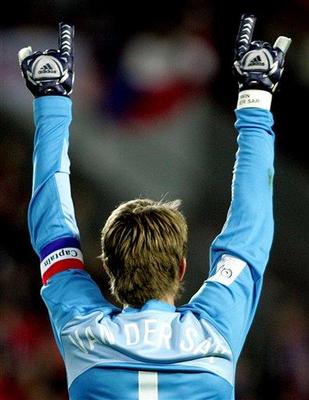
(photo from fifaworldcup.com)
Share