Book #3 update

The pandemic has had a deleterious effect on many writers. Whereas it’s affected my ability to hold my concentration on reading (for pleasure), it has certainly proved to be an obstacle on the creative process of others. I’m grateful that I have, somewhat contrarily, thrived.

I committed to starting my third book in earnest, seeing as I had plenty of time on my hands — business was (and is) down, leaving me with large swaths of time during the week. Add to this the lockdown, which has affected my ability to plant myself in my familiar café/bar haunts, given that they have either been forced to close or restricted to only outdoor seating, I found myself working from home. And I’m not used to this, seeing as I share it with my partner. A good pair of headphones have helped.

My writing process is different this time. Typically, in the past, I’ve written most of my first drafts by hand in a notebook, then transposed to laptop. But that style was very much based on walking about town with my notebook and stopping off somewhere to jot down the skeleton of a chapter. This time, I’m staring at a blank screen on my laptop because somehow writing a rough draft in a notebook just doesn’t seem necessary (or, if I am honest with myself, perhaps less efficient). And, as it’s turned out, staring at a blank page on my laptop has become an invigorating challenge. I’ll know in my head the rough outline of what it is I’m supposed to write (i.e. This is the chapter were Marcus and Alex need to connect with one another), but aside from my marching orders I don’t really know what it’s supposed to look like. The advantage of handwriting is that there’s an implicit casualness — if I want to doodle in the margins then it takes the piss out of whatever I end up writing being somehow sacred, if that makes sense. And so I begin filling in the blank laptop page with tidy New Times Roman text and there’s a kind of rush, not unlike pushing off from the lip of a snowy hill, poles in hand, skis firmly strapped to my boots.

I wrote earlier about how I was considering Book #3* as a comedy. This has changed. There is plenty of comedic absurdity, don’t get me wrong, but I think The Point of the book has changed and developed, and clarified. This is the magic of writing: watching something that only exists in your technicolor imagination take shape imperfectly in the real world of the formerly blank page, and the more you write the closer it is you get — not to the technicolor thing you imagined necessarily, but what you learn it should be, if that makes sense. A novel is in some respects an argument for its own existence, and what exists only in your imagination is but an impetus. Once you begin to manifest it you discover that, like a legal argument, characters will demand that you justify what happens to them, what they say in the form of dialogue, so that you are ultimately being fair to the spirit of the material.

I suppose what I’m saying is that my relationship with writing has undergone a substantial shift between Radioland and now, and I think part of it is being more practical with my time/labour, and the other is finding a new way of focusing as I write, which I may write about in another post.

*technically this isn’t Book #3 per se. I wrote a novel prior to The Society of Experience, which I proceeded to put aside (if you read the acknowledgements in SoE you’ll get the story around this). Then, while waiting for SoE to work its way through to publication I began work on a spiritual sequel to SoE, which I also proceeded to put aside (short version: I had a better, more dynamic idea for a novel, and I didn’t want to feel trapped in the same narrative universe as SoE). Thus, my forthcoming “Book #2”, Radioland, came into being. So, Book #3 is really Book #5, which is some crazy backwards Star Wars shit, I know. It’s also, as some might realize, a lot of pages of writing that no one will probably ever see, and if any neophyte authors are reading this and wondering how I feel about that, my answer is that it’s part of the process. Just as musicians practice their brains out before going into studio to record, there’s going to be a lot of effort that your audience is never going to see that ultimately (and quietly) benefits the parts they do see.

Share

Gladstone Press

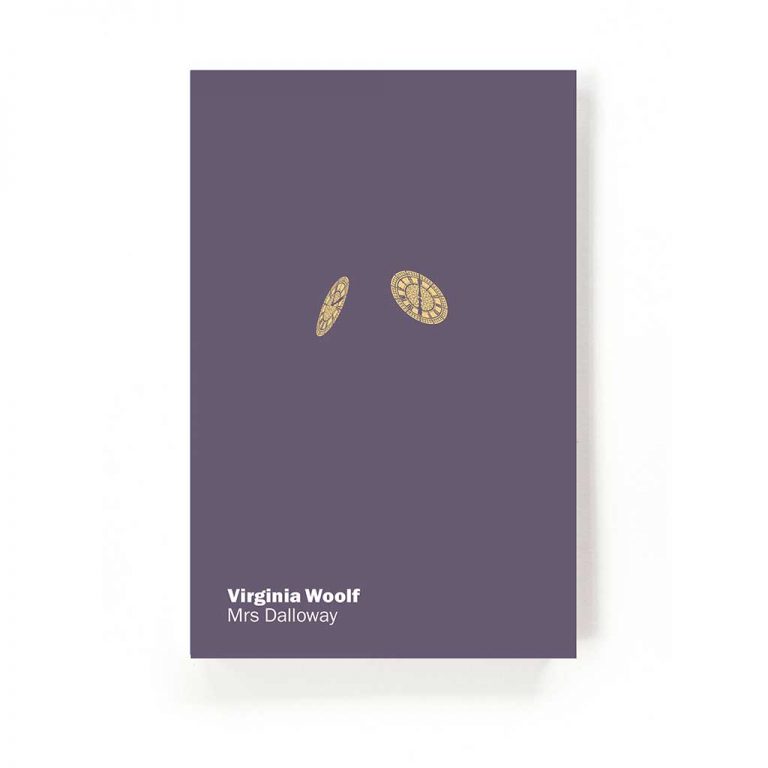
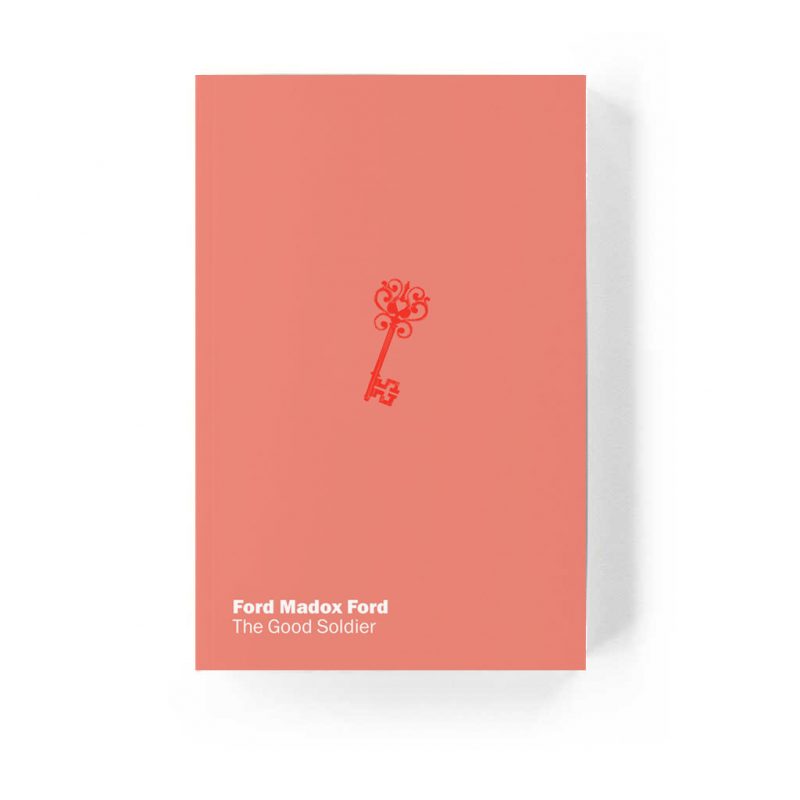
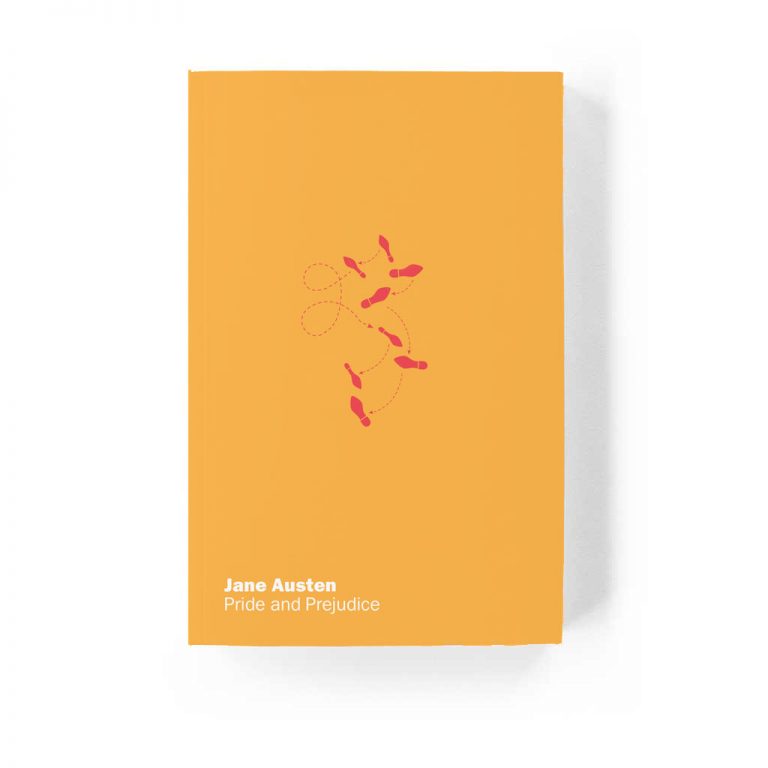
Two years ago, my partner, Ingrid, launched Gladstone Press. The purpose? To reissue classic books (or books that should be considered classics if they aren’t already household names) with modern design and high quality materials. Both the media and the general public have been very receptive to the idea.

Pride and Prejudice by Jane Austen

Ingrid, if you don’t know, is one of the top book designers around, and so Gladstone Press is a natural fit for her, and I’m always impressed by her dedication and commitment to each title that she selects.

Mrs. Dalloway by Virginia Woolf

Especially in light of how hard publishing has been hit by COVID, it hasn’t been an easy path lately for publishers or indie bookstores, but I’m happy to see people are still ordering her titles.

The Good Soldier by Ford Maddox Ford

If you haven’t figured out your summer reading list yet, check out her site. You can order direct from Ingrid or you can ask your local bookstore to order a copy for you.


Share

A Different World

####

I’m sometimes in the habit of cross-posting from this blog to my professional blog, but this time it’s the other way around. I think it fits.

####

The COVID-19 pandemic has laid bare the human face behind our central idea of how an economy works — something we have long needed reminding of, lest those of us who are able to pay our rents and leases become too comfortable with abstract terms such as “supply chains” and “stakeholders”. We are reminded that we are a society of interdependent people — individuals, families, communities — and it’s overdue that we see our economies the same: people require support when tragedy makes their livelihood untenable.

And just as the pandemic has made us humbly pause to consider the society we have constructed (or, if I am feeling cynical, we have  allowed others to manage so long as it doesn’t affect our ability to pay too much for our livelihood), so too has the tragic, preventable deaths of George Floyd, and Breonna Taylor in the U.S. and in this country, Regis Korchinski-Paquet and Chantel Moore to name just two from each country in the last two months, forced us (and not without the persistence of the Black Lives Matter movement) to reckon with our society’s implicit racism and how that directly affects the lives (not just livelihoods) of Black and Indigenous individuals in particular.

We are reckoning not with the isolated actions of “a few bad apples” but with the concept of systemic racism, that is, when racist or white supremacist notions are baked into the very structure of certain communities, businesses, and government agencies. This is particularly evident within policing organizations.

I’ve previously written about the idea of social justice, and my own path from a place ignorance. There is a great sense of exhaustion I’ve heard from members of the BIPOC (that is, “Black, Indigenous, [and] People of Colour”) community. The exhaustion of having white friends and colleagues continually approach them to ask for resources to help them understand racism (imagine asking a victim of gun violence to help explain the problems with firearms licensing). The exhaustion that comes with wondering whether this will be yet another blip of media interest in which hopes are raised only to be let down.

A different world is possible, but the time is past due for white folk like myself to do the heavy lifting, to seek out and reference the many (many) resources out there already written by the BIPOC community that will help people like me contextualize and understand how racism is systemic, and — just as importantly — to help others like me better understand this situation. As a therapist and active member of society it’s the least I can do. 

For anyone who is curious, here are some resources I have no hesitation recommending:

Between the World and Me, by Ta-Nehisi Coates (book)

Black on Bay Street, by Hadiya Roderique (Globe and Mail essay)

The New York Times’ 1619 Project

The Inconvenient Indian, by Thomas King (book)

A last thought for you: there are no slow news days, only barriers to other peoples’ experience.

Share

Radioland and Book #3 Update

I’ve written about Radioland (aka Book #2) before. It’s being submitted to publishers now that the industry has adjusted to the lockdown. Fingers are crossed. As tempting as it is to divert myself with this, I’m trying not to think about it. And yet…it’s The Second Book, the sophomore effort, etc etc. It’s a giant unnecessary burden — as well as a cliché! — to feel that somehow, of all things, this is the book that determines my future and not the last one (or the next). And so, yes, I’ve been a little concerned sometimes about this being some sort of reckoning of me as a writer, which is kind of silly. Whereas my mind is like Is the book good? Yes? Then that’s all you should really care about. And yet…

In other news, prior to the lockdown I started a third book, which I wrote about here. I didn’t expect to start another novel so soon — in fact, it’s the last thing I wanted — but something had been building up within me during the latter part of working on Radioland. It’s very different (and yet, the more I work on it, I can see how it falls into place with both The Society of Experience and Radioland’s themes). Don’t worry it has a name…buuut I’m not sharing it with anyone until it’s done. Let’s call it Book #3. What makes it different? Unlike the first two, it’s mostly a satire. Now, I can do humour, no problem. It comes second nature to me. And yet, devoting an entire book to it is something altogether different and a major challenge. I also have to say that I’ve not written anything so quickly before (I don’t share my word/page counts publicly, sorry, just like I don’t share my 10K race times). It’s the sort of book that wants everything out of me, and now. The good news is that I think it rocks. I don’t know where the hell it’s necessarily going (which perhaps also answers anyone’s question about how strictly I outline things), but I’m enjoying the trip.

Share

Reading Fiction

One casualty of the COVID-19 lockdown has been the fact that I can’t read fiction. The good news is that this doesn’t affect my ability to read/revise my own writing, however any plans I’d had to finish or start something transportive I’ve had to set aside.

My assumption is that this is a product of low-level fight/flight/freeze instinct at play. Once again, there’s a very real danger out there, after all. A lot of very real deaths out there, too, which has in turn halted the world’s economies. Mass layoffs, and entire industries staring into the mirror, wondering what awaits them around the corner. Fast-forward two endless months, and each province, state, and country is playing a game of How Much Do We Open, some more cagily than others. And still the thrills and chills — commercial real estate as we know it may be undergoing a paradigm change — continue.

Whatever the reason, I just don’t have the space for fiction at the moment. I have enough room in my head to be able to navigate the world (as well as the fictional ones I’ve created) and that’s about it. And, believe me reader, I would love nothing more than to finish Ludmila Ulitskaya’s The Big Green Tent, which is a lovingly told novel about the lives of a trio of young men (and by extension their loved ones and colleagues) in post-Stalinist USSR. I suppose the good news is that I get to savour it?

As for non-fiction? I’m mainlining that shit. And I’m so thankful for my subscriptions to the Literary Review of Canada, and (a Christmas 2019 gift) the London Review of Books. Yes, make of this what you will, but though I don’t have room in my head for fiction, I have more than enough for reading essays about books (some of which are fiction).

I’m also thankful that I’d started learning a musical instrument last year — being able to practice guitar (and, more importantly, relearn a lot of music theory I’d abandoned decades ago) allows me to appreciate music in a fuller way than I have previously as just a listener/devotee.

So, perhaps it bears repeating: there are no awards being handed out when this is all over, because the “all over” will neither be soon, nor easily measurable because it stands to happen very gradually (and I’m not placing any bets on the “all” part). A lot of us who have had our self-development routines halted — going to the gym, dance class, recreational team sports, for instance — are looking for ways to perform (on a basic level at least) so that we feel some sense of personal progress. And the truth is that I think we will all be left on our own to make sense of this, in our own ways — which is perhaps the equivalent of a participation badge rather than an award.

Just make the best of it. Don’t expect a lot, because this is a crisis. Take whatever you can find in terms of growth and accept that for what it is. Routines will come, but later. Relaxation will come, but later. Reading fiction (for me, at least) will come, but later.

Share

Writing Adv*ce: Tools

Welcome to another piece of writing adv*ce (here are some earlier entries), which eschews advice itself and instead asks questions or demonstrates different (not necessarily better but hopefully not worse) approaches.

I want to say, off the top, that however you end up writing your story, poem, book, essay is good so long as you get the work done. I’m against being too precious about my tools, even though, as I show, it can happen easily. Like any art form, writing can be self-absorbing. The trick is to give ourselves enough time, space, care and attention so that we capture the best of it in our work, without losing touch with day-to-day realities (interpersonal interaction, paying bills). So, yes, sometimes we don’t want to write in just any ol’ journal, but something that’s well-made and maybe looks cool at the same time.

I love fountain pens. I love their aesthetic, love the different inks and nibs. And for a while it’s what I used to do my writing. Now, I should make it clear: with few exceptions I go everywhere with a notebook and a pen. It helps me capture things, purge ideas. The problem I eventually found with fountain pens was that, depending upon the paper, the ink might smudge (I’ll come back to this). Or, I ran out of ink in the middle of a writing session. Or, maybe the nib had an annoying scratchy part that dragged against the paper. Ultimately, I was far too distracted by what my fountain pen brought to the endeavour of writing, or, rather, what it interrupted: work. The work is everything, and, though this need not be an either/if, if need be it takes precedence over the more procedural aspects of writing. Performance artists notwithstanding.

My fountain pens sit dejectedly in a coffee cup on my office desk. They are rarely touched. Some day perhaps, but not now. I’ve been using the same brand of rollerball pen (uni-ball deluxe fine) ever since. It just works, and I don’t have to think about it. It serves my purposes as a tool of my trade. As well as the same pen, I use the same type of notebook. Finding a decent brand and staying with it is another way I try to stay focused on the work without being tempted to switch my tools. That said, someone might easily consider this precious (lest I be accused of modelling my habit after Einstein, who owned multiple copies of the same grey suit). Speaking of notebooks, an interesting thing: a couple of years ago I switched brands for the first time in…let’s say, well over 10 years. My former notebook of choice was Moleskine. They’re perfectly fine, except I hold them partially responsible for my falling out of love with fountain pens. You see, Moleskines, despite appearing in a classic style, are a modern product based on the design of a French notebook from the early 20th century; while you and I would think, because of its pedigree, the quality of the paper Moleskine used would be perfectly suitable to fountain pens, they are, as I ruefully learned a couple of years ago, not. I have since switched to Leuchtturm and have no regrets. (I have to admit, this feels like writing about an ex-girlfriend.)

Writer, if you want to use an old fashioned typewriter, go for it. If you want to write diagonally across the page of your journal, go for it. I might suggest along the way you keep an eye on how your tools serve your task, and be open to asking whether simplifying the way you write would allow you to better focus on the work. Try not to get hung up on your tools. I write less and less in my notebook these days, and more and more I send texts to myself w/ my smartphone. All my smartphone is doing, because it’s practically attached to my hip, is making it easier to do what I achieve with the notebook, albeit with less character. Maybe this is my own preciousness coming out, as I do prefer the act of handwriting. But sometimes it’s just not practical.

Share

Comedy

The next book is going to different.

I’ve given up on “the next book isn’t going to be an ambitious book” because inevitably I churn out something that ends up doing so, or at least attempting. That said, I would like to write something funny, which is hard — at least if you’re aiming for something that is consistently funny. Then there’s the type of funny. Not all funny is funny to all, and that’s the main problem with writing something comedic: it has to have a consistency that you wouldn’t necessarily expect from other genres (as long as a thriller contains a handful of thrills then it earns the merit badge of its title), and not just in terms of how populated it is with humour; there’s consistency in terms of the volume of material but there’s also consistency in terms of texture — is this a satire that a smaller number of people with more rarefied knowledge will appreciate (think of the film The Square, a wry satire of the upper echelons of the art world), or a broader, more bombastic, plot-driven variety (see Hitchhiker’s Guide)?

It’s intimidating and I may abandon the whole thing, but Radioland, my second book (hello, publishers at this year’s London and Frankfurt Book Fairs — my agent will be looking for you!), took a lot out of me and I’m looking to try something stylistically different.

Wish me luck!

Share

Jean Vanier

Yesterday, I read the revelations concerning an internal report by L’Arche, an organization renowned for its work in changing the way society takes care of those with developmental and cognitive challenges. Its founder, Jean Vanier, has been accused by several women who worked with him of sexual assault. I was gutted to read this, as are many people around the world, I suspect. Let me be upfront, because I realize not everyone is going to follow the link I’ve posted (and sometimes I blog thinking that this will automatically be the case): these were women of faith who were working dedicatedly with his organization and/or directly with him, whom he coerced and pressured, sometimes over years, breaking so many personal and professional boundaries in the process, doing so much to hurt people while he was helping others.

Vanier, who passed away last year, was one of those people who, while I did not explicitly follow, I held in esteem. Ever since first learning about his work in my late 20s, his commitment to humanizing those who do not have a voice — which included the homeless, among other sectors of society — I’ve looked up to him as a high water mark of how to be a decent human being capable of walking the talk. And this makes the stories coming out all the more sickening, because of the extent of his abuse of power, how much harm he has done to his victims. 

So, what do we do?

I’m not on social media much but I can already imagine people dismissing everything to do with L’Arche, the organization. And while it would be healthy to see how the internal investigation evolved (in particular how quickly it responded to complaints), I am cognizant that the news is due to L’Arche’s internal investigation and not as a result (from what I can see) of an external journalistic exposé.

I want to continue to support the work of L’Arche in spirit, even if Vanier’s actions in private were so intoxicated and self-absorbed — in particular, for me, the accounts in which he justifies his actions to his victims as being in the spirit of God. While it appears that none of the people he cared for — the most vulnerable in society — were targeted, I am holding my breath on this last part. But there are already victims, women who trusted and believed in his work, in him, and who are scarred by their experience, and whose relationship with their religion I can only imagine must have exacted a great toll as well.

A question that is particularly relevant these days: is it possible to support the continuation of someone’s work despite their horrid private actions? Yes, I think it is, and I don’t think one requires a lawyer to parse out that logic, however I think in this particular instance L’Arche will need to gain the trust of the public, and to define themselves beyond (probably by expunging) Vanier’s image.

Incidentally, I’ve been reading Becoming Ethical, by Alan Jenkins, which provides ways for therapists and social workers to work with men who abuse. I appreciate Jenkins’ philosophy, part of what is called the invitational model, which is not to lock those who have abused into a permanent status of abuser, but allowing them an opportunity to represent themselves and find their own path through the pain they may have caused (as well as deep reflection on their own internal logic). I mention this because I deeply wish there had been a last act in Vanier’s career where he was able to recognize the damage he had done and at least had begun the work of transforming himself ethically.

I am so fucking angry at the man. And terribly saddened with yet another public figure – someone synonymous with raising the quality of the lives of others — has unveiled himself to be culpable of something so avoidable and destructive.

[For those who are curious, I’ve revised this piece many times. Why? The answer may be its own blog entry, but I feel I didn’t give as much space to the victims in the original post.]

Share

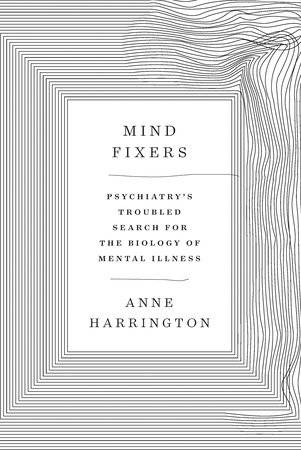
Book Review: Mind Fixers: Psychiatry’s Troubled Search for the Biology of Mental Illness, by Anne Harrington

image of

For the longest time I’ve been looking for an impossible book: an historic exploration of psychiatry and psychology over the last 150+ years that lays the groundwork of how we got to where we are (with the infighting, the arrogant spectacles, the tentacles of private interests), that also isn’t painfully academic or with too little (or too much) of the author’s own perspective of such a unwieldy topic. Well, as I said, it doesn’t exist, but Anne Harrington’s Mind Fixers comes very close.

As the subtitle states, Harrington (a science historian and the Franklin L. Ford Professor of the History of Science at Harvard University) has her lens steadied on the search for the (real, perceived, and ultimately elusive) biological underpinnings of mental health conditions. This is a terribly important topic and if this book has not ignited the debate it might have, it’s no reflection on the scholarship or insights gleaned from Mind Fixers, but perhaps a victim of timing and not being the loudest possible controversy to be found on Twitter. Even then, if you follow psychologists, psychiatrists, and those who specialize in related research on Twitter you’ll soon find yourself inundated with accusations of anti-psychiatry levelled at those who criticize prevailing notions of mental illness being caused by chemical imbalances in the brain, while the replication crisis undermines many of the foundations of Psychology 101.

If there’s a story here, it’s one of shifting hegemonies: from those who were concerned of their patient’s physical wellbeing, to those concerned with their brains, from those concerned about subconscious maternal conflict to those convinced the answer was in our brains, but only chemically. And with each shift in search of a possible answer to mental suffering there are reciprocal shifts in public investment and, eventually, interest from pharmaceutical companies. And at the end of the day what shifts the most are some of the most vulnerable people in our society: from sanitariums to hospitals; from wartime battlefields to community centres…only to be dumped onto the streets. It’s all here in Mind Fixers, and it’s a timely read considering the vested interests currently luring large investments in brain science, or in such promised but potentially dangerous remedies as ketamine, or those convinced of a genetic pathology. And if it sounds as if this book is strictly for history/psychiatry wonks you are dead-wrong.

What Harrington does very well is take reams of historical information and distill it into a narrative that ultimately maps out how those with what is generally called (though I hold some hesitations at times) mental illness were treated and what those in their charge felt was at play inside their bodies. Along the way we see ethical lapses in the form of wholesale human experimentation (i.e. injecting unknowing patients with blood infected with malaria), as well as the overreaching ideal of Freudian psychoanalysis as a Rosetta stone. Along the way we are introduced to ideas and theories which seemed to make sense at the time — narcosynthesis, insulin coma therapy — along with travesties such as deinstitutionalization, basically the dumping of people with mental health issues on the streets as a result of overambitious government policy that was out of sync with the realities of state coffers. Mind Fixers is also blunt about the influence of pharmaceutical companies, who increasingly figure in the narrative; the last quarter of the book is an admonishment of the profiteering that took place from the mid-1980s to the mid-00s as companies such as Eli Lilly were able to advertise directly to Americans and, with the help of an increasingly subjective DSM that allowed two people with completely different symptoms to be diagnosed with the same disease, exponentially increase their profits through prescriptions.

There are some issues. Repeatedly, Harrington refers to the “neo-Freudians” who, in their day (mid-20th century), held the reins of power with respect to diagnosis and how psychiatric trends were approved. There is a lot of confusion (just look at the definition provided on this U of C Berkeley page) about what a neo-Freudian is: those who studied but ultimately disagreed with Freud (however kept his strictly psychodynamic approach) or those who held Freudian views but refused to downgrade the role of biological processes? It may sound semantic, but in lieu of a definition the term’s repeated use without context begs for clarity. In the process it also makes it sound as if all psychoanalysts were in some way Freudian adherents. What about Melanie Klein and the rest of the object-relations movement? How did they differ? Indeed, the role of plain ol’ talk therapy — explicitly Freudian or not — is given short shrift, which might sound understandable in a book looking at biological underpinnings, but as a tool in the arsenal against so-called mental illness its absence feels odd, especially in light of the author’s emphasis on the misdirections of neo-Freudians. I get that Harrington could easily have written a book three times its size on her chosen topic. But if you’re going to talk about the influence of Freud and psychoanalysis in general then I feel you have to unpack and contextualize a bit more than what is on display here.

For the most part, however, Harrington is surprisingly fair-minded, not only unveiling the naked greed (and capricious biological arguments) of psychopharmaceutical manufacturers, but highlighting the testimony of those patients who were — placebo effect or not — helped by their medications, even if it came at a cost of other aspects of their health. She is by no means on a mission to dispel the notion of a biological source of mental illness, as I’m sure some vested interests might think looking at her book from a distance, but rather to show how partisanism, arrogance, and greed have wasted decades of valuable mental health research as we swing from trend to trend.

Mind Fixers: Psychiatry’s Troubled Search for the Biology of Mental Illness, is available at an independent bookseller near you, or online.

Share

The One I Feed

If I’ve learned anything this year it’s the command, perhaps even the primacy, that music holds over my creative life, which is strange(ish) for someone who isn’t a full- or even part-time musician. Let me qualify “someone who isn’t a full- or even part-time musician”: I can play drums decently well, I’m barely adequate on keyboards, and I’m beginning to develop confidence on electric guitar. But there are no stakes for me: I’m not in a band, I’m not hoping to become a recording artist. So, as an established/emerging writer, what’s the deal?

The deal is that music presents as part of a triumvirate of full-blooded influences on me: music, film, and writing. I am incomplete as an artist without one of these. Don’t get me wrong, I love other forms of art — dance, painting, sculpture, etc (to infinity) — it’s just that my DNA is activated by music, film, and writing.

But the predominancy of music in my life sometimes has me worried.

Let’s start with writing. Music twists around my work almost symbiotically. The Society of Experience involves a character whose day job is a music supervisor for film and TV productions, and thus the narrative is punctuated with songs from the very beginning; the main character is sometimes haunted by the sound of a jukebox in the bar beneath his apartment. And yes, of course I created a soundtrack for the book’s launch (which features music mentioned within as well as inspired by the themes and subject matter). My next novel, Radioland, involves a “successful” musician having a nervous breakdown. The novel I’m working on right now, [untitled matt cahill project], involves the power of a DJ on a young boy in the country. If I could afford the rights I would quote song lyrics to introduce book sections.

Even when it comes to film, music has been immensely influential. From the quirky soundtrack of Brazil to the Wagnerian flourishes of Excalibur, I have not only fed deeply on music scores and soundtracks but have followed a countless number of rabbit holes. If it hadn’t been for watching Underground, I wouldn’t have spent a year chasing down recordings of Serbian brass band music. In film school, one of the best things I ever did was a one-take b&w short I shot on a wind-up Bolex that I played back w/ The Jesus and Mary Chain’s Reverence blasting in the background.

I care deeply about music to the extent that, on a social occasion where we were taking turns playing songs on a nearby jukebox based on a chosen theme, I was asked to choose 3 songs I hated. I said I wouldn’t. And I wouldn’t because a) it meant sitting through 3 songs I hated, and b) life is too short to listen to songs you don’t like. It made for an awkward moment and I felt somewhat precious, but that’s how it goes when you take a principled stand about most things.

So, my worries, however ephemeral, are whether I’m suffering from a blindspot in how I prioritize music. Is it a blinder? Is my appreciation for it distorting my perspective insofar as my writing (in particular) might suffer? I don’t know. I don’t have a lot of artist friends, and the ones I do have probably wouldn’t deem this to be something worth much concern. That said, sometimes I wonder: am I using one art form to inform and/or expand another, or am I misusing either/both? Should I be concerned when things become sacrosanct? 

These are not really questions that require answers, but as an artist who wishes to be reasonably self-aware, they are good to ask nonetheless.

Share