Ambient

I don’t know how or when I got into ambient music. I can tell you there have been a few seminal contributors: classical music, movie soundtracks, minimalist and so-called world music composers, and the more spacious actors in pop/rock music.

Let’s start with a sort-of definition of ambient music, and I will begin by saying that I have no formal education in this realm. Ambient music is typically experimental and tends toward spaciousness and a lack of traditional (Western) song structure; it has its roots in the likes of 20th century composers such as John Cage, as well, during its development, contributions from traditional music from India and Japan, as well as from jazz. It can be a formless and electronic haze, or it could be all about exacting pattern and repetition using traditional instrumentation. There is also often a sense of the tactile. I will include some examples toward the end of this piece to begin to provide some context. At the end of the day, what is and isn’t strictly termed “ambient” is often more a question of the composer’s intent. You will just as likely see genre labels such as “minimalist,” “drone,” and “experimental” instead, as the term “ambient” can be a sort of kludge.

As a primary influence on me, classical music is a no-brainer, and like a lot of kids who grew up at the time I did, we were treated (or as I like to say, inculcated) to classical music through Bugs Bunny and Disney cartoons. As an adult I love the flourish and bombast of Shostakovich and Borodin, and the aching lyricism of Vivaldi and Bach. However, there is something undeniably mesmerizing about a brief section of Act II of Wagner’s opera Siegfried, where, through gorgeous use of instrumentation and dynamics we are surrounded by the quiet stirrings of nature — it surrounds the listener and one has no choice but to surrender to its formlessness. This formlessness is not something we often associate with something so strictly structured as classical* music.

the cover of Twine, an album by Taylor Deupree and Marcus Fischer. This image shows 1/4" audio tape loops hanging from the top of the frame.

As a movie buff, it makes perfect sense, given my exposure to classical music as a child, that movie soundtracks would inspire my appreciation of ambient music. Even in an epic space opera such as The Emperor Strikes Back there are many moments — particularly the suspenseful, quiet bits — where John Williams draws from classical roots, but of course, in order to create mood and retain timbre, sections end up as long stretches of almost abstract-sounding composition. Another perfect example would be the use of György Ligeti’s Lux Aeterna in Stanley Kubrick’s 2001: A Space Odyssey during the monolith scenes. Funny how sci-fi tends toward this direction.

A movie and a soundtrack that shook my foundations as a teenager was Godfrey Reggio’s Koyaanisqatsi. While the imagery was both disturbing and inventive, it was my introduction to Philip Glass’ minimalist composition that entranced me. Its mantric dedication to repetition using an orchestral ensemble and use of church organ and choir during its more climactic parts was catnip to this kid. When, a year or so later after seeing this, I discovered that Glass had collaborated on an album with Ravi Shankar (1990’s Passages) I couldn’t resist picking up a copy at a classical/jazz record shop near where I worked as a photolab technician. It was love at first listen; while some might’ve thought that the two were at odds with each other — one an avant-garde composer, the other an Indian classicist — their collaboration (each took turns orchestrating the other’s compositions) was a major influence on me.

To save space here, I will briefly name three other significant musical influences: David Sylvian, Talk Talk, and Miles Davis. Sylvian’s Japan reunion of-sorts, Rain Tree Crow, only put out one album but it was a low-key combination of rock/jazz/experimental soundscapes with African rhythms that has had a lasting influence on how I decided to listen to music. Talk Talk’s last two albums — Spirit of Eden and Laughing Stock — are rightly hailed as experimental masterpieces of pop-meets-improv jazz however a single song deserves mention, from their comparatively more formal pop album The Colour of Spring: April 5th. You can see where they were going with only that one song (and the album is wonderful as it is). Lastly, discovering Miles Davis’ album In A Silent Way was another key piece in my ad hoc self-education: the tactile nature of the instrumentation has been hugely influential on composers of all genres since then (and you can hear a motif from this album used on Taylor Deupree and Marcus Fischer’s Twine).

Over the last seven or more years, I’ve become deeply involved with ambient/experimental works by composers such as Stephan Mathieu (who not only composes but masters others’ work at his studio) , Deupree (who established the influential ambient label 12K), and France Jobin, as well as those, like Ryuichi Sakamoto and Christian Fennesz, who dip in and out of the ambient genre.

In an age where we are bombarded with divisive and interruptive dialogs encouraging us to be outraged at every turn (not to mention the very real aspects of society that are worth our outrage, if only we had the time and energy to devote to them while being able to support ourselves financially), experimental ambient music allows me — on a good day — to reset my thoughts and tune into a more free-form sonic world. Ambient is not pablum. Ambient is not “new age music.” If anything ambient has been about transcending the boundaries of “instrument” and “technology”, something all genres of music have attempted at one time or another; hip-hop does this particularly well.

Here are some examples that have been influential for me:

Radioland, by Stephan Mathieu: https://schwebung.bandcamp.com/album/radioland-2

Perpetual, by Ruyuichi Sakamoto / Illuha / Taylor Deupree: https://12kmusic.bandcamp.com/album/perpetual

Duo, by France Jobin + Richard Chartier: https://matterlabel.bandcamp.com/album/duo

~~~, anna roxanne: https://anaroxanne.bandcamp.com/album/-

Arrow, by Richard Youngs: https://preservedsound.bandcamp.com/album/arrow

Tracing Back The Radiance, by Jefre Cantu-Ledesma: https://jefrecantu-ledesma.bandcamp.com/album/tracing-back-the-radiance

Allister Thompson hosted a blog, Make Your Own Taste, that contains a lot of ambient artists and contextual information on the genre. You would do well to visit if this is your thing.

*note: I use the term “classical” generically; technically I prefer the Baroque and Romantic periods best, truth be told.

Share

January 11, 2016

I planned to get up at 6am and go for a run, despite the forecast noting a windchill of -16C. What happened is that, because I’d played my first indoor soccer match of the year the previous night (I headed-in the game equalizer) my better sense woke me up and I switched off the alarm on my smartphone at 4am to get some rest and heal my muscles.

Ingrid’s radio alarm went-off at 7:26am. It was the usual: CBC Radio One’s Metro Morning broadcast. But something seemed off. For one thing they were talking a lot about David Bowie. But, I thought, he just had an album out on Friday so it didn’t surprise me. And then it dawned on us that his name was being used in the past tense. I distinctly remember them playing Sound and Vision, a song I would never imagine Metro Morning otherwise playing.

I didn’t want a Canadian or journalistic perspective. I didn’t want to hear about how “strange” Bowie was. I didn’t want to hear the inevitable and inevitably earnest interview with astronaut Chris Hadfield. We spent the rest of the morning listening to BBC Radio Six which had put together a very thoughtful program, including reminiscences from musicians and Bowie collaborators. We went about our morning routine – namely, drinking coffee and reading the Globe and Mail – but it seemed like we weren’t paying attention to anything but the radio. I eschewed social media. I did not want other people’s words in my head, I didn’t want to find myself summarizing my feelings about Bowie’s passing in the sort of facile way that social media can render even the most heartfelt words. I didn’t even want to write that I was avoiding social media. I wanted none of it.

We had some breakfast and I finished some email correspondence for my practice. And then I went for a run. I needed to, even though this was probably the first time I’ve ever stepped out in plain daylight to do so (note: seeing your shadow is weird when you’re running). It was neither my fastest nor most laboured 10k. My head wasn’t really focused on anything, expect for maybe some of the songs BBC Six had been playing: songs plainly inspired by Bowie (Down Here by John Grant), songs which had plainly inspired Bowie (1-2-3 by Len Barry).

Lou Reed was the musician/performer who most likely kept me from killing myself when I was a teenager. His voice came through the speaker and consoled me in its plain cadence, and hinted to me of an alternative universe that I could only dream of seeing back then, living in the suburbs as I did; darker, sure, but more real. I don’t know if David Bowie saved my life but he made it infinitely more interesting and colourful, pulling influences out of his sleeve like a Harlequin-magician and transforming them into a succession of mesmerizing and artistically inspiring songs intended for a wide audience. He largely succeeded because he stayed ahead of trends. Both of them are gone, and while I may have felt more gutted about Reed’s passing, Bowie – whose songs, cool and fragile, rollicking and romantic, I sang to myself regularly – was another artist I had communion with, as do we all with those who deeply influence us when we feel alone.


Share

RIP Lou Reed

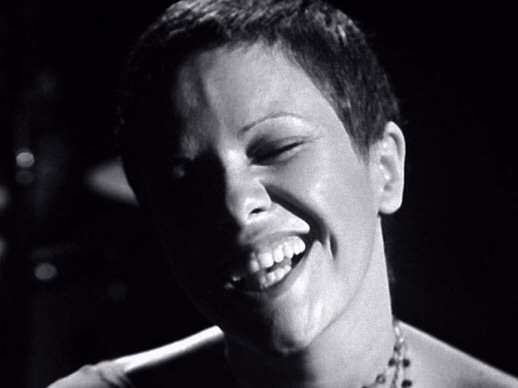
I don’t want to come across as melodramatic, but I’ve been preparing myself for the day that Lou Reed passed away. That day came today.
When I say “preparing myself”, I don’t mean with an end in mind. I suppose the point was being mindful that he wasn’t going to be around forever. No one is.

The photo to the left is the first album of his I bought (on cassette). It introduced me to both Lou and the Velvet Underground in equal measure, taking the listener to his Street Hassle release. His voice lingers in my head, his words undoubtedly. He was as much a writer as a musician. He created settings for his songs, surrounded with strange people. It was impossible to feel lonely with his voice in my ears.


Share

I Don’t Want To Know

As a writer, even though I am not part of any sort of literati, I am still plugged into the lit scene. You need to be if you want to understand the general to-and-fro of any industry you are interested in becoming a part of (same goes for TV, music, theatre, etc..). That said, I must make an admission. I am making this admission because I think there are a lot of people like me out there who feel the same but are reticent to admit it.

Here goes: I don’t take any particular interest in the life of the artist outside of his or her art.

When I read a book, I don’t care if an author comes from the East Coast and studied journalism, had a drug problem and now lives in a shed with a mastiff. It’s not that I don’t care about this author personally, it’s that these facts shouldn’t have anything to do with the book that I am about to read. I should be able to pick up the book, knowing nothing about said author, and be able to read it, enjoy it, be fully affected by it, without substantially missing something due to a lack of familiarity with the author’s biography.

And yet, when you are culturally plugged-in (and by this I mean, you check out industry blogs, trade mags, etc.) there is so much white noise about the artists themselves that it seems divergent from what it is they are supposed to be doing: their work. We can talk about Picasso’s passions, but 100 years from now there will probably only be discussion of his work – your work is the only thing left after you and everyone who knew you has died. And if people are still talking more about you than your work after this point, then I would think the quality of your work was overstated.

Would knowing that Stephen King battled drug addiction offer an insight into some of his writing? Yes. But, my point is that if that insight is necessary in order to fully appreciate a piece of work then there is a problem. The work doesn’t work if you need a biographical cheat sheet to inject context into the material.

I think Bryan Ferry is an fantastic vocalist – and I don’t want to know anything more than that. Nor the details outside a director’s films, nor what inspired the playwright to write her play. I’ve got my own shit going on, thanks very much.

Ephemera is for journalists, fanzines, and those working on their Ph.D. The general public should not feel inadequate if they pick a DVD or book off a shelf, sit down in a theatre, or load a song without being prepared with supplemental information not contained within the medium which contains the work. The work inevitably has to stand up for itself. I write this for two reasons: first, with the likes of the AV Club and traditional print/TV media clamouring to add as much web-based context as possible to every article, there’s a growing sense that – for the everyman – if you aren’t savvy to the smallest details of each artist’s passings and goings, you are nothing but a tourist. Secondly, embracing social media to a claustrophobic degree, we can now read endless commentating on authors reading their work for a live audience!…something no one really asked for outside the publishing companies themselves and perhaps the authors’ parents. Let’s face it: most authors can’t read aloud to save their lives – it’s not their specialty.

There are reasons for digging deeper, but that’s up to the individual. It was interesting to learn more about HP Lovecraft when I reviewed Michel Houellebecq’s quasi-biography of him and his work. What’s funny, however – using that same example – is that when I proceeded to read the two works by Lovecraft contained in that same book, I don’t recall thinking to myself “Ahh – this is where his uncomfortable relationship with women takes shape!”. That’s because the stories were two of his masterpieces, and when you witness a masterpiece, peripheral biographical information is going to gunk-up your enjoyment.

The medium may be the message, but the work contains the words. Outside of this we are left with cultural “bonus features”. Nice to have, but not necessary.

Share

You Can’t Be Everything To Everybody (Actually You Can, But It’s Boring)

I like jazz music, even though I am not an authority on the genre. Heck, I like all genres of music. I may not have a lot of pure country & western on my shelf but without C&W a lot of the music I love (and do have on the shelf) would not exist. Period. Music, if it’s possible to talk about it in such broad terms, is a wide-spanning ecosystem where every genre and sub-genre makes an eventual impact on the whole [insert pebble/ocean analogy here].

There is a jazz radio station in Toronto that I listen to (that is, when I want to listen to jazz), named Jazz.FM91 – or, less formally, JazzFM. They have some great programming (The Big Band Show with Glen Woodcock is a fave) and some great hosts (Heather Bambrick, Walter Venafro). I even like the guy who reads the news in the morning (Tim Keele, with that old-school newsman voice). Aside from a couple of annoyances, there wasn’t much to dislike.

The problem is, similar to what plagues public broadcasters, in trying to appeal to a wide audience (and it should be noted that JazzFM is supported by donations) they end up playing a lot of crap which makes me lunge for the remote to change the channel: Joni Mitchell doing jazz, jazz musicians covering Joni Mitchell, Elvis Costello doing “swing” versions of his own songs. Overall, an overdependence on middle-of-the-road lyrical jazz of the sort that elevator manufacturers would consider too ironic to use as background music.

It used to be easy to avoid the bad programming: namely, Ralph Benmurgui’s morning show (the man insists on sucking all the oxygen out of the control room…seriously, if someone mentioned that a 737 hit a dog on a runway in Mexico, Benmurgui would instantly quip: “You know, I was in this great airport in Puerto Vallarta last winter where they served this wonderful coffee! And let me just say to our Mexican listeners: ¡Le deseamos el mejor!“) and their choice of the syndicated Sunday morning program, Radio Deluxe (where hosts John Pizzarelli and Jessica Molaskey play an assortment of jazz classics performed almost soley by – wait for it – John Pizzarelli and Jessica Molaskey! Here’s a lesson to all you starving artists: if those royalty cheques aren’t coming in fast enough, just start a show where you can program your own work).

However, lately, outside of these distractions I’ve had to lunge for the remote more and more. JazzFM is becoming synonymous with all the clichés that keep people under the age of 55 from listening (or considering listening) to jazz: the first, that “jazz” is a never-ending series of earnestly pedantic covers of songs such as “I Can See Clearly Now” and “Aguas de Marco”. The second, that everything you need to program a jazz-based radio station is contained in the Blue Note CD box set (seriously: I pulled this out last year and began listening to all 5 CDs, and I had to stop because I realized this was practically half of JazzFM’s playlist).

In the end, I fear JazzFM is becoming just another Top-40/Oldies radio station. This is great news for Michael Bublé and Diana Krall – can anyone name an original composition either of them has written? But what of people who’ve never experienced anything but the mention of Oscar Peterson’s name? Did Miles Davis stop creating music after 1960? In case anyone from the station is reading this (or not), I’m not asking for the Jolly Roger to be flown over the JazzFM building – what I’m asking is whether the middle of the road (which is where they seem to be sitting) needs to be so damned narrow.

Share

The Happiness Project

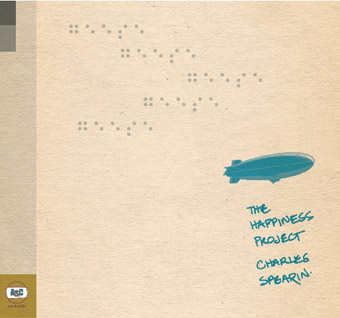
My friend, Charles Spearin, has released an innovative CD he calls “The Happiness Project“. The gist of it is that he began to interview his neighbours and recorded their conversations. Attuned to the tonality of how people expressed themselves he got the idea to replace the voices of his interviewee’s with musical instruments which mimicked each person’s voice pattern. The result is a unique (and very approachable) experiment which weaves voice, instrumentation, and environmental background sounds (birds, etc..). You may know Charles’ other projects, namely Broken Social Scene or Do Make Say Think. If you’re interested, please check out the site for “The Happiness Project” and see what he’s up to.

Share