
The Hammer (pt. 1)

When I rented a car and went to Brantford/Onondaga to do some reminiscing and photo-taking, I knew that Hamilton was also, ultimately, on my to-do list.
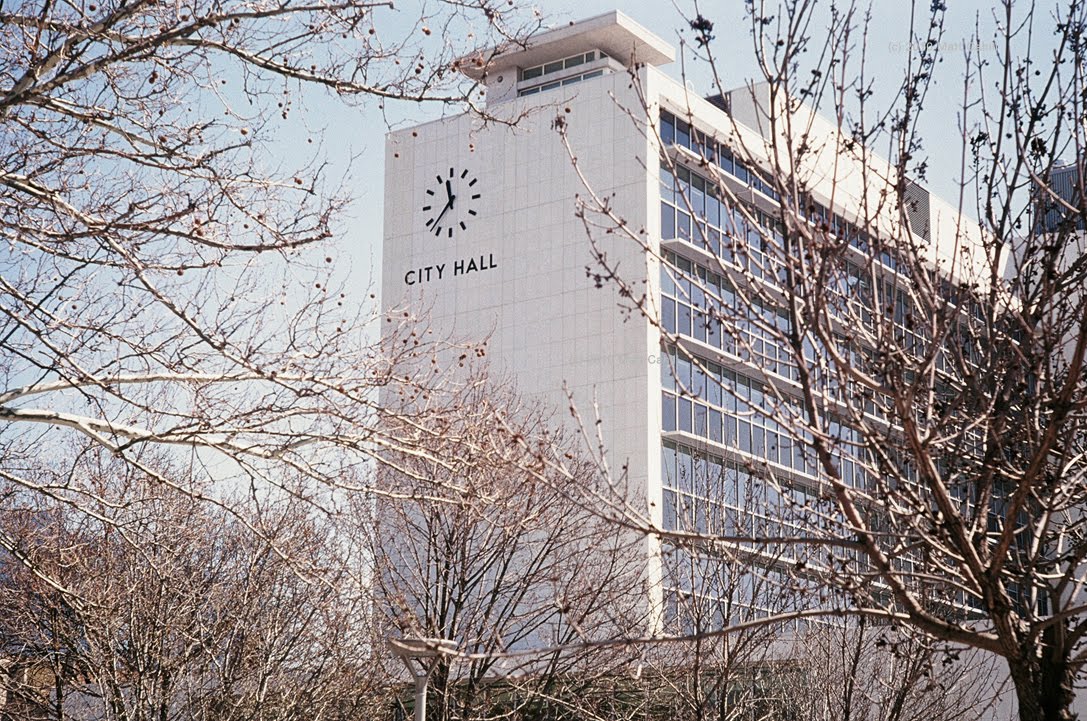
The aim of these trips is not preconceived. This makes it doubly hard to explain to others (friends, strangers, and loved ones) what exactly the hell I’m planning to do. “Taking pictures and stuff.” I’ll say – that’s certainly no lie, but of course there’s more to it. The thing about Zen is this: the second you begin to describe it, it disappears. And so – Art & Zen being the same – there’s always a scaffolding I build around my explanation for these trips. It’s the same scaffolding I use when I go out writing, or to take photos locally: a vague (yet not untrue) reason which allows me to unspoil the inspiration (which itself needs to be vague) while preventing others from thinking I’ve lost my mind. I’m not uncomplicated.
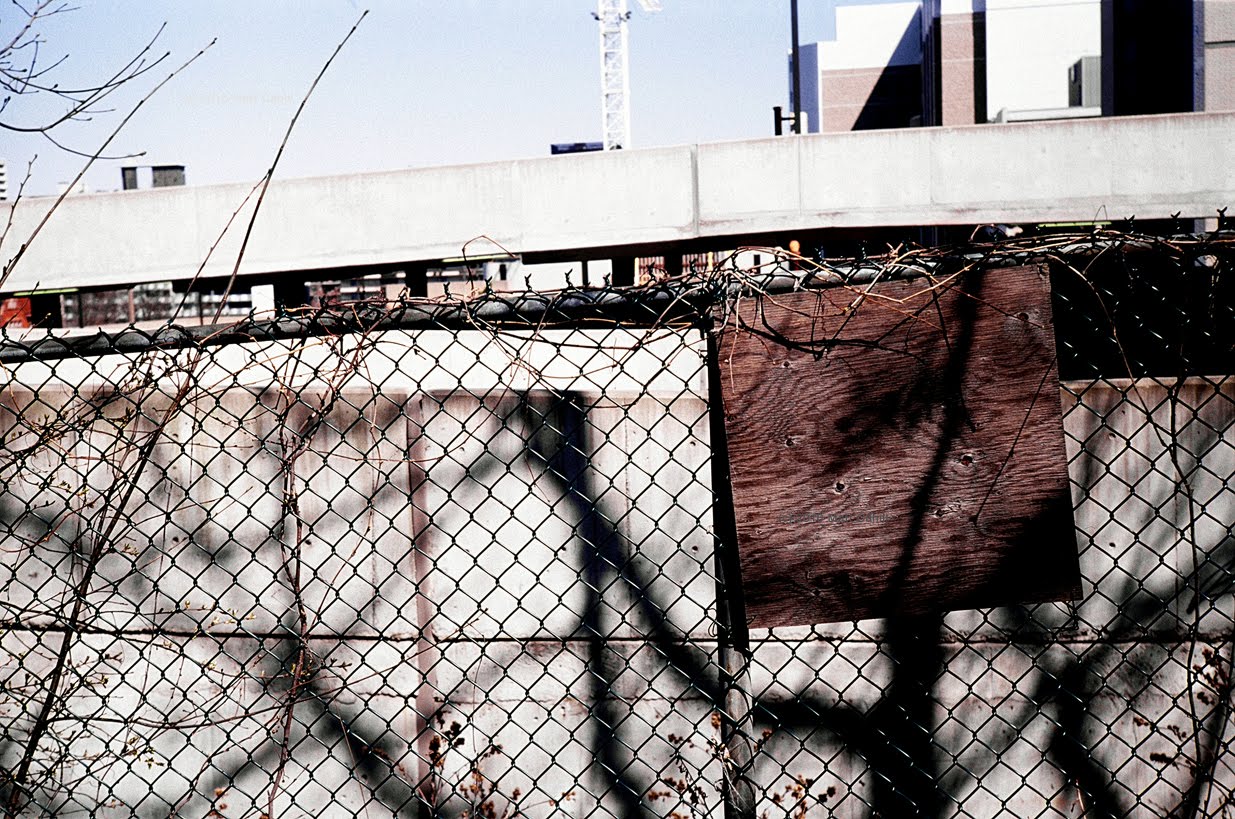
Hamilton, being a place of the past for me, exists in patches of haze – this isn’t to say I did a lot of drinking or drugs when it was a destination, and yet it seems that way: murky. Of course, a good chunk of that time is best forgotten now. The downtown seems more hollowed-out than it did before, with the exception of Gore Park which to this day reminds me what a good idea it is to have spacious downtown promenades.
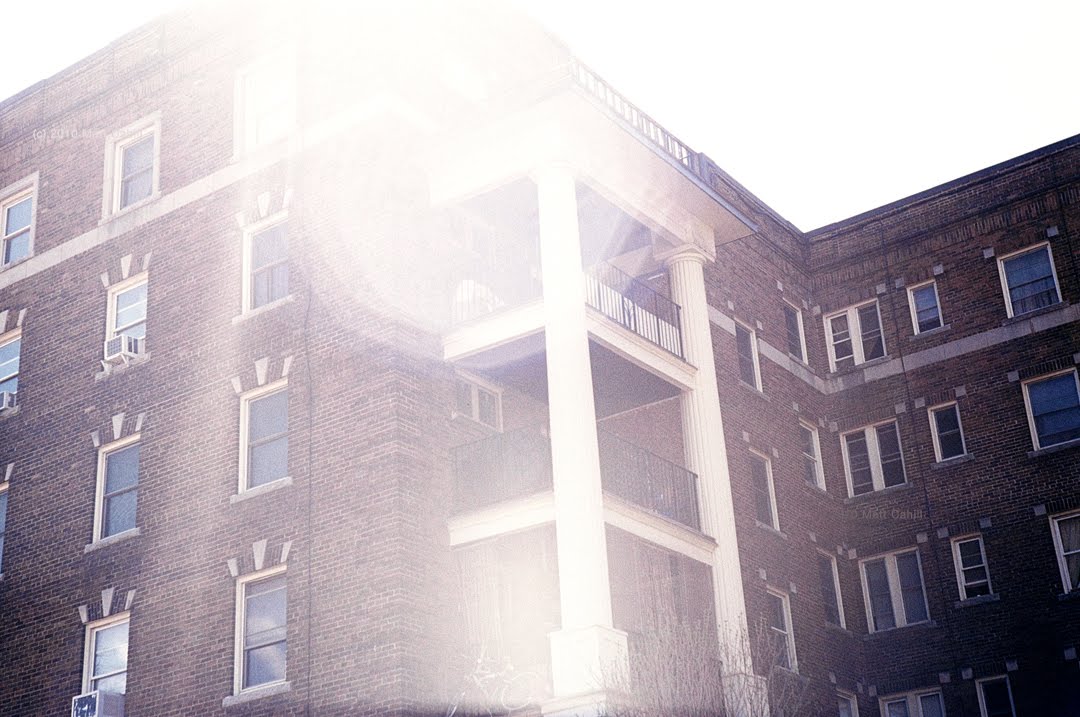
It was a precursory destination. First, with an ill-fated relationship which spawned a series of bad decisions which I owe to naivety. I am not alone in stating that I owe many mistakes in my 20s to naivety. It all culminated in a brief tenancy at an old apartment building north of St. Joseph’s hospital. In so many ways, it was one of the more excruciating periods in my life – I think the haze I mentioned previously is partially there to protect me from looking too closely at things like this.
The second identity Hamilton had for me happened a few years later when, staying with relatives in Burlington while I studied at college, it became a “big city” to escape to. Toronto was bigger, of course, but it was too far to drive to just to have kicks. Hamilton was perfect and in the early 90s had a great nighttime scene in and around Hess Village. My hang-out was the Bauhaus Café, which sadly (though not surprisingly) no longer exists.

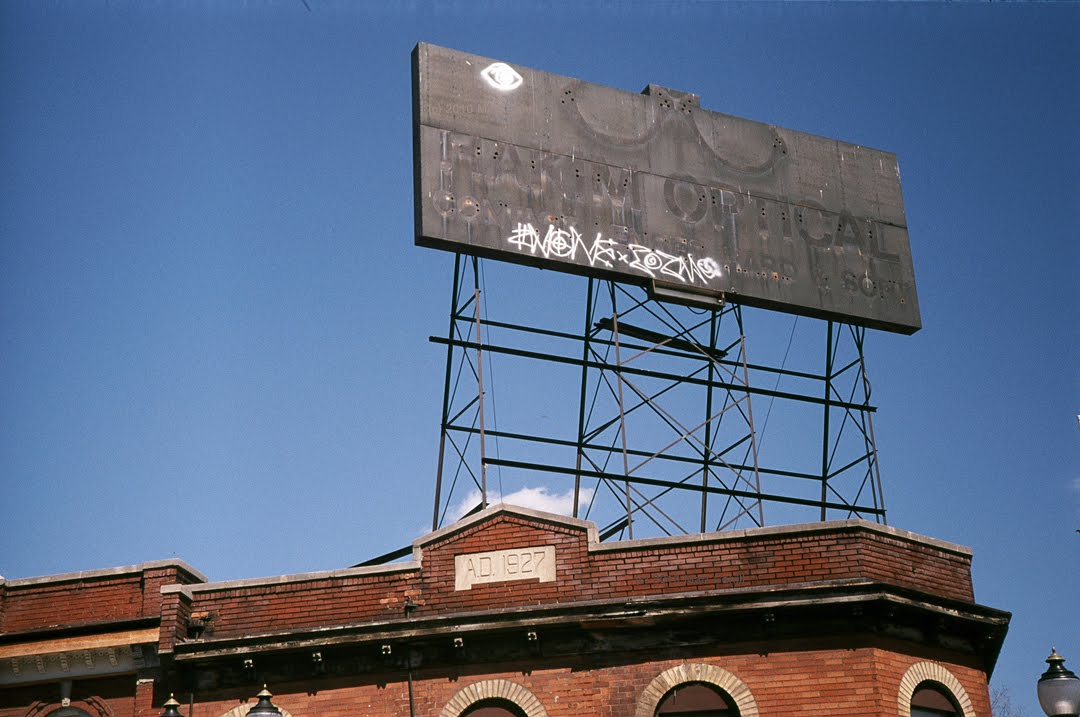
Walking around there now, it seems as if parts of it just gave up. People don’t even want to advertise on billboards. To be fair, I shouldn’t make any judgments without going there again, but on a Friday night – I’m afraid however that these judgments will only skew worse if I do.

Perhaps I have a better understanding of the haze now: it’s there to protect my feelings, it’s there to protect the city from the cold light of an unsympathetic audience.

Share

Honesty, After Dark

A continuous problem I have throughout the social media spectrum, the main culprits being Facebook and Twitter, is that – once you get to the point where you have your sister’s husband as your “friend”, once the guy you barely talked to in high-school is “following” you – you are no longer able to be, well, honest anymore. You cannot post as a status update “Gary is an asshole” without, ultimately, answering to Gary (or his pot-smoking live-in partner, or your co-workers who are largely idiots). You can’t even be vague: “Some guy I know is being an asshole.”. People will know who you’re talking about – context leaves clues people can find. Gary will get mad and want answers.

Oh, you can be honest, alright. You can lay it on the table all you want, but with the inevitable consequence of offending people and getting in trouble for it. In other words, there’s nowhere to hide online. This is why I wish there were Bizarro social media sites like, say, Facebook After Dark and Undercover Twitter. Places where you can say the things you really want to say about the people you’re “friends” with, the people you “follow”, without fear of recrimination. I think we would all be happier as a result.

You reading this, Gary?

(P.S. There is no “Gary”, in case anyone is wondering. I don’t really have co-workers either) – ed

Share

I’ll Show You Stupid

Possibly the worst tactical mistake you can make, politically, is to make fun of an opponent’s lack of intelligence. I say this because not only is there an influx of politically active people on the world stage who fall under the category of “lacking intelligence”, but there is an absence of memory about how publicly scorning such people only empowers them (and, most importantly, voters).

It’s hard. When someone says something completely false – and stupid – the well-educated person’s knee-jerk instinct is to say “You’re an idiot”. Fair enough. But, it’s the taunting that backfires. For example, look at Sarah Palin. I think she represents a necessary evil in American politics: a self-elected Voice of The People who campaigns on the rather wispy argument that the US is run by a bunch of elitists who don’t understand “real Americans”. It’s all a bunch of crap (by elite, do you mean they have an education? don’t you want the people running your country to have an education? to have seen something beyond the borders of your own country for sake of perspective? who the hell are ‘real Americans’? does this imply ‘false Americans’?), but it serves its purpose. And what do her critics – who, to be fair, constitute most of the people on the Earth – do? They make fun of her.

She’s an idiot. A moron.

The problem is, she’s a moron who appeals to a growing number of disenfranchised people who are looking for a proud, politically and morally uncomplicated banner to wave proudly over their heads. And yes, we can argue about why this is and who the supporters are, but – not to say that history is a 1:1 reflection of the future, because it’s not – history has shown that history doesn’t give a shit about those questions. Reflection happens in the future – that is, after we politely chortle to ourselves at all the nonsense of Palin, her “Tea Party”, and her scads of uncivilized minions. That is, after they take the next election.

The elitist/commoner non-argument (it’s a ploy, really) is as old as politics itself. We’ve had something very similar (and thankfully, tamer) happen in Canada. Our current government is a coalition of reformer factions who merged in the late 90s/early 00s to take over the Canadian Progressive Conservative Party (this would be the same as if the current “Tea Party” took over the Republican Party). They removed the word Progressive from the name and lead the country as a minority government. They too campaigned (and still do, whilst in power no less) as the party of the People, as an alternative to whomever stands against their policies (aka “the elites”). It’s old hat.

Before they came into power, they – as the Alliance Party – tried very hard to unseat the ruling Liberal government (tangent: can you imagine if the US had a party called the Liberal Party?). Their leader was a man named Stockwell Day, who rode onto the scene (quite literally) on a Sea Doo. He was all charisma and commonality. But as time wore on, people found that his reformist ideas weren’t very deep and a lot of the people in his party were either yahoos or – elitists? – began distancing themselves away from him. The chrome on his veneer began to chip away and the man became a running gag; the Prime Minister of the day, Jean Chretien, joked openly that he preferred having Day in opposition (as to suggest his chances were that much better to win elections against the Alliance). Long story short, all it took was a few years, a “unite the right” movement, and a new leader who could streamline (that is, squelch) internal strife and you had a winner. That is to say, the toppling of a government.

I suppose what I’m saying is this: making fun of people like Sarah Palin because she doesn’t come across as polished, or sophisticated, or well-educated is ineffective. All you manage to do is inflame the passions of people – many of whom may have been too lethargic or apathetic to vote in the first place – so that they start creating local campaign offices. There is nothing like being intellectually offended to raise someone’s ire – anyone’s, no matter where or how they were raised. Raise the ire, that is, so as to make them active agents on behalf of those scorned by the “elites”. Agents of “change”.

George W. Bush was publicly derided by intellectuals and non-intellectuals alike in almost every conceivable medium and venue, yet he served two four-year terms as President of the US. If you want to take down the likes of Palin, take her down as you would take down Reagan or Thatcher – that is, as an opponent worthy of debate, worthy of your concern. To do less would be to knot your own noose.

Share

Our Home and Masochistic Land

Historically, Canada has never even been close to placing first in the medal-count of the Winter Olympics. We are, after all, an exceptionally large country with an inversely proportionate population: I’d be stretching the truth if I said we had 35 million people here.

So, when I read last week that the Canadian Olympic Committee had boasted that (no this time) we were going to take first place in Vancouver a small part of me projectile-vomited across the room. It was upsetting because this ridiculous aim (summed up by the mantra Own The Podium) is something only bureaucrats can cook-up.

News to the COC: it’s not like our athletes haven’t tried their damnedest in the past. It’s not like they didn’t “get” the whole gold thing until now. They’ve never wanted to do anything but put in their best, but the problem – population aside – is typically Canadian: a miserable lack of funding, organization, and foresight. Only in Canada could we create an organization like the COC, with their shallow-sounding boardroom boasts which read more like something from a corporate motivational lecture (“What Colour Is Our Olympic Athlete’s Parachute? GOLD!”).

It adds insult to injury because there simply is no chance in hell that we are going to top the medal count, this Olympics or any to come. I’m saying it aloud: there is no…well, you get the idea. Heck, I’d be happy if we top Russia. The facts don’t lie: despite our northernness, our wintry and sporting dispositions, we simply don’t have the population to consistently support a proportionately competitive Olympic powerhouse, especially when up against the U.S. which has 10 more people to every one of ours! In retrospect, we should all be getting mad-drunk with delight! We’re currently fifth in the freaking world, in spite of our pathetic sports infrastructure, despite our catch-us-while-you-can stagnant population growth, in spite of corporatist “iceholes” (if I may quoth Colbert) in the COC putting a bragging chip on our shoulder that we didn’t need in the first place.

There should be a banner flying at the top of Whistler, just underneath the Canadian flag, with the phrase: “We’re Actually Doing Pretty Damn Good”.

Seriously.

Share

The Sky is Falling (Very Slowly), or, Will The Real Science Please Stand Up

The problem with having a belief in something which happens to be provocative (and by provocative, I mean something which is not embraced by the whole and which may be a bit thorny for some) is that, like in most aspects of life, all it takes is a few zealots to make you look like a fool by ideological proximity.

As I pointed out many moons ago (December of 2006!) when it comes to climate change (as opposed to the slightly misleading term global warming), outside of blind ignorance our greatest liability are people who jab an accusatory finger at every natural disaster and scream “You see! It’s global warming! Climate change caused this! If we don’t do something NOW we are doomed as a species!”. For me, it started with Hurricane Katrina, when people (a fantastic percentage of whom had no scientific accreditation) began to suggest that it simply wasn’t an old-school “act of nature”, but rather something to be blamed upon worldwide environmental collapse (as if New Orleans didn’t have enough problems to contend with). It fed into a grand conspiracy theory which gave certain people a quixotic reason to exist: that mankind was the chief culprit all along, and that it was only a question of years to fix it. Cue epilogue of Planet Of The Apes.

On the other (self-evident to the point where I wonder whether it’s worth mentioning) end of the spectrum are the usual assortment of deep-pocketed corporate “carbon monoxide is good for you” state polluters, and knee-jerk libertarian radio hosts who feel that idling their cars is akin to patriotism (and, as an aside, the whole libertarian-patriot thing seems like an oxymoron, doesn’t it?).

The thing is this, panic aside: I do believe in climate change. All that shit turning to water north of us (that would be the Arctic ice) is a sign. Much less lachrymose is all that science, provided by all those scientists, which pretty much confirms that, yes, climate change is real, and that, yes, human industry is a variable in its occurrence. The issue of how the future is looking as a result of climate change is less clear. The problem is this: remember those largely non-scientific people blaming Hurricane Katrina on climate change? The ones telling us that if we don’t do something NOW then the world’s a goner? They got a lot of attention; the cameras kept rolling. This was probably just a knee-jerk reaction of mass media which was (and is) delighted to scare the public any chance they get (it keeps ratings up). Well guess what: some scientists found that if they used the same sort of seismic analogies and kept the ticking clock of doom just a few minutes away, not only would they get attention, but they could get funding.

Inevitably, it had to end – the speculative bubble that is. You can only say that we have five more years to change the world for five years until people start asking why societies haven’t collapsed like the finale of an Irwin Allen movie. And then someone or some group hacked into the records of some climate scientists and found that some of them were acting like jerks, that some of them didn’t want to play nice with their facts (unlike all those journalists and columnists we read). To me, this was heart-breaking, because it allowed both honest sceptics and partisan political hacks alike to pull a j’accuse and call it Climategate (seriously, I look forward to a world without the silly and dated gate suffix) and call the science itself into question, as opposed to the questionable actions of a few. Some have hinted that the bad publicity fall-out could set climate science back by a decade if increased public persecution gets worse. However, I feel this is as likely as, well, the world ending in five years.

The good news is that the world hasn’t ended; neither our world, nor the world of science. If anything, reading today’s op-ed by Margaret Wente in the G&M, even people who previously took every opportunity to deny the existence of climate change are now looking at things plainly: no pro trumped-up worries about imminent global catastrophe, and no con lefty/green/hippy bullshit stereotypes. If anything, perhaps bringing those few scientists into the spotlight has, post whatever-gate, calmed everyone down a notch. Perhaps enough so that we will be able to parse our language into something which does not use fear as a means of persuasion. Perhaps so that we won’t dilute the meaning of words like green and sustainable to homeopathic degrees.

I believe (or at least I hope) we can find an entry-point where we can use science and research rather than propaganda and fear to motivate ourselves to improve our prospects (that is, both human prospects and business prospects, two things which have not always shared mutually fulfilling goals). It is heartening to see that there may be an X-Prize for fuel/energy production, similar to what was done for sub-orbital exploration. I’d also like it if we could reboot the message of environmentalism with a good ‘ol back-to-basics mantra of: use less (as in packaging, unnecessary products, natural resources). I will be happy, even if it is all a hopelessly lost cause, that we go down working on something together as opposed to a Purgatory of scoring political points against ourselves.

Share

For *’s Sake

It’s been one of those battle-cries of mine the last while. Everything in the world, culturally-speaking (and I don’t necessarily mean high culture) seems to be evaporating into mindless bullshit.

The AV Club – a site I admittedly have a love/hate relationship with already – just posted an interview with actor Paul Giamatti. In the opening summary, the interviewer describes the plot of his latest film, which reads like a counterscript of 1999’s Being John Malkovich and yet there is no mention of this parallel anywhere in the article, something even Entertainment Tonight would do. The interviewer talks about this upcoming film with Giamatti as if it and his role – the John Malkovich role, if it were Being John Malkovich – were just soulless objects to be discussed out of necessity. In other words, it’s just like any other media-junket interview, like something you would read in InStyle or Chatelaine. Not that those examples are b-a-d, but when you pride yourself as better, especially savvy, tongue-in-cheek better, you shouldn’t even be in the same postal code as InStyle or Chatelaine if you want to retain your reputation.

The Motley Fool – again, a site previously known for being savvy, even though they deal with the stock market – now reads like Ain’t It Cool News, complete with arguments which, under rational analysis, seem completely idiotic and antithetical to what one would assume is their mission statement (ie. being different than the rest of those brain-dead-and-short-sighted Money sites).

Oh, and CNN. Not that they’ve ever been more relevant than a Reuters news ticker, but they’ve gone from mediocre to stupid by allowing one of their show hosts, Lou Dobbs, to continuously question the origin of Barack Obama’s citizenship, a paranoid suspicion virulent in the libertarian/right-wing fringe of the U.S. that has been repeatedly disproved (read: he doesn’t want Johnny Foreigner running and ruining the most-possibly-greatest-country-ever-in-the-world).

Now, one of the arguments I can imagine hearing is: well, Matt, in a 24-hour newsday (whether on TV or the Internet) when people expect constant information there inevitably has to be weaker material. To which I say: I understand, but I’d settle for less information over less hours (if need be), if it means the information will be consistent and better. After all, you are what you eat, and in this day and age we feed on media in an astonishingly unconscious and voracious manner.

Share

We All Scream For Lies Green

If you’ve picked up a newspaper or magazine in the last three or four days, you will have inevitably noticed (if not on the front page then prominently featured inside) the word “green” in the title of the edition/main article/theme of entire issue. As I sit typing this, there is a magazine on the table in front of me (one of those supplemental magazines that the Globe and Mail throws in for free every week or so…you know, the type of magazine – either fashion-oriented, vacation-oriented, guys-who-like-cars-oriented – that you’d be hard pressed to have ever remembered seeing in a retail store, even one which boasts a million magazines). It’s called Green Living and the front page trumpets “CANADA’S GREENEST CITIES OF TOMORROW” (with an asterisk at the bottom ” * Is yours on the list?”). The Sunday New York Times Magazine was dedicated to this colour also. As were the entrails of most newspapers.

You see, this Wednesday (April 22, 2009) is Earth Day. Get it? Earth Day? Green? Ohhhhh!, I’m sure you’re exclaiming, perhaps even tapping your noggin for foolishly neglecting to remember. Not that it’s a holiday or anything. No, Earth Day is not a holiday. Not even the banks get it off (though I would’ve expected them to sneakily insert an Earth Day Eve into their schedules). It is, however, that time of year – like Poetry Month – when, for 5 minutes, we try to give a shit about something we do a much better job of conceptualizing when it’s not being shoved down our throats by people who hold diplomas in Event Management.

Expect between now (Monday) and then (Wednesday) to be inundated with the environment, Mother Earth, drowning polar bears and the like. This is not to say that I’m one of those Ayn Rand-ian right-wing troglodytes who thinks climate change is a socialist scheme. That is not my point (and I’m happy it’s not my point today because it’s extremely convoluted and I did poorly in math). My point is that, in the same breath that these newspapers and magazines (and websites!) roll-out the green, there are hundreds of articles about how to “buy” green. Getting back to Green Living, the sad little magazine in front of me, some other articles listed on the front are “WHERE TO PUT YOUR ECO DOLLARS” and “20 Budget Smart Enviro-Tips” [sic?!]. Even in the otherwise lefty (rather Jeckyll/Hyde lefty, if you ask me) Toronto weekly, NOW Magazine, the emphasis is almost as enthusiastically consumerist as it is on scaring the shit out of the reader about our imminent ecopocalypsetm.

In other words, legitimate environmental concerns aside, with every Earth Day I feel as if we are facing a new Y2K (i.e. a semi-manufactured crisis that wasn’t entirely invented to make money, yet, hey, why should we stop ourselves from making a buck, hell, wouldn’t you, let’s see how long this lasts). Of course, there are substantial differences between Y2K and Earth Day: the latter is borne from a need to undo and/or mitigate the effects of society’s footprint on the earth, the former was borne from a need to undo and/or mitigate the effects of a bit of coding corner-cutting. There are (and were) legitimate concerns in either scenario. There were (and are) also people who would do anything to cash-in on a fear-based trend which increasingly loses its reason due to the insatiable North American need – even in our present economic situation – to commodify e-v-e-r-y-t-h-i-n-g. Basically: isn’t getting people to buy a lot of stuff, green or not, counter-intuitive to the philosophy of reduce, re-use, and recycle? Furthermore – and this is me – I worry when a word (outside of religion) gets so stretched, mistook, mythologized, and appropriated that its meaning eventually loses all efficacy (see: sustainability).

I do not argue with the want or wish to use the word green, or to associate it with legitimate environmental concerns (because they are legion). I just wish it – and by virtue, Earth Day – did not seem like a St. Patrick’s Day Parade where everyone – Irish or not – wraps themselves in the colour without really caring to know why, so long as there is the remote promise of an unrelated happiness (this goes for Valentine’s as well, sad to say). The thing is – and I hope my father isn’t reading this – we as a society can afford to misinterpret (or forget) what St. Patrick’s Day means, but allowing our concerns over the environment to be cynically co-opted by purely commercial interests – whose concern for the environment is more or less a marketing strategy – is more disconcerting to this writer.

I’ll take the Earth. You keep the green.

[P.S. Just as I was about to upload this, I received an email from a local limo company who fancies I am interested in their services. The subject: “Join Us at the Green Living Show”. A limo company!]

Share

Happy New Year (he says)

I tried making a list of notable things about 2008, but it just felt like a Grade 8 writing assignment (you know, the sort that teachers give out so that they can finish their homework while the students are placated). In short, it’s not me nor is it my style to dwell (publicly at least) on events which transpired over an arbitrary period of time. When you do this, you sort of miss the greater (dare I use the word “holistic”) scheme of things.

Beauty and Tragedy happen on their own schedule; they do not pay attention to calenders. A handful of countries are currently pummelling the shit out of each other – fa la-la-la-laaa, la la la laaa – without regard for newspaper editors’ deadlines for concise and snappy end-of-the-year roundups. It continues into 2009, as do you and I.

Uncertainty is a necessary cloud upon us; we choose to see it, but often – as we get caught up in living our lives – we are oblivious to it. We try to contain our lives and achievements in temporal measuring cups because…well, time matters to us. Days matter, as do months. And so, being the end of another year, we feel we have earned a spot of detached reflection.

“So there!” we say to life during this artificial pause.

Life does not respond, and we are reminded that, when we reflect we reflect alone. Given more reflection (and ideally some solace, perhaps with a jazz radio station playing in the background and some dark roasted coffee), we realize the awesome power of reflection.

Use it well. And may the new year (and all of the ones to come) be enlightening and fulfilling for you and those dear to you.

Share

Book Review: Unended Quest, by Karl Popper

“Pfuel was one of those theorists who so love their theory that they forget the purpose of the theory – its application in practice; in his love for theory, he hated everything practical and did not want to know about it. He was even glad of failure, because failure, proceeding from departures from theory in practice, only proved to him the correctness of his theory.”

– Leo Tolstoy, War & Peace, Vol. III, Pt. 1, Chpt. X


My self-guided study in philosophy brought me to Karl Popper this past summer. Yes, another 20th century Austrian (seeing as the last philosopher’s book I reviewed was Wittgenstein’s Tractatus Logico Philosophicus). Another logician as well, but what’s compelling about Popper is that he did not limit himself to one particular field of study (in his case, science). He was just as passionate and knowledgeable about social dynamics, art, and politics.

Popper approached the long-held observational scientific method with distrust; rather than prove a theory to be correct with empirical evidence, he took inspiration from Einstein’s openness to critique (when he released his theories on relativity) and insisted that falsification was a better method (ie. allowing one’s theory to be refuted by opening it up to the community-at-large for inspection from more angles). This, he argued, protected the world from the success of pseudoscientific “pet theories”. His inspiration for this came from his disenchantment with social and academic institutions of the day which rigidly held the works of Marx and Freud in high esteem.

Allow me to stop here and say the following: there is no way in hell I can sufficiently (to my own or anyone else’s satisfaction) and clearly lay-out the man’s theories, justifications, and *how* he came about his all in what I always hope and aim to be a succinct blog entry. It has taken me a day to revise the above paragraph and I’m still not particularly happy with it.

That said, I found Unended Quest to be a fascinating portrait of a great mind who refuses to stop questioning. His way of thinking about the underpinnings of logic and about systemic, ingrained assumptions in society is nothing short of radical. Under Popper’s means of demarcation such seemingly scientific pursuits as economics, climatology, and even dietetics are left looking like…well, not quackery, but certainly not anything approaching science.

So, yes, feet get stomped on, lines get drawn…and this brings me to what makes a great philosophical treatise: it forces you, whether you like it or not, to recalibrate your assumptions about society. Even if you have fundamental disagreements, you are forced to work hard to justify them. In other words, it’s the perfect way to give your brain a shake (perhaps even your foundations of understanding).

Unended Quest is full of ideas and strong opinions, with the socio-political history of the 20th century as its backdrop. This is a man who lived through two World Wars, whose early experiences as a social worker with neglected children made him fundamentally question the learning process, and who ended up being on a first-name basis with some of the greatest minds of the then-burdgeoning realm of quantum physics (Einstein, Schrödinger, Bohr).

That’s it. That’s all I can write without this becoming a term paper. All I can add to this is that I aim to re-read this book on a yearly basis, which is perhaps the best complement I can pay to an author.

Unended Quest (ISBN: 978-0-415-28590-2), by Karl Popper is available at an independent bookstore near you, or online at any number of vendors.

Share