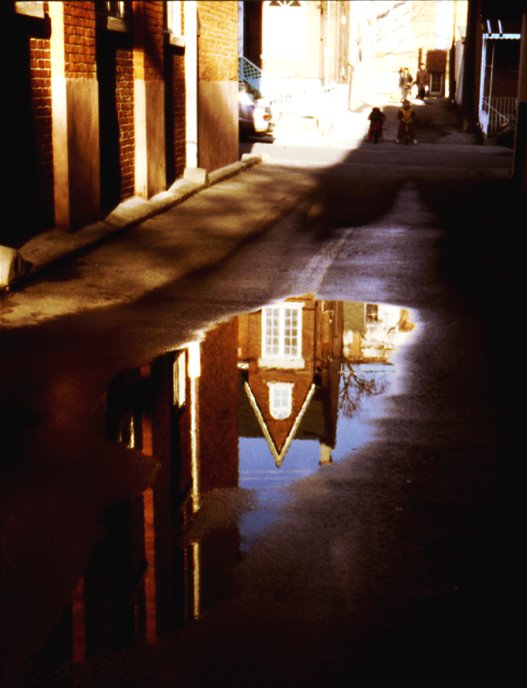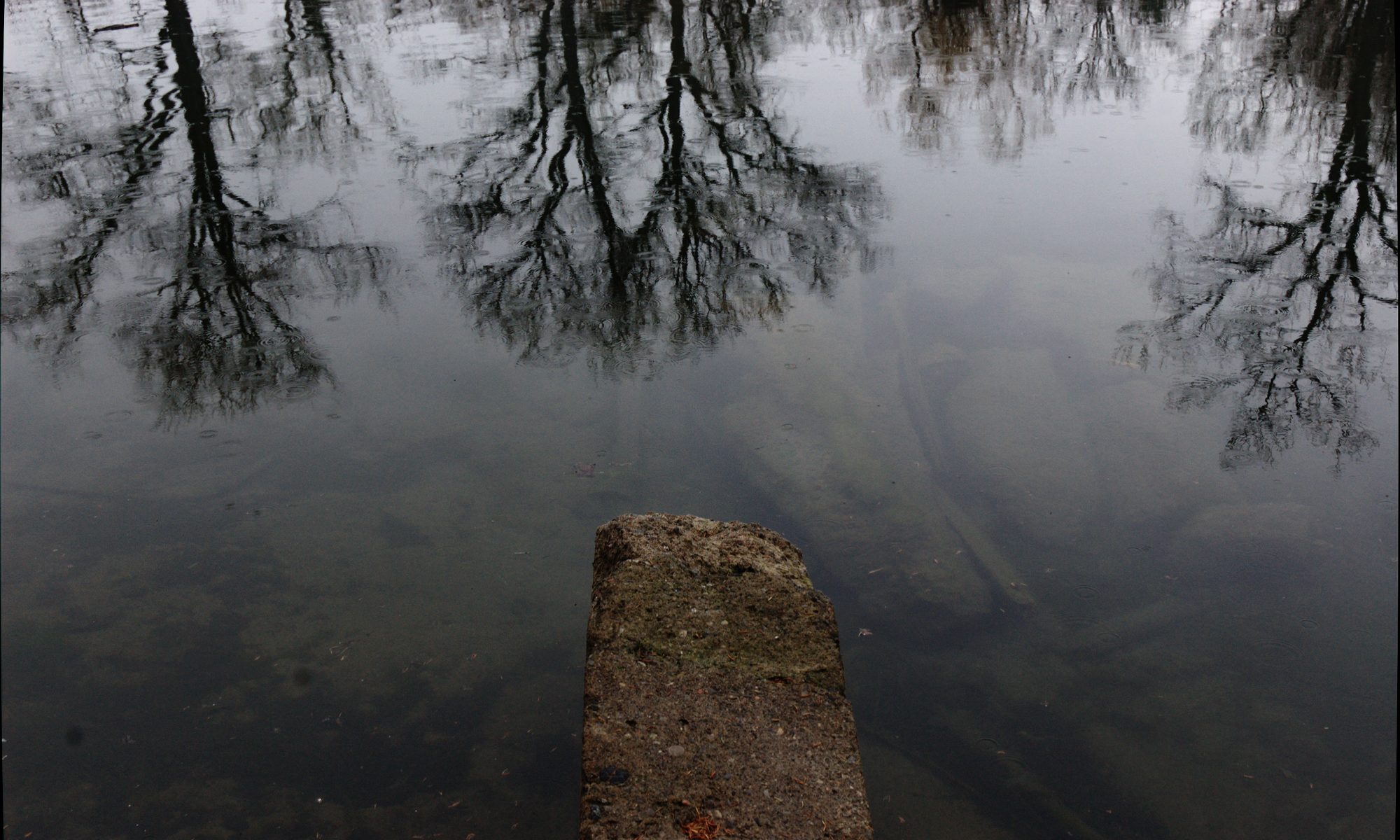


Photo: Shaw Street #5

Photo: Bellwoods Place #15

Photo: Bellwoods Place #13

Photo: M5V Wall

Photo: #34

Cinema in Toronto: Three Rep Theatres to Close
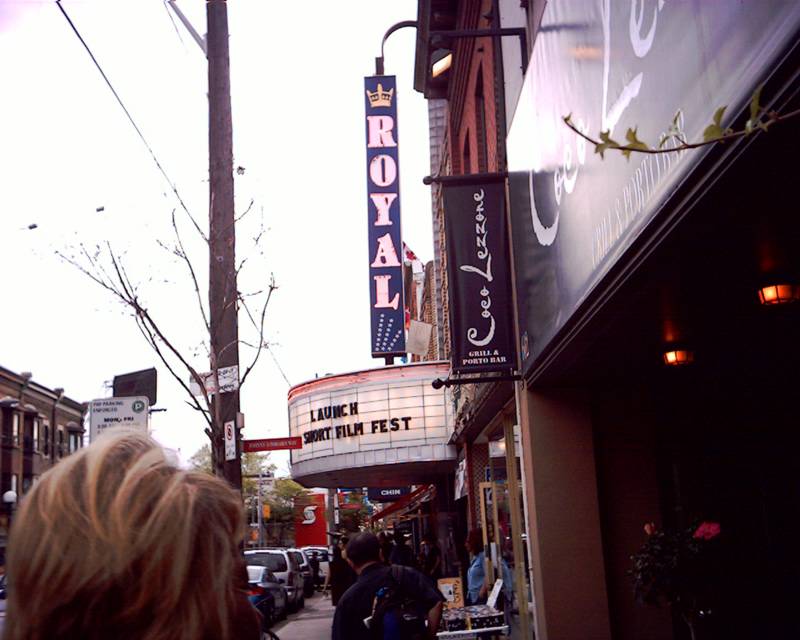
I was shocked to receive word that three of the most venerable rep cinemas in Toronto are about to close their doors at the end of June: The Royal (at College & Clinton Sts.), The Revue (on Roncesvalles), and The Kingsway (Bloor W.).
Excerpt from the Toronto Star:
The theatres — part of the Festival Cinemas group — were owned by cinema entrepreneur Peter McQuillan, who died in October 2004.
Last night, his son Mark told the Star that he and his two siblings made the decision to close the theatres reluctantly.
“The heart and soul was my father. Since (his death), we have been trying our best to run (the business).
“But we don’t have the time, the energy and the financial wherewithal to keep it going,” said McQuillan, noting difficult market conditions contributed to their decision.
“I feel bad if they are closing. We might get a few more customers but I don’t know what it says for the industry,” said Carmelo Bordonaro, owner of the Bloor Cinema.
“It’s a labour of love, these cinemas, believe me — a lot of hard work,” Bordonaro said. [read more]
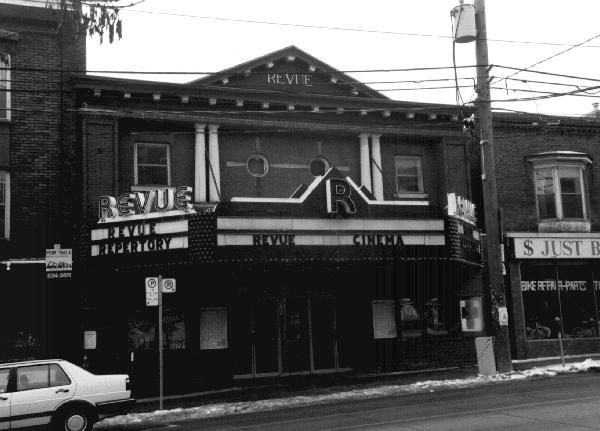
It’s not hard to imagine how daunting a task it would be to run a rep cinema, even in a city as film/film-festival crazy as Toronto.
Film projectors in theatres are going to be cultural fossils within the next 5 years as the industry moves towards digital distribution. Film itself will probably be relegated to a shooting format only (alongside HD).
Yet…aside from being able to cheaply watch the latest films after their official theatrical run (they gotta make money after all), rep theatres are the ones that are able to show us – on film – works of the great filmmakers that came before us; the ones that painted our current cinematic archetypes. Soon, I realise, if you want to see anything by Kurosawa, Bergman, Tarkovsky, or Welles – it will have to be on DVD.
Of course, there are still a few rep cinemas left: The Bloor, The Paradise, The Fox…however, who knows how many years they have left? Pretty soon the Cinematheque will be the only one; a museum for film.
May I suggest that, if you live in downtown Toronto, you make a trek to one of these fleeting oases before they cease operations. Buy cheap popcorn, put up with dilapidated seats and sticky floors, and enjoy films as they were meant (or hoped) to be seen.
Photo: #31

RIP: Jane Jacobs
“The point of cities is multiplicity of choice.”
– Jane Jacobs, 1916-2006
From CBC News:
Toronto-based urban critic and author Jane Jacobs died Tuesday morning.
- RELATED: Remembering Jane Jacobs
 |
|
Jane Jacobs, shown in 2004, influenced a generation of urban planners with her critiques about North American urban renewal policies. (Adrian Wyld/CP)
|
Jacobs, author of The Death and Life of Great American Cities, and most recently, Dark Age Ahead, was 89.
Her powerful critiques about the urban renewal policies of North American cities have influenced thinking about urban planning for a generation.
Born May 4, 1916, in Scranton, Penn., Jacobs had made her home in Canada since the late 1960s.
Educated at Columbia University, she met her husband, architect Robert Jacobs, at the Office of War Information in New York, where she began writing during the war.
Known for protesting sprawl
The strong themes of her writing and activism included opposition to expressways, including the Spadina Expressway in Toronto, and the support of neighbourhoods. Jacobs has been arrested twice while protesting urban plans she believed to be destructive.
She also explored these ideas in books such as The Economy of Cities, Cities and the Wealth of Nations and Systems of Survival: A Dialogue on the Moral Foundations of Commerce and Politics.
The Death and Life of Great American Cities, published in 1961, questioned the sprawling suburbs that characterized urban planning, saying they were killing inner cities and discouraging the economic vitality that springs organically from neighbourhoods.
Inspired ‘Ideas That Matter’ gathering
Jacobs settled in Toronto in 1969. There she supported developments such as the St. Lawrence neighbourhood, an inner-city development for people of all income levels.
In 1997, the City of Toronto sponsored a conference entitled Jane Jacobs: Ideas That Matter, which led to a book of the same name.
Her most recent book, Dark Age Ahead is “a grave warning to a society losing its memory,” jurists said in awarding her the $15,000 Shaughnessy Cohen Prize for Political Writing in 2005.
“In spare, exquisite prose, Jane Jacobs alerts us to the dangers facing the family, higher education, science and technology, the professions, and fiscal accountability. Drawing on history, geography, and anthropology, this book reflects a lifetime of study and observation, offering us lessons to avoid decline,” the jury said.
Dark Age Ahead finds comparisons between our current North American culture and European culture before the fall of the Roman Empire and the subsequent Dark Ages.
Interviewed by Canadian Press when she won the Shaughnessy Cohen Prize, Jacobs said, “People really know themselves that the dark age is ahead. They’re worried, and they haven’t articulated it, but they feel it.”
“I think it’s late but we don’t need to go down the drain,” she said. “But we will if we aren’t aware. It’s a cautionary book.”