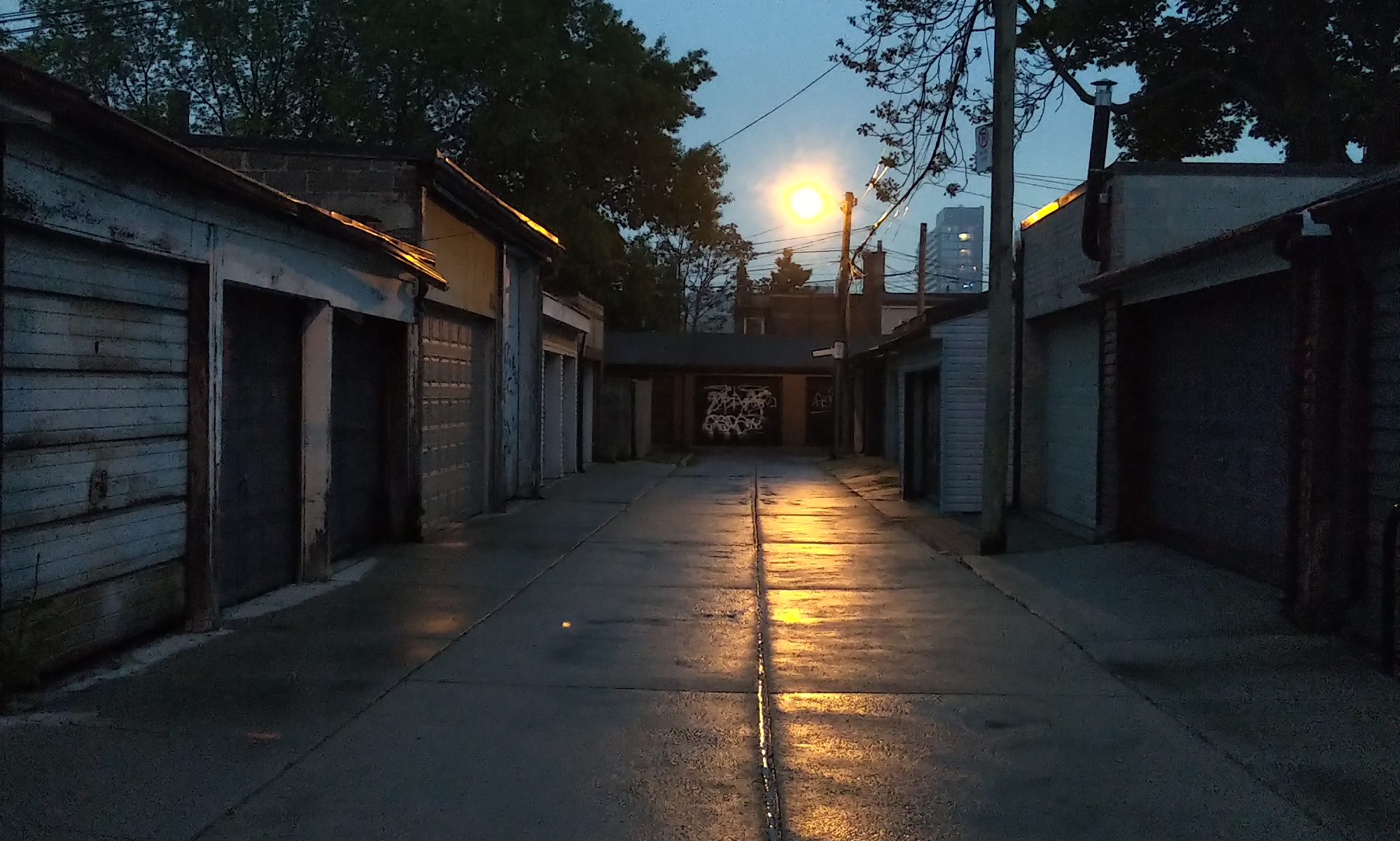
“Trust only movement. Life happens at the level of events, not of words. Trust movement.”
– Alfred Adler (1870-1937), Austrian psychotherapist

Great minds…


We Seek To Remain Unscathed
The more I read about mutuality – the art of affecting and being affected by another, particularly within the context of a therapeutic environment – the more I realize that the online world is a place (or a thing) which appears to function this way, yet in practice is typically abstinent and unilateral.
With the Internet (as much as I hate using that word so generally) we have a vast infrastructure – insert plumbing/transit/Tower of Babel metaphors – whose sole purpose is the nearly instantaneous transmission of information. Yet, the ways and methods that we — its users, managers, and architects — have managed to communicate with each other have not evolved in-step with the technological state-of-the-art.
This is not to say that we cannot experience mutuality via internet communication, but rather a) current technological interfaces do a better job of anonymizing the personalities of its users rather than accentuating them, and b) the interpersonal efficacy of this technology has not progressed past what was available in 1996, since the advent of full-duplex sound cards. Continue reading “We Seek To Remain Unscathed”
TIFF a-hoy!
Looks like the film I worked on earlier this year, Keyhole, will have its world premiere in Toronto this September @ TIFF. Some press here.
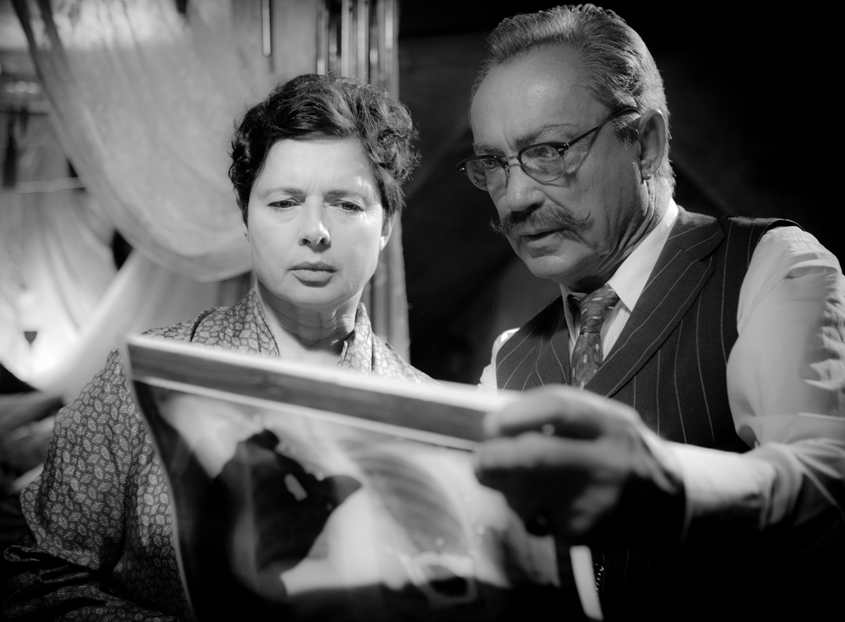
For those new to this site, I have had a parallel journal chronicling the film, called Guy Maddin’s Keyhole: A Post Production Diary, which I wrote in tandem with my work on the project.
Needless to say that I’m very happy to have another film premiering at TIFF, and I hope that it is well-received. Keyhole is a challenging film, even for fans of Guy Maddin’s work, yet I think it’s perhaps his most personal and – in that regard – bravest work to date.
Renovations
In the attempt to import 400+ pages from Blogger to here (via WordPress), there were several (try over 75) pages whose subject-tags were not properly imported. They became auto-assigned to “Uncategorized”. So, I’ve spent time each day re-categorizing them. They were mostly older posts – a lot from when I started in 2006. That was <checks watch> over five years ago.
The difference between blogging and writing fiction is that with a blog you’re not supposed to correct or revise things past a certain freshness date. It’s a journal: you don’t screw with it. The past is ultimately the past, and if you look like a moron in the past then, perhaps, that’s you being a moron in the past. Contrarily, with fiction, there is no straight jacket: when you look at past writings your lithe reflexes unravel a cloth roll of surgeon’s tools, all necessary for cutting and cleaning what you’ve written, regardless of how brilliant or not brilliant your ideas.
Thus with fiction, sensitivity to the whole is greater than the brilliance of the individual turn of phrase. With blogging, respect for The Record supersedes the ego: you must be careful not to disturb The Record.
And so I unearth and renovate quietly. I open the “Uncategorized”, scan them to make sense of how I should properly re-categorize them. Some I want to delete. Some I do delete (two posts: trust me, they were stupid). Others I begrudgingly leave. Renovation inevitably exposes weaknesses: of thought, of argument. It also lays bare ideas and passions you’d put aside in favour of other pursuits, but which you read today with fascination as if someone else had written them. This is the good thing about writing – fiction, poetry, magazine articles, blogging – no matter what your focus is, if you do it long enough you inevitably have something with which to reflect upon.
Hello and Welcome! (again!)
I have two sets of welcomes: one for those who visited Imaginary Magnitude over at Blogger (its former home), and another for those who are new and have never been to either site before.
I’m going to be tweaking the look and feel of imagitude over the next while. Hopefully I don’t break anything. I’ve managed to import all of the Blogger posts – the only question that remains is what happens to the Blogger blog. I shall leave it alone for now.
Please feel free to comment and/or ask questions, or just stare silently from your cold monitors.
All the best,
Matt
Studies + Considerations
I am spending the summer immersing myself in reading all things psycho. I came across a statement which, if you can get past the academic tone, provides a key interpretation of how the relational approach (which is what I’m studying) is divergent from classical psychoanalysis’ emphasis on a one-person psychology.
“The relational-perspectivist approach I am advocating views the patient-analyst relationship as continually being established and reestablished through ongoing mutual influence in which both patient and analyst systematically affect, and are affected by, each other. A communication process is established between patient and analyst in which influence flows in both directions. This implies a “two-person psychology” or a regulatory-systems conceptualization of the analytic process. The terms transference and countertransference too easily lend themselves to a model that implies a one-way influence in which the analyst reacts to the patient. That the influence between patient and analyst is not equal does not mean that it is not mutual; the analytic relationship may be mutual without being symmetrical.”
– Lewis Aron, A Meeting of Minds: Mutuality in Psychoanalysis
The author proceeds to develop this distinction between relational and classical (two-person vs. one-person psychology) as it pertains to intersubjectivity (the mutual awareness of what the other is thinking/feeling in a therapeutic environment and how this field of awareness affects both the patient and analyst). The quote above is a brilliantly distilled proposition which may seem commonsensical on first reading, but with a broader understanding of the history of psychoanalysis I can see how revolutionary a statement this is.
Book Review: Therafields, by Grant Goodbrand
It was with considerable surprise when, browsing the shelves of our favourite used bookstore, Balfour Books, I was handed a book by my wife. “Did you see this?” It was purporting to be about a massive psychoanalytic commune which had its roots in downtown Toronto during the 60s and 70s. I was surprised because I’d never heard of it before – the group was called Therafields. I was immediately struck by the communal angle, the era, the emphasis on psychological investigation – it was like being handed a screenplay by David Cronenberg. The fact that I am studying psychotherapy and its theoretical/historic development made it irresistible.
Subtitled The Rise And Fall of Lea Hindley-Smith’s Psychoanalysis Commune, Grant Goodbrand’s Therafields is just that. From the mid-60s till the early-80s, what was eventually coined Therafields, became one of the largest active communes in North America (significant considering both the era and that it happened with virtually no physical or cultural traces left in this city), owning as many as 35 houses within, and 400 acres of farmland just outside Toronto. At its apex it had over 900 members.
Starting out with a modest practice in the Annex, Welsh émigré Lea Hindley-Smith began by seeing people in her home. Her open embrace of students combined with an uncanny ability to get to the bottom of her clients’ problems (not to mention her real estate acumen) conspired along with the socially progressive ideals of the 60s to develop a remarkable experiment in psychotherapy: a live/work environment which operated also as an ongoing group-process for its members, all under the auspices of Hindley-Smith who became their professor, CEO, and den mother. More houses were bought so that more living spaces could be added to accommodate new members, and new groups were developed. The story of Therafields is an account of how this creative hive eventually became an unmanageable empire. It is also an invaluable reflection of the changes happening at the time, guest-starring those stranded by the revoked promises of Vatican II, the back-to-the-farm movement, and the idea that psychotherapy could be about society rather than the individual.
I am a child of the 70s. Nothing could possibly be less meaningful than that statement. However, culturally speaking, I was surrounded by the 70s. The mid-70s to mid-80s were a formative time in Canadian television. In other words, we saw a lot of ourselves. And what we saw was produced and inflected by those who came of age in the 60s and early 70s (that’s the way it always worked until recently, by the way – the older generation helped the younger generation identify with their own generation). In other words, I can imagine Therafields, while reading about it. Goodbrand has done a good job of contextualizing the era in which his book takes place. It also helps that Goodbrand was a key member of Therafields himself, and as such is gifted with a familiarity which an outside author would struggle to develop. The flip-side to that statement is that an outside author might have had a better chance of keeping the rhythm of the book’s story consistent: there is a habit of temporal back-and-forth which does not make for smooth comprehension at times.
Considering Goodbrand’s credentials, Therafields unfortunately suffers from a detached perspective. He is as qualified as anyone to write about Lea Hindley-Smith and those who were key to the group’s skyward development – like esteemed poet bpNicol, for example – yet it seems only an accumulation of actions, the plotline of a biography, which gives us clues to the hearts beating behind the cast of characters. Goodbrand’s book sometimes reads like an account rather than an experience.
And here we come to a marketing dilemma: I’m not sure who the intended audience is. I am thankfully, luckily, well-suited to read, understand, and enjoy Therafields. Yet… With its insistence on differentiating what Hindley-Smith practiced (Kleinian) from classical psychoanalysis, without necessarily providing a debriefer for the reader on what makes Kleinian psychoanalysis different from it, I cannot imagine the “average reader” walking away knowing what that all should mean. Perhaps that won’t matter if they are keen on digging into a prime slice of Toronto history – complete with addresses, one could conceivably operate a motor-tour of where Therafields took place.
It is, nonetheless, an insightful read and an invaluable chronicle of a peculiar social/cultural phenomenon. Therafields, by Grant Goodbrand (ISBN: 978-1-55022-976-9), is available (evidently) from a used bookstore near you, and also online.
Another One Bites The Dust
ARG! One of my favourite literary blogs is ending its run! I encourage you all to visit Ward Six. I really appreciated their approach: to book reviews, to the art of writing. To art itself.
The reasons they give are sensible, yet I will be selfish and whinge that I am now left with oh so very few relevant, intelligent, knowledgeable literary blogs to follow.
Nonetheless, I wish John and Rhian all the best.
Remembering Michael
It’s the 32nd anniversary of my uncle’s murder. Details here: http://www.amw.com/fugitives/brief.cfm?id=44215.
Sad, numb.
I was in a mood when I wrote this – hard not to be, I suppose. However, I don’t want it to come across as maudlin, so I thought I’d add some context.
I chose this year to make a statement about it, on social media especially (Facebook, Twitter). Why? Because, outside of the initial blog posts I published around the time of the America’s Most Wanted episode, it’s been a source of untapped grief. In making it public, I was unabashedly putting it out there – to friends and acquaintances, and strangers alike – instead of it being this twisted little secret which swims around my head.
The fact is, my uncle’s death has nothing to do with me. I never had the chance to meet him. I am involved in the sense you would be involved if you were researching a stranger from another age, another country, who just happened to be related. And yet his story is woven into mine, distant though our two lives were. I am older than he was when he was shot. I wasn’t even 9 years old back then, and I didn’t learn about it until I was 17. The tragedy was delayed for me: time-released.
In any case, this is my sorrow, shared briefly with you. It is, I should add (in all fairness), a necessary exploitation of a crime, in the faint hope someone will happen across an old Guild D40 guitar, or know what happened to a burglar with a Leica fetish. Faint hope, for sure, but it’s part of the process of grief.