

Niagara Falls
From the Wikipedia entry “Slowly I Turned“:
The routine has two performers pretending to meet for the first time, with one of them becoming highly agitated over the utterance of particular words. Names and cities (such as Niagara Falls) have been used as the trigger, which then send the unbalanced person into a state of mania; the implication is that the words have an unpleasant association in the character’s past. While the other performer merely acts bewildered, the crazed actor relives the incident, uttering the words, “Slowly I turned…step by step…inch by inch…,” as he approaches the stunned onlooker. Reacting as if this stranger is the object of his rage, the angry actor begins hitting or strangling him, until the screams of the victim shake him out of his delusion. The actor then apologizes, admitting his irrational reaction to the mention of those certain words. This follows with the victim innocently repeating the words, sparking the insane reaction all over again. This pattern is repeated in various forms, sometimes with the entrance of a third actor, uninformed as to the situation. This third person predictably ends up mentioning the words and setting off the manic performer, but with the twist that the second actor, not this new third person, is still the recipient of the violence.
I spent about five years, between my late-teens and early twenties, working in photo labs. It was the easiest thing for me to do, seeing as I had a natural disposition toward photography. I spent many hundreds and hundreds (I suppose I could just write “thousands”, but then that seems like such an exaggeration) of hours printing other people’s photographs, correcting the colour, correcting the density – even occasionally eliminating hairs or scratches on the negatives. All said, it was a thankless job, but not a job one does in the first place if one is seeking thanks.
It was while I held this position that I read (or heard – I am convinced the toxic chemicals eroded my memories from those days) that the most photographed place on the earth was not the pyramids of Egypt, not the Great Wall of China, nor was it the Grand Canyon.
It was Niagara Falls, Canada.
And you know what? That person was absolutely right, from my perspective at least. I have seen so many photographs of Niagara Falls, from so many angles, from so many different types of cameras, lenses, and film stocks that when Ingrid and I went there during the summer, it felt as if I were entering some sort of nightmare/dream world. I hadn’t seen the Falls since I was a kid (with the exception of seeing them from the American side once – not impressive at all) and yet I was intimately familiar with every inch of it. It is the closest thing to recreating deja vu that one can do, I suppose.
 Needless to say, I took photos. What else are you going to do? It’s a giant, massively awe-inspiring natural waterfall. And when I got my slides back, I looked at them and groaned – it didn’t matter how good they were, how picture-postcard they were. I’d seen them all before. From every angle, every camera, every lens, and every film stock.
I eventually found one photo which wasn’t so eerily pre-reminiscent: a stranger on an observation deck, staring out (not down) philosophically, as if Camus were alive and in Niagara Falls no less. It is through this photo that I found it possible to combat the madness of my previous occupation: to find the angle no one else has bothered to capture. I do not consider it an exceptional photograph from a technical point of view, but for personal reasons it is a healthy way to re-pave my perception of a subject so totally saturated by the second-hand experience of first-hand observation.
Laissez-Faire Political Commentary, pt. #1

Art & Suicide
As reported in the news over the weekend, spilling into the papers this week, American novelist/essayist David Foster Wallace took his life. He had hung himself in his home, only to be discovered later by his wife.
To be honest, I’ve only read one piece by Wallace – an essay in an issue of Harper’s almost ten years ago on the release of the revised Oxford English Dictionary – and yet it left an indelible impression on me. It made me laugh out loud with its quirky honesty and his style was unique and strong; in short, it made me take notice of writing and writers at a time when it simply was not on my radar (for various reasons). I always swore I would read one of his books, but the prospects of picking up the one he is best known for, Infinite Jest, all 1,000 pages of it, was intimidating. It still is, but that has more to do with the fact that I’m in the middle (or, factually, just past the middle) of War & Peace with Joyce’s Ulysses staring at me from the bookshelf longingly.
Wallace’s suicide is the second in the last few years by an artist who’s work I’d kept an eye on. The first was that of American humorist and performer, Spalding Gray, who – it is assumed – leapt from a ferry into the Hudson River and drowned. I saw him at Massey Hall (one of the most venerable venues in Toronto) many years ago. As with Wallace’s essay, I remember crying with laughter during Gray’s droll monologue.
Which brings us to the question of artists and suicide.
Someone on Bookninja had this to say in reaction to the story:
In my work (psychiatry) I’ve seen so many creative people who are so tortured inside. I’ve often wondered if, given the choice, they’d choose peace over creativity. Maybe suicide is exercising that choice.
I thought about this. I wanted to respond, because I had something to say, but in the end I decided it would only be a tangent and while tangents are allowable in most online situations, an obituary is not exactly the place for one.
The answer is that artists do not want peace, or at least an artificial peace. To do so would be to abandon the tension which is inherent in art (and science, for that matter). In their art, over the course of their lives, artists attempt to resolve this tension; to articulate what it is that is at the centre of a storm which motivates them to create. The tension is the artist. Them against an outside world which does not work. Art becomes a philosophical expression of an existential dilemma. With this as the case, how many artists would willingly barter peace for creativity if such a trade were even possible? Not many, I would wager. What is peace when art allows you to reach higher than ever before, to touch the cookie jar of euphoria with your fingertips?
Like Wallace and Gray, I too suffer from depression. Their passing gives me pause, to put it lightly. Last night over dinner, Ingrid and I had a long talk about this – Wallace, Gray, art, and suicide – and she used a quote from Wallace that she’d read in one of the obituaries, that suicide happens very slowly. He is right. It is not, as commonly portrayed, an impulsive decision, but rather something which gestates very gradually within the mind of the sufferer. The danger is that this internalized dialogue, over the course of years, may eventually lead to the rationalization or acceptance of suicide as a logical option or self-fulfilling prophecy.
Art, however, is not depression, and depression should not be construed as something which only afflicts those in the arts. When you are depressed, anything can inflame the situation. Both the fire and the water used to douse it. It is for this reason that I take a moment to bring this up. So that people may understand what is, for lack of a better term, a mental illness. Allow me to suggest a wonderful series in the Globe and Mail, perhaps the best collection of stories and first-person recollections on the subject to be found in any newspaper.
I tip my hat to Wallace, to Gray. I mourn for the grief experienced by their loved ones.
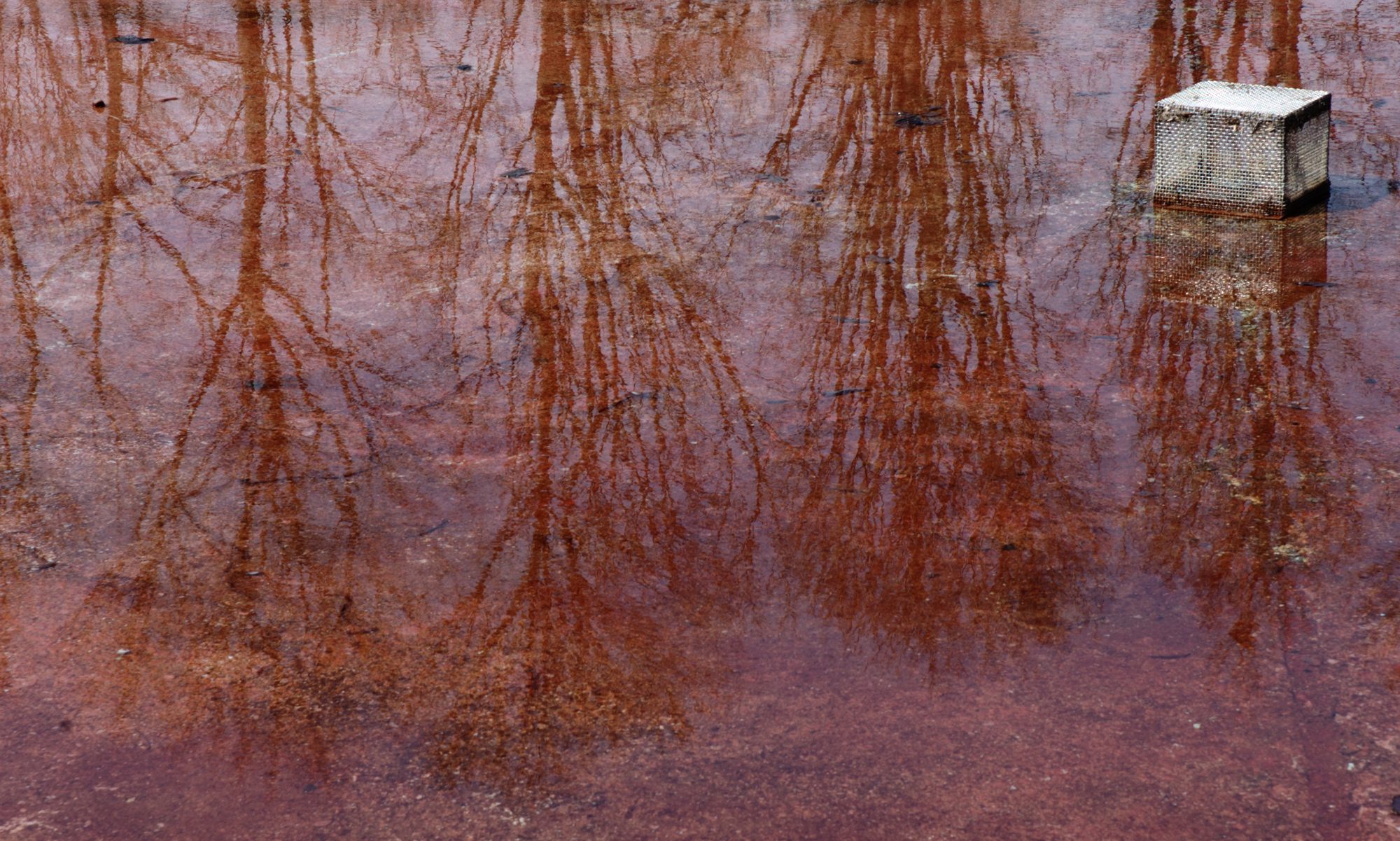
Photo: Standpipe #1

Film Informing The Word
Reading Shelly Lowenkopf’s blog – which he should consider titling Opium for Fiction Writers – one does not need to look too closely to see he likes the TV program The Wire; he often references the show to demonstrate whatever aspect of story-crafting he has chosen as his subject that day. I’ve never watched The Wire, but I’m sure some day I will, if only because it seems to genuinely merit the attention.
Being more of a film person, it got me thinking what films have influenced me as a writer, or which – should I ever find myself in a situation to dispense wisdom – I would choose, if only because they demonstrate some part or element of writing very well. What follows are a few films which, for lack of a better term, have writerly aesthetics. Coincidentally, most of what I’ve picked ended up being based on novels.
Off the top of my head, I would begin with Cutter’s Way (1981), a little-known/little-shown film with Jeff Bridges and John Heard.  On the one hand, it’s about a drifter in San Francisco who thinks he witnessed a murder one night, who’s suspicions are heightened by his best friend, a self-destructive Vietnam veteran. Yet, the more ornate (and by the ending, spectacular) elements of its drama serve as a background, a nuisance to the drifter protagonist, and it ultimately becomes a story about someone who discovers they’ve spent their life dodging the responsibility of making tough choices. Based on Newton Thornburg’s novel Cutter and Bone.
I would then travel back in time to The Third Man (1949), with Joseph Cotton and Orson Welles, a film-noir set in post-WWII Vienna (then occupied, as wonderfully described in the film’s opening narration, by the American, British, and Russian armies, and of course, the black market).  An American novelist discovers on his arrival to the city that the only person there he knows – his old friend, Harvey Lime – was recently killed in an accident. Yet, the longer he stays, the more splintered are of the accounts of Lime’s passing, and the more strange are the cast of characters who claim to be his deceased friend’s associates. Add love interest and stir. Strangely, though written by Graham Greene, it wasn’t based on one of his published stories; he wrote a novella as a means of creating a template on which to base the screenplay, later published in book form after the film’s release.
Fast-forward to 1980 and The Ninth Configuration, with Stacy Keach and Scott Wilson.  It is the story of a shadowy military psychologist assigned to a remote castle in the Pacific Northwest, used as an asylum for those temporarily discharged from service in the Vietnam War. However, as the colonel is inspired by his discussions with the asylum’s star patient, an astronaut who abruptly terminated his mission to the Moon just prior to take-off, the staff discover the colonel’s methodry is more unorthodox than expected. This is the one film I knew was based on a novel, seeing as I read both the first incarnation (Twinkle, Twinkle “Killer” Kane) and its subsequently re-titled revision prior to the film being released. Written, produced, and directed by none other than William Peter Blatty (author of “The Exorcist”, and a damn good director in his own right).
So, what is it? What is it about these random picks which touch upon fiction writing, aside from their literary pedigrees? Well, they all instill in the viewer a wider, more long-range idea of the story being told – much in the way that a good novel is capable, with the inclusion of just a few words inserted into the right spot, of suggesting dimensions which exist beyond the edge of the book pages. All three films include characters who stand out; characters who you can imagine living beyond the breadth of the films’ respective duration times, if not from the beginning then surely afterwards. In all three films, we have protagonists who are thrust into a gnawing responsibility they did not request to be part of, a responsibility which in The Ninth Configuration is karmic, in The Third Man is seductive, and in Cutter’s Way a question of conscience over desire. However, like all good stories, these responsibilities are seminal for the characters, and for the viewer with literary influences, perhaps inspirational.
[Post-script: it is not lost on me that all three of these stories are essentially mysteries, influenced by the remnants of armed conflict, namely WWII and Vietnam. I’m tempted to delve into why this is, but again, this is a blog and not a doctoral thesis. Perhaps another day. In the meantime, I’ve got a film mix to supervise…]
Work and Therapy
My “day job” in film and television (which often bleeds well into the evening, depending upon what part of the process I’m involved with) is to supervise what is known as “post production” (sometimes hyphenated as “post-production”). This is the rather Deconstructivist (as opposed to deconstructionist) process which involves picture editing (which virtually assembles the footage and sound back into a comprehensible story, if all goes well), sound editing (including sound effects, dialogue replacement, foley – that’s the man with the track pants and high heels – and music), and, depending upon the project, visual effects (whether they be corrective or something more snazzy involving CGI and goblins running down an exploding volcano).
It can all be extremely interesting – even if you’ve done it for years, sometimes you just can’t wait to see the end result – or nightmarishly absurd. It really depends on the project, the people involved, and the budget. Working in post, as opposed to working on the set during production, I get to see the various bits that were shot slowly congeal into what eventually gets delivered to the broadcaster or film distributor. I end up seeing the shows I’m working on many, many times before anyone outside gets to see it once. Regardless of whether it is a sensitive, intelligent Canadian documentary or a Hollywood torture-horror film, they all kind of dovetail into one another. I sometimes wish the sensitive, intelligent people in the documentary were in the horror film. Sometimes I wish the people who work on horror movies were profiled in a sensitive, intelligent documentary.
Big or small, there is a lot of money hanging on any given project, so the pressure put on those, like myself, overseeing the process can be profound. Stress is like alcohol; it can be habit-forming as a motivator, but it can also engulf your better reasoning. Thankfully, I don’t think I’ve worked on a project where I haven’t been able to openly poke fun at it with my peers. Laughter is a wonderful antidote, particularly when you don’t have a creative stake in what you’re laughing at; the important thing is making sure that it isn’t the mirthless, bitter laughter of someone whose sanity has been frayed by deadlines and intermittent bullying. If the latter is your case, you need to step away. Soon.
