Ambient

I don’t know how or when I got into ambient music. I can tell you there have been a few seminal contributors: classical music, movie soundtracks, minimalist and so-called world music composers, and the more spacious actors in pop/rock music.

Let’s start with a sort-of definition of ambient music, and I will begin by saying that I have no formal education in this realm. Ambient music is typically experimental and tends toward spaciousness and a lack of traditional (Western) song structure; it has its roots in the likes of 20th century composers such as John Cage, as well, during its development, contributions from traditional music from India and Japan, as well as from jazz. It can be a formless and electronic haze, or it could be all about exacting pattern and repetition using traditional instrumentation. There is also often a sense of the tactile. I will include some examples toward the end of this piece to begin to provide some context. At the end of the day, what is and isn’t strictly termed “ambient” is often more a question of the composer’s intent. You will just as likely see genre labels such as “minimalist,” “drone,” and “experimental” instead, as the term “ambient” can be a sort of kludge.

As a primary influence on me, classical music is a no-brainer, and like a lot of kids who grew up at the time I did, we were treated (or as I like to say, inculcated) to classical music through Bugs Bunny and Disney cartoons. As an adult I love the flourish and bombast of Shostakovich and Borodin, and the aching lyricism of Vivaldi and Bach. However, there is something undeniably mesmerizing about a brief section of Act II of Wagner’s opera Siegfried, where, through gorgeous use of instrumentation and dynamics we are surrounded by the quiet stirrings of nature — it surrounds the listener and one has no choice but to surrender to its formlessness. This formlessness is not something we often associate with something so strictly structured as classical* music.

the cover of Twine, an album by Taylor Deupree and Marcus Fischer. This image shows 1/4" audio tape loops hanging from the top of the frame.

As a movie buff, it makes perfect sense, given my exposure to classical music as a child, that movie soundtracks would inspire my appreciation of ambient music. Even in an epic space opera such as The Emperor Strikes Back there are many moments — particularly the suspenseful, quiet bits — where John Williams draws from classical roots, but of course, in order to create mood and retain timbre, sections end up as long stretches of almost abstract-sounding composition. Another perfect example would be the use of György Ligeti’s Lux Aeterna in Stanley Kubrick’s 2001: A Space Odyssey during the monolith scenes. Funny how sci-fi tends toward this direction.

A movie and a soundtrack that shook my foundations as a teenager was Godfrey Reggio’s Koyaanisqatsi. While the imagery was both disturbing and inventive, it was my introduction to Philip Glass’ minimalist composition that entranced me. Its mantric dedication to repetition using an orchestral ensemble and use of church organ and choir during its more climactic parts was catnip to this kid. When, a year or so later after seeing this, I discovered that Glass had collaborated on an album with Ravi Shankar (1990’s Passages) I couldn’t resist picking up a copy at a classical/jazz record shop near where I worked as a photolab technician. It was love at first listen; while some might’ve thought that the two were at odds with each other — one an avant-garde composer, the other an Indian classicist — their collaboration (each took turns orchestrating the other’s compositions) was a major influence on me.

To save space here, I will briefly name three other significant musical influences: David Sylvian, Talk Talk, and Miles Davis. Sylvian’s Japan reunion of-sorts, Rain Tree Crow, only put out one album but it was a low-key combination of rock/jazz/experimental soundscapes with African rhythms that has had a lasting influence on how I decided to listen to music. Talk Talk’s last two albums — Spirit of Eden and Laughing Stock — are rightly hailed as experimental masterpieces of pop-meets-improv jazz however a single song deserves mention, from their comparatively more formal pop album The Colour of Spring: April 5th. You can see where they were going with only that one song (and the album is wonderful as it is). Lastly, discovering Miles Davis’ album In A Silent Way was another key piece in my ad hoc self-education: the tactile nature of the instrumentation has been hugely influential on composers of all genres since then (and you can hear a motif from this album used on Taylor Deupree and Marcus Fischer’s Twine).

Over the last seven or more years, I’ve become deeply involved with ambient/experimental works by composers such as Stephan Mathieu (who not only composes but masters others’ work at his studio) , Deupree (who established the influential ambient label 12K), and France Jobin, as well as those, like Ryuichi Sakamoto and Christian Fennesz, who dip in and out of the ambient genre.

In an age where we are bombarded with divisive and interruptive dialogs encouraging us to be outraged at every turn (not to mention the very real aspects of society that are worth our outrage, if only we had the time and energy to devote to them while being able to support ourselves financially), experimental ambient music allows me — on a good day — to reset my thoughts and tune into a more free-form sonic world. Ambient is not pablum. Ambient is not “new age music.” If anything ambient has been about transcending the boundaries of “instrument” and “technology”, something all genres of music have attempted at one time or another; hip-hop does this particularly well.

Here are some examples that have been influential for me:

Radioland, by Stephan Mathieu: https://schwebung.bandcamp.com/album/radioland-2

Perpetual, by Ruyuichi Sakamoto / Illuha / Taylor Deupree: https://12kmusic.bandcamp.com/album/perpetual

Duo, by France Jobin + Richard Chartier: https://matterlabel.bandcamp.com/album/duo

~~~, anna roxanne: https://anaroxanne.bandcamp.com/album/-

Arrow, by Richard Youngs: https://preservedsound.bandcamp.com/album/arrow

Tracing Back The Radiance, by Jefre Cantu-Ledesma: https://jefrecantu-ledesma.bandcamp.com/album/tracing-back-the-radiance

Allister Thompson hosted a blog, Make Your Own Taste, that contains a lot of ambient artists and contextual information on the genre. You would do well to visit if this is your thing.

*note: I use the term “classical” generically; technically I prefer the Baroque and Romantic periods best, truth be told.

Share

Content Discontent

I think I’ve had my fill of TV (streaming or otherwise) and mainstream films.

The first problem is mine, and is one of saturation. I worked in film and TV post-production for 20 years, watching everything from 15-second TV commercials to multi-part TV series, to box office-busting films. And part of working in film and TV is keeping up your fluency so that you can communicate effectively with each other (if a director makes a reference to Picnic at Hanging Rock you better be ready to watch it if you haven’t seen it already). Also, I’ve watched hundreds of films and countless TV shows over the course of my life — the seminal and forgettable, the laughable and the revelatory.

I’ve pretty much seen every storyline at least once. I’ve seen every twist and turn, every “surprise ending.” I’ve seen every plot device, every sort of villain, every sort of (male) anti-hero, every sort of Disneyesque sentimentality and every sort of nihilist purging of the arthouse soul. It’s hard for me to be taken in by a show or movie — either to suspend my disbelief or my anticipation of what the creators are going to do.

The second problem is out of my hands. In this age of streaming services, we are awash with content. Netflix, Amazon Prime, Crave, etc. all require things to put on their virtual shelves so that we can be enticed to part with our money in order to explore their goods. I have no problem with this business model — it’s basically turned into (back to?) cable TV. The problem is one of quality. It seems that, in the effort to fill the shelves  seasons are lengthened with filler and show renewals are rubber-stamped that end up being samizdat versions of the preceding season. Multiplexes are filled with the faddish (and profitable) notion that (see: Marvel) everything can be part of a franchise. If I hear another producer say “We originally imagined this as a trilogy/series in four-parts” I’m going to scream.

What bugs the shit out of me is how this affects what’s presented as upper tier programming. A good example is Good Omens, the heralded adaptation of Neil Gaiman & Terry Pratchett’s collaboration. I haven’t read the original book — I have a notion that it’s written in a larger-than-life, Douglas Adams-y style — but the show is painful to watch. It wants to be sly and slick satire and it has strong early moments, but it’s all so buffoonishly overplayed — the actors who aren’t line-reading chew their way through the scenery — to the degree where I had to wonder whether the producers might’ve considered making it for children. The worst is that for a six-part series there’s barely enough story to take up three. I lost count of how many time-sucking flashbacks and side-stories are introduced in order to lead to the telegraphed, overdue finale. Speaking of Gaiman, adaptations, and overdue finales, please see the meandering second season of American Gods (which I abandoned).

For the record, I don’t have a problem with the Marvel Universe franchise. They’re not hiding anything: it’s a stream of big-ass popcorn epics. They aren’t being released as exemplars of anything other than “hey, here’s a well-executed adaptation of a comic book most people haven’t read.” Sure, given the choice I’d rather watch an imperfect  Olivier Assayas film over Ant Man, but at least I can watch the latter and know where to keep my expectations dialled.

While I’m bleating, a trend I wish would die, pardon the pun, are films where it’s obvious the protagonist won’t get a scratch despite killing 100 hired assassins (see the three John Wick films, The Equalizer, and Colombiana). Where’s the suspense if you don’t allow the audience to imagine that, no, the protagonist might not make it. This is an inherent problem with films and TV shows that are made in the hope of infinite reboots: no suspense (see: Orphan Black, a prime example of where the producers missed multiple opportunities to draw more attention by killing off one of the clones).

Why can’t we make something, leave it be to stand on its own merits, and move on without exploiting its success with sequels and prequels and remakes and reboots? As good as the original was (and it is), who in god’s name, save for the cast and crew, asked for a second season of Big Little Lies? What part of that story begged for extended development? Note: Liane Moriarty, the author (whom I share a birthday with) whose novel was adapted into the show never wrote a sequel until the HBO adaptation achieved success (she ended up writing a novella by request, not exactly the way any author would like to work, let alone revisit characters, though I don’t blame her).

Anyhow, I sometimes wonder, in the industry’s effort to satisfy its appetite for content, whether we are sacrificing the magic of our relationship with entertainment for the sake of Say’s Law, the (questionable) belief that supply creates its own demand.

Share

Book Review: Casting Light on the Dark Side of Brain Imaging

Whenever a mental health authority is interviewed in the media it’s nearly inevitable that this person is a medical doctor, usually a psychiatrist. This individual typically isn’t a practicing therapist; they may only be able to speak of clinical diagnoses and/or the prescription of psychopharmaceuticals. I mention this because when this authoritative psychiatrist is interviewed in the media I end up listening to a depiction of the massively complex human interrelational landscape I see around me every day, as both a writer and psychotherapist, reduced to a chemical imbalance in someone’s brain. It’s like ascribing a boxer’s loss of a title match solely to the width of their biceps.

book coverThe gold standard for looking at mental health is through what’s called a biopsychosocial lens, a flexible model that allows professionals to consider the biomedical (for example, thyroid issues, dementia), the psychological (traumatic experiences, abusive relationships), and socio-economic factors (unemployment, impoverished environment) that might be at play in the mental health profile of any given individual, even if it ends up a combination of one or more parts. In North America there is unfortunately a sacred primacy around the biomedical approach to mental health, with the psychological and socio-economic as (at best) secondary considerations at the table of funding and education. At this moment there are medical doctors losing sleep wondering how to beat the shame of knowing there is a patient in their care whose condition might be psychogenic (meaning, whose pathology is not, strictly speaking, a biomedical end product). Continue reading “Book Review: Casting Light on the Dark Side of Brain Imaging”

Share

Writing Adv*ce: Character

I’ve been thinking lately about a couple of short stories I’ve been working on over the last few years that don’t seem able to find a home with a publication. Now, there are a thousand reasons for a story to get rejected, and some of these have little to do with whether or not a story has issues to be worked out: subject matter, “fit,” philosophical angle. The stories I’ve been thinking about felt fleshed out and yet I suspected — no matter how badly I wanted to believe they were “done” — they were missing something that kept them from being as good as they promised to be, and, if I were honest with myself, the sort of work I want to be known for: complex, nuanced, readable.

One clear-headed morning on my walk to work, I was feeling comfortable enough to get over my nearsighted, belligerent writerly arrogance and apply some frank analysis to these two works.

Rather than bang my head against the wall staring at the works themselves, which I’d done previously, I took a different tack and investigated what it was that made some of my previously published work resonate and these current works not. And I realized, thinking specifically about Snowshoe and There Is This Thing About You, that the characters in these works were relatable — you might even despise them, yet there was a rapport with the reader, an “in”. These are difficult characters, conflicted, and sometimes there will be the desire to sublimate these characters onto a two-dimensional plane that makes it easy to dislike them. Yet, though we might grow impatient with their lack of finesse, accomplishment, and patience, the reader can’t help but want to relate to them, to understand what makes them tick. And in the stories I’ve been troubleshooting I discovered this very thing — relatability, respect, empathy — to be at least part of the missing element.

I recognized that each of these problematic stories featured a supporting character who was, to some degree, the bane of the main character’s journey; in each story the protagonist couldn’t possibly move forward without the effort of this unwitting adversary for whom in each story the protagonist lacked respect on some basic level. And it occurred to me that if the protagonist so clearly lacked respect for them on the page then on some level maybe I did too.

Despite this revelation, the work ahead is not paint-by-numbers. If anything, I realize that there’s a deeper layer that’s missing and by nature deep layers don’t just get applied like false eyelashes. It’s going to take some more reflection before I understand the meaning of what needs to be done, otherwise whatever I do is going to have QUICK FIX written all over it and the wily reader will see it a mile away.

Oh, and for anyone reading this who is under the impression that once these changes are made getting these stories published is a slam dunk, think again. Unless your name is Alice Munro you’re always going to find yourself at the whims of an editor or editorial reader — that’s just the way it goes.

(* I hate advice-giving, so rather than doing that, I’m going to provide something more meditative and complex, and maybe useful to some)

Share

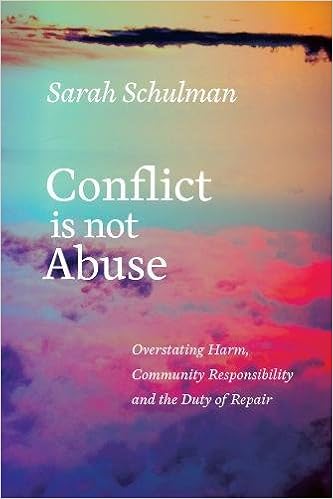
Book Review: Conflict Is Not Abuse, by Sarah Schulman

I’ve noticed more and more over the last decade that less and less people want to use the phone. I cannot help but draw a correlation between this observation and the ubiquitous rise of digital communication. Email? Sure. Text? Yup. And what’s wrong with this, you might ask? On paper it would objectively appear that text-based communication (particularly including social media) is superior at transferring information without error, if only us pesky humans didn’t make mistakes. And this last part is key: we are not objective, we balance the objective world with our much less easily measurable experiential (or personal) reality; this second reality is informed by our experiences, which are diverse and sometimes punctuated by trauma or loss. When we talk to someone on the phone we are leaving ourselves prone — to fallibility (stammering, going off on a tangent), or having our hesitations read as something we may not otherwise wish to reveal.
I was thinking about these things (and many others) when I began reading Sarah Schulman’s powerful book, Conflict Is Not Abuse: Overstating Harm, Community Responsibility, and the Duty of Repair. The problem with nearly all forms of digital communication and social media (with the exception of apps like Skype, etc) is that there is no actual dialogue — we aren’t allowed to have the sort of vulnerable conversations that speaking in-person or on the phone forces us into. And, in one of the book’s more important diagnoses, Schulman recognizes this as a key ingredient in the escalation of violence. Instead we are only allowed to trade unidirectional statements, leaving nuance and human connection by the wayside. So, when we have a disagreement with someone via text it becomes easy to pile on them, to vilify them. We can’t see them and there is no way for them to interject. On a social media platform like Twitter, this sort of conflict easily escalates into directing the wrath of groups upon an individual. Continue reading “Book Review: Conflict Is Not Abuse, by Sarah Schulman”

Share

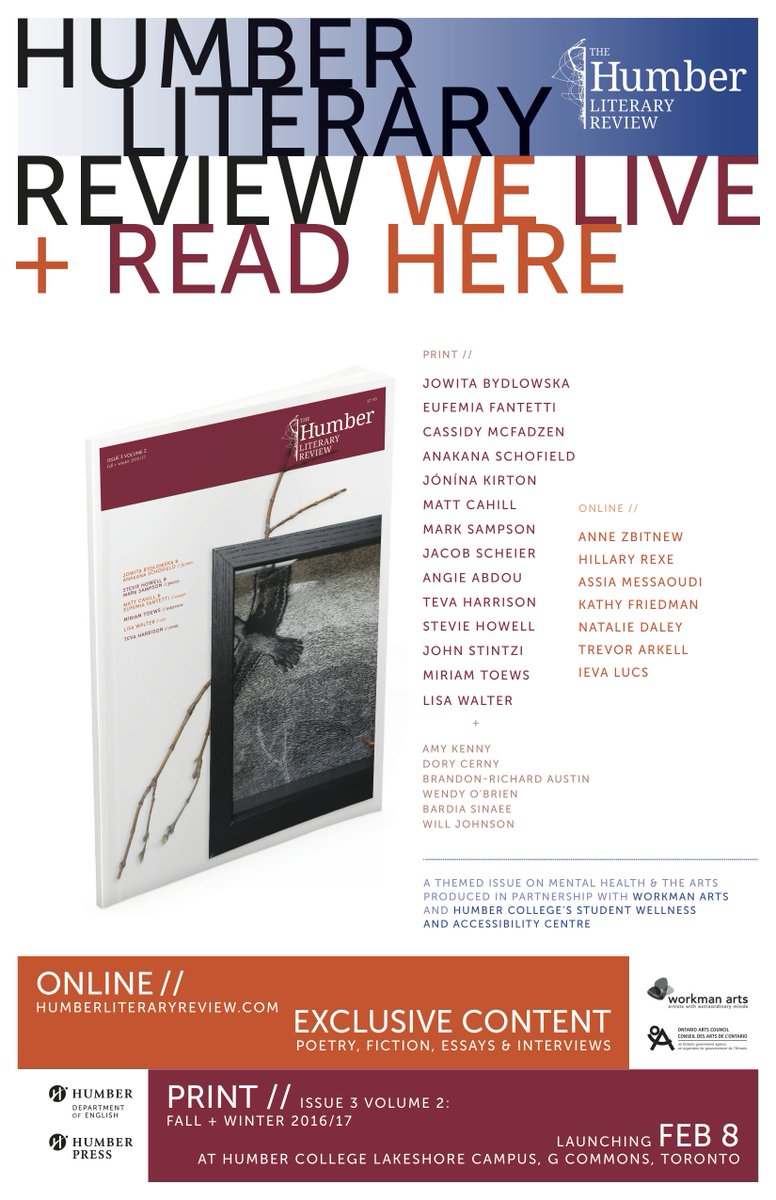
Essay in Humber Literary Review #6

I’m happy to say that the latest issue of Humber Literary Review (#6) is out, and I have an essay included. This is their first themed issue, and it’s about mental health. Because I’m a psychotherapist who is deeply reflective about the way in which we choose to see the world, I saw this as a golden opportunity to submit a pertinent perspective; my essay, On Madness Within Imagination, confronts a cultural blindspot – the depiction of madness in fiction.


It is available at the following Toronto bookstores:

Another Story (on Roncesvalles)
Book City on the Danforth
Book City on Queen
Book City on St Clair
Book City in the Village
Presse Internationale on Bloor
Presse Internationale in the Beaches
Type Books (on Queen)

It is available elsewhere, of course, but I have no clue where. You can also purchase a subscription from HLR.

Share

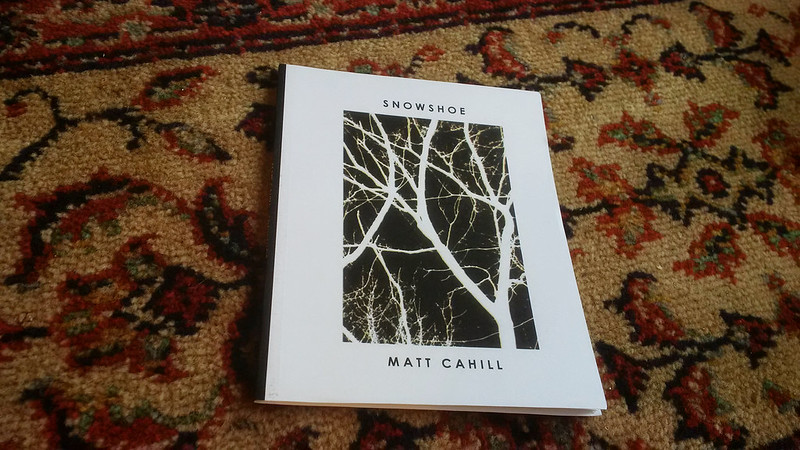
Handbound Print Edition of Snowshoe For Sale

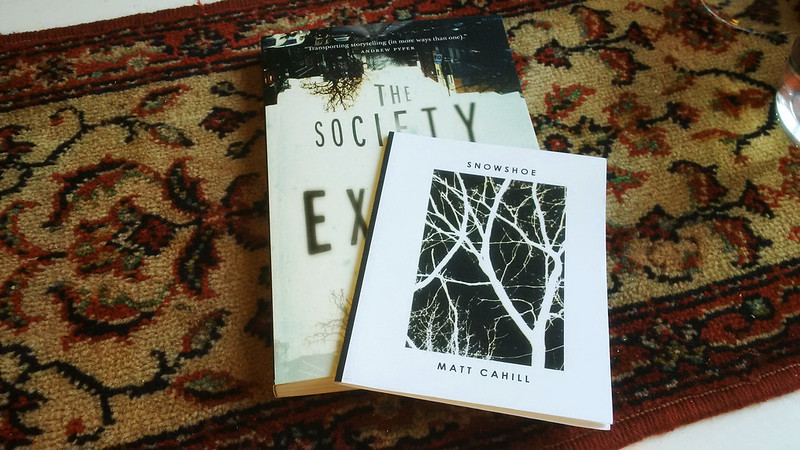
I do a lot of talking about my novel, The Society of Experience, however that’s not the only work of fiction I’ve had published. Found Press, who has published my stories in their unique digital singlet format, is experimenting with the idea of creating limited print editions of select authors’ stories. I’m happy to say that one of those chosen is Snowshoe, my spooky piece about a father trying to get his son to sleep only to realize the boy is haunted by something more ominous than the wind outside.

Snowshoe handbound print edition (5 1/2″ x 4 1/4″)

This is well-timed since I read from Snowshoe on October 25th for the International Festival of Authors and it got a great reception. I have in my possession 15 copies – that is the extent of the initial print run since they are handbound. I am selling them for $15 each (optionally signed, if you wish). Or, if you haven’t yet read The Society of Experience (longlisted for the Sunburst Award, fave of Harper’s Bazaar magazine, as well as Emily Saso’s favourite book of 2015) I will sell a bundle of Snowshoe and The Society of Experience (regular $37 if bought individually) for $32 (and yes, optionally signed, if you wish). Crazy cheap bargain Cahill stop it.

The Society of Experience bundled with Snowshoe

Obviously, I only have 15 copies of Snowshoe, and while there will most likely be more in production (I can tell you there is a lot of interest from independent bookstores here in Toronto in this and other FP titles) because they are hand-made they don’t exactly slide off a conveyor by the hundreds. In other words, there’s no guarantee when more will be available.

If you are interested, get in touch: matt [at] mattcahill [dot] ca. Note: postage is extra (but reasonable)


Share

A Note For Book Clubs

This past weekend I had the pleasure of visiting a book club in Brantford, Ontario. It was my first experience and I truly enjoyed it. I valued the perspective of the readers and was able to hear questions I often wouldn’t get a chance to hear in professional Q&As, which end up being rather tightly formatted. The questions I received were often challenging and thought-provoking. It was also fun talking about my history there (I spent a chunk of my early years in Onondaga), which was referenced in the Brantford Expositor last year.

I wanted to share this because if anyone reading this has a book club and would consider having myself (and my book, The Society of Experience) make an appearance, please feel free to get in touch. My contact info is on my author page: http://mattcahill.ca. I can’t always guarantee my availability, but wherever I can make it work, I will. I’m happy to make a visit in-person, as well as field a Q&A via email, or take part in a Skype session.


Share

Upcoming Readings With Kyp Harness and Mark Sampson & A ChiSeries Video

I have two new gigs lined up over the next few months. I have to say that my visit to Ottawa was wonderful — everyone involved, organizers and audience alike were very friendly and great people to chat with (in case you were curious, or thought these were terribly serious affairs). If you’ve been thinking of making it out, it would be great to see you at either of the next two events.

June 10th @ The Belljar (2072 Dundas St W, Toronto)
I will be reading from The Society of Experience as part of a launch for indie musician Kyp Harness’ debut novel, Wigford Rememberies. We will be joined by poet Mark Sampson, reading from his new collection, Weathervane. Details of the event can be found here. Authors’ books will be sold via Another Story Bookstore.

July 6th @ McNally Robinson Booksellers (1120 Grant Avenue, Winnipeg, MB)
I will be joining the ChiSeries once more, this time for my first reading outside of Ontario! Also reading that night will be David Neil Lee — we will be joined in conversation by Chadwick Ginther and S.M. Beiko. Details can be found here. I haven’t been in Winnipeg before so I’m really looking forward to it.

Speaking of Ottawa, the people at Silver Stag Entertainment managed to tape my reading. I normally can’t stand the sight of myself reading (or hearing my voice), but it ain’t bad. The audio quality is a little rough, as you can overhear bar patrons in the room next door, but I thought I would share it with you. Enjoy!

Lastly, I’m hoping to announce a brief Alberta tour that will be happening in September. It’s in the planning stages, so fingers are crossed!

Share

Look Out, I’m Coming At Ya [updated April 25th!]

Late April/early May is going to be busy with appearances! First up, I will be participating in the 35th annual Ad Astra Convention (happening April 29-May 1 in Toronto). UPDATE: I’m appearing on Sunday the 1st of May at 2pm on the panel The Trials and Tribulations of Writing About Time Travel (along with fellow authors Kari Maaren and Kelly Robson).

Then, on Saturday April 30 I will be taking part in Authors For Indies Day, working the floor at Type Books during their 10th Anniversary (Queen West location) from 12pm to 1pm. Come by and I will help you find books!

Lastly, I will be reading in Ottawa on Tuesday May 3rd at Patty Boland’s (101 Clarence Street). UPDATE: I’m appearing at 7pm, alongside authors Chadwick Ginther and Mark Shainblum. Event listing here.

Like I said: it’s busy!

Share