About Blame, Shame, and the Sacred Altar of Individual Responsibility

[This originally started out as a post on my psychotherapy blog, but became so lengthy and opinion-laced that I figured I’d put it here.]

One comment I hear, particularly in op-ed sections of newspapers, is that as a society we are becoming “soft” (ostensibly because we are beginning to encourage children to discuss their emotions throughout public school life, and not just when they get in trouble or are victimized). Within this same argument is the contention that, thanks to people like me (mental health professionals), everything that is perceived to be wrong with the individual is to be blamed on other people or institutions. Thus, the contention is that individual responsibility is somehow being sapped of its strength.

I see no need to blame anyone for anything. If a client’s parents were too strict when they were growing up, it’s enough to explore it (and its effects) until such a time as the context of those events have a present-day meaning which will allow the client to lead a healthy, durable life and move on. My interest is with the client: their health, their well-being. I have no use for encouraging, casting, or redirecting blame. That is not within the philosophy of the modality of psychotherapy that I am trained in. It is certainly not within my personal philosophy. There’s not much to be gained from vilifying people and things.

Something to note is that many forms of victimization carry with it, primarily, shame (though other feelings may follow closely, like anger). The shame of not being able to avoid the caretaker who struck you. The shame of not being able to speak out about the racial discrimination you experienced in school. The shame of being sexually preyed upon by a coworker. Shame is a very deep hole to climb out of. Just talking about shameful experiences can retraumatize some clients – that is, put them right back in the original emotional context which first scarred them.

Survivors of abuse often feel responsible for their victimization, regardless of how little agency they had at the time they were victimized. In other words, if we are to talk about blame then we should talk about victims of abuse walking around blaming themselves. One of the tasks of therapy is to move the finger of blame away and to look at what has happened to a client with clarity, without an agenda. Then and only then can the process begin of assisting the client out of that deep hole I previously mentioned; assisting by paying close attention, sharing, talking. The client does the heavy work and I’m there to help in every way I can.

I cannot think of something which better defines individual responsibility than someone recognizing that something deep down within them needs to change, and undertaking the time and effort (and pain, and, yes, in the case of working with a therapist, money) to rework their understanding of themselves, to lift themselves to a higher point of view – and all that this entails both in the therapeutic space and in the outside world.

If by “soft” critics mean weak, then the individual who helps herself is not “soft” – she is not weak. She does not blame herself as she once did. She has taken control of herself and has worked hard to build awareness, and through awareness resiliency.

Share

Connectedness, Social Media, and Syntheticism

If there’s something to be said about going on a vacation – whether that means renting a car and driving two hours away from your town, or buying a plane ticket and flying six hours away from your country – it’s that it provides something crucial: distance. Physical (and, one should hope, subsequently mental) distance.

When I go away I take that idea of “distance” seriously. I don’t check Facebook, I don’t check Twitter. I don’t even check voicemail (unless it looks important). My only transgression is occasionally checking newspaper headlines to make sure that the world isn’t on the brink of collapse (which it often seems to be).

Upon returning, I find myself staring at my computer (or, more often, my BlackBerry) and wondering: what’s the point? Sure, I’ll go back to checking email, scheduling things, occasionally making sure the world isn’t on the brink of collapse, but re-entering the world of social media is another question. A daunting one, to be honest. I respect social media, yet, against its purpose, I often find it paradoxically alienating.

It started with Facebook, which began as a unique way to stay in touch with friends without relying upon email – a communal sandbox with multimedia extensions. With time (and popularity) came the inevitable mediocrity of a lot of people (along with the watering-down of “friend”-ship) without a lot of ideas posting a lot of crap that I found myself more often than not skipping. Continue reading “Connectedness, Social Media, and Syntheticism”

Share

Narratives & Messages

We live in an atmosphere concentrated with media: we are drenched so deep that we don’t often realize how integral it has become in our lives. In my fiction, which can be speculative and sometimes nodding to “the future”, I don’t mention this much. I was wondering if, by not speaking to this (awesome/scary) fact of life, I was missing out on saying something substantial about our lives; then again, a writer with the intent to say “something substantial about our lives” is often asking for more than they can deliver to begin with. Perhaps I intentionally avoid the subject. Perhaps I want, fictionally, to portray a world where the reader can escape our media fishbowl, not content to stare into our monitors and smartphones – into any one of the many shining screens around us. *

 (*This is not to say that, as someone who writes stories to be read, I am exempt from any of what I go on to describe.)

As Madge the manicurist in the Palmolive commercials used to say: “You’re soaking in it.” And we are.

My concern, as far as this post goes, is not the number of screens surrounding us, nor is it the gross subsidization of our environment by advertising (vis à vis self-interested parties). Content is king, after all. And, unlike ads and the proliferation of screens, I feel we don’t look at content very closely.

We are essentially surrounded by narratives.

Continue reading “Narratives & Messages”

Share

On Self-Censorship As A Canadian Preoccupation

There are always going to be thin-skinned readers, but writers who self-censor for fear of offending said readers suck more. #canada

This was going to be a missive sent over Twitter. Then I thought, what if someone replies to me, calling me out? What if someone says:

@m_cahill Care to name names, or are you AFRAID OF OFFENDING SOMEONE? #jerk

Allow me to elaborate (and do it in an environment I can totally control without distorting my message due to a 140-character limit).

Two articles in the last week were sources of outrage among certain parts of the online world, particularly on Twitter, where it’s particularly easy to express outrage*. The first was Ian Brown’s essay on men gazing at women in the Globe & Mail. It elicited a lot of criticism, from feminists who were offended by the objectification of women to people who simply construed Brown’s perspective as creepy in a Lolita sorta way.

My partner and I began talking about some of the anger we saw in our respective Internet social circles. I felt a lot of it was overblown. Predictable, actually (sadly). And yet I agreed with Ingrid, who reminded me that there is something to be said about “the gaze” which women historically have been on the other end of. In other words, it was a complex issue. All said, something I found admirable in Brown’s piece (and his writing in general**) was his forthrightness. Unlike so many writers there was no effort made to allay the concerns of the entire reading public that he wasn’t trying to offend anyone.

Continue reading “On Self-Censorship As A Canadian Preoccupation”

Share

The Dread of Zombies

Everyone is waiting for the zombie genre (in books, television, and particularly film) to whither away like a desiccated corpse. I argue that it’s here to stay – that, in fact, it has stronger legs (ugh) than most other genres of the macabre.

The dread of zombies imagined – the tiredness some of us feel with each iteration (Pride and Prejudice and Zombies, The Walking Dead, Zombieland) – is understandable. Less understandable than with vampires, but understandable still. There are too many zombie and zombie-like (for the record, 28 Weeks Later is not, strictly-speaking, a zombie film, yet it more or less qualifies itself by virtue of many shared) themes in books, shows, and movies these days. But I would argue that it’s because – due to our increased connectedness to each other via the Internet and social media – we are exposed to real life zombies. Thematic zombies. Metaphorical zombies. And the exposure stands to increase.

A shitload of people voted for a complete ass to be the mayor of Toronto. A shit. Load. Mind you, not many who lived downtown did. Still, it was a rout. People like me – people who prize intelligent discourse over pot shots, people who would prefer to be ruled by someone with an informed conscience rather than a bullet-list of to-dos – were incredulous. It didn’t even matter what quadrant of the political spectrum Rob Ford occupied: he was the last person any reasonably well-informed person would have wanted. And yet he won in spades.

Thematic zombies. Metaphorical zombies. The dread of zombies.

Who voted for him? Who can say that they “understand” him? Are they too not also zombies by virtue of his succession to the throne of city council? Faceless, nameless, godless, conscience-less hordes hefted Mr. Ford to office, and we stand here still – a year later – asking ourselves just what the hell happened, watching the circus of political buffoonery before our eyes.

Lest this become a solely personal treatise, isn’t this the same for everyone? Aren’t we witnessing “zombie activity” in other guises: large groups of seemingly nameless, faceless, godless, conscience-less hordes blindly enabling things we fundamentally disagree with but are powerless to dispell? For me it’s the rise of Rob Ford, for others it could be the Occupy movement. For others still, it could be the revolution in Tahrir Square. The massive, faceless but powerful other. The faceless, godless, conscience-less hordes…with agency.

Thematic zombies. Metaphorical zombies. The dread of zombies.

No, it is not going away. Make popcorn.

Share

Two TIFF Reviews

The Keyhole world premiere at TIFF went over quite well (see here for more). I had the opportunity to catch two other films over the same weekend:

360: Fernando Meirelles’ latest film is a continent-spanning, Wim Wenders-esque meditation on fidelity and perseverance in a world whose inhabitants’ stories are increasingly inter-threaded. The cinematography is beautiful, with exquisite long shots which accentuate each locale intimately, while the characters sort out their broken hearts and wandering eyes. The cast is solid: Jude Law, Anthony Hopkins, Rachel Weisz, and many others, with yet another gritty, soul-churning performance by Ben Foster. It is a movie with a clear moral conscience at its core, which may disappoint some who are looking for a string of happy endings, and others who alternately want the world to conform to a cynical philosophy. One to elicit discussion, for sure.Jude Law and Rachel Weisz, in a scene from "360"Jude Law & Rachel Weisz in "360"

Anonymous: It’s weird to see a movie at TIFF which you know will be rolled out into movie theatres soon. Weirder still to stand in line and see a massive-sized poster for the movie you are about to see across the street from you, telling you that it will premiere in a month’s time. The tickets were comps, so I didn’t let this hang me up. Sam Reid as the Earl of Essex, in "Anonymous"

Anonymous isn’t a great film, I will say that now. In an effort to dramatize its thesis – that our notion of Shakespeare is based on a ruse, and that The Bard’s works were actually written by a nobleman, the Earl of Oxford (Rhys Ifans) – it crams in so many plot points to justify its theory (and it is a leading Shakespeare-alternate theory, for what that’s worth) that I felt separated from the characters (and eventually the story) on the screen. And this is a shame, because it’s a gorgeous-looking film and the filmmakers obviously spent a dear load of time making everything look authentic. The performances as well are quite strong, with a cast which also includes Vanessa Redgrave as Queen Elizabeth I and David Thewlis, who all but lives beneath the skin of the calculating William Cecil. The great tragedy, if you will pardon the pun, is that Rhys Ifans’ affecting lead performance, an actor who for so long has held films together in often comic-serving supporting roles, seems sacrificed to some degree – scattered across a time-spanning storyline – so that we only see him intermittently. Pity. Still, for those who love movies with codpieces and horse hooves clop-clop-clopping on cobblestone, you could do worse.

Share

Chaos Cinema

I posted this for my Humber College students on their blog. I posted this on Facebook and Twitter. As such, I should probably post it here.

If you are a film lover who feels increasingly unable to understand or orientate yourself watching action movies made in the last decade, I implore you to watch this video essay about what the author calls chaos cinema.

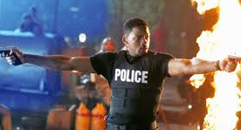
Bad Boys 2It describes quite succinctly what has frustrated me as a film viewer: action sequences (or entire films) are becoming little more than jagged-edged stimulation devices and not the shared experiences that they should be (see: chase scene in Batman: The Dark Knight)

Essential viewing.

Share

TIFF a-hoy!

Looks like the film I worked on earlier this year, Keyhole, will have its world premiere in Toronto this September @ TIFF. Some press here.

For those new to this site, I have had a parallel journal chronicling the film, called Guy Maddin’s Keyhole: A Post Production Diary, which I wrote in tandem with my work on the project.

Needless to say that I’m very happy to have another film premiering at TIFF, and I hope that it is well-received. Keyhole is a challenging film, even for fans of Guy Maddin’s work, yet I think it’s perhaps his most personal and – in that regard – bravest work to date.


Share

Weekender

I love looking at The Onion’sWeekender“, their satirical take on the weekend magazine that comes with your major newspaper (a la The New York Times’ Sunday magazine).

They’re brilliant when, behind the jabs at fluff/news magazine inanity, there’s a “meta” quality. Their satirization of the way fonts and type placement are abused, for example.

They’ve even gone so far as spoofing the NYT fashion magazine

My recent favourite:

Share