From the album de/Still (to be released September 1st)

Matt Cahill's blog
Last year I got a call from my bank informing me that I needed to open a business account if I was going to continue receiving payments from my day job clients (which, at that time, went into a personal chequing account). I suppose that’s one way to know that your business is doing ok. But what followed was instructive.
First, I called the bank in order to set this up. But when they asked what my registered business name was, it seemed to come apart. I told them I didn’t have one — I’m a sole proprietor, and my name is the name of the business. I was told flat out that they couldn’t process my request until they had proof of my business being registered. So, I thought I’d make it super easy and go in-person to one of the two local branches I have a decent relationship with. And there I sat, speaking with a representative — a man probably 15+ years younger than me — and sure enough the same question came up: what was my registered business name? I shrugged and said it was my name: Matt Cahill, Psychotherapist. I told him that my business was registered with Canada Revenue and that I’d been making HST payments for the last seven years. In other words, I was legitimate (especially by virtue of them asking me to setup a business account). He seemed unable to understand what I was saying and, you guessed it, insisted that he couldn’t set up a business account without a registered business name. Seeing a brick wall in front of me, I thanked him for his time and left.
I spent the next couple of days figuring out what was wrong and, importantly, why was no one listening to me given that not everyone who starts their business is using a name like Speedy Lube, or Debbie’s House of Cheese. There are plenty of other professionals, like myself, who must be going by their name, I told myself. I decided to give it one more try, and booked an appointment at the other local branch. This time I came with a printed page from my online CRA business account (yes, like something one of my parents would have done in the 90s), which displayed my name with my registered HST number. When the moment came for the representative, a woman closer to my age, to ask me for my details, I just handed her the page. She glanced at it and entered the information and everything went as I’d initially thought it would a week earlier.
I walked away from this experience wondering, given what I went through, how someone who isn’t a white guy in his late 40s, who doesn’t have a 20+ year history with their bank would’ve have felt. I sure as hell felt frustrated that in my first two dealings, neither of the representatives bothered to consider the context of how my business is set up. I’m not running a cleaning company, I’m not a numbered corporation. I thought to myself: what if I was some kid trying to start a business? What if I wasn’t already established, had income coming in?
So, when I read this article in The Star (apologies if it is paywalled), about Vivian Kaye, a Black woman who, when she tried to start a business, couldn’t find a bank or business incubator who could understand the context of her business model — in this case, selling hair extensions for a predominantly Black clientele — even in spite of her eventual success, I felt angry. Particularly at what she calls “the quiet racism we have here in Canada.” It is a perception I’ve long heard from BIPOC Canadians, and each time I come across it I feel ashamed. Why, in the 21st century, are people such as Kaye having to practically teach banks about certain products, not to mention profitable sectors, that aren’t but should be on their radar? What, in other words, are banks, who are most often de facto gate-keepers for small business owners, doing to modernize their ability to understand the many different types of businesses (and perspectives) that are out there?
Two years ago, my partner, Ingrid, launched Gladstone Press. The purpose? To reissue classic books (or books that should be considered classics if they aren’t already household names) with modern design and high quality materials. Both the media and the general public have been very receptive to the idea.
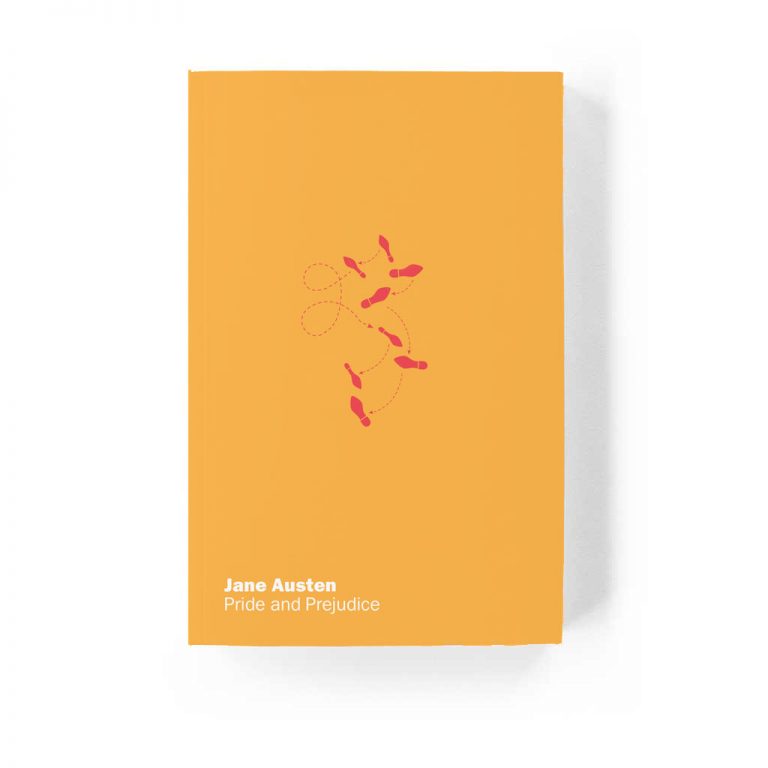
Ingrid, if you don’t know, is one of the top book designers around, and so Gladstone Press is a natural fit for her, and I’m always impressed by her dedication and commitment to each title that she selects.
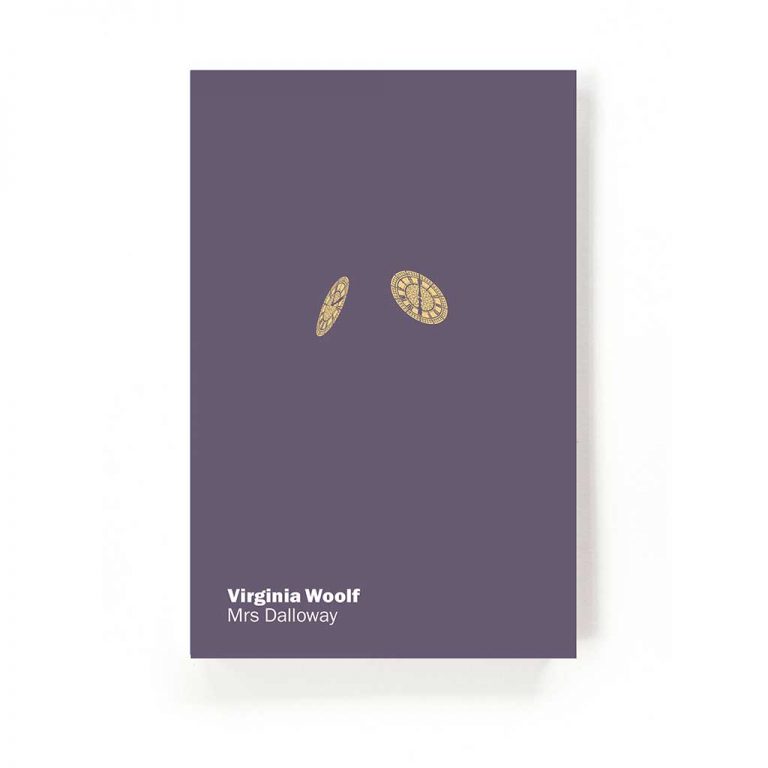
Especially in light of how hard publishing has been hit by COVID, it hasn’t been an easy path lately for publishers or indie bookstores, but I’m happy to see people are still ordering her titles.

If you haven’t figured out your summer reading list yet, check out her site. You can order direct from Ingrid or you can ask your local bookstore to order a copy for you.
Last week was hard. Overwhelmed by the end of it. Head full. No room to deal with the quotidian what do you thinks and what would you like to dos that approach us from friends and loved ones. These sorts of periods are not necessarily rare in my profession, as a psychotherapist. A common underlying cause, what makes it so overwhelming, is, naturally, holding the weight of my clients’ concerns, their varied life events, the precipices, and shadows.
But this past week especially, it felt like I was talking to myself in parallel to my clients. We were touching on things, incidentally, that seemed to resonate with me, my own past and present*. We talked about broken romantic relationships, we talked about unresolved dynamics with parents that likely may never be resolved, we talked about feelings of professionally lacking when up against our peers. We talked about death. We talked about heartache, complicity, and that fucking word “selfishness.”
So there was this sort-of doubling effect, like when you’re on a smartphone call and suddenly you can hear your own voice echoing because there’s a bad connection, and no matter how much you try to tune it out you can still hear every UM and YES echoing a second after you say it, in the shitty way your voice sounds like when you hear it played back to you.
One of those weeks. Material that, using its own logic, veers a little too close to mine. Most of the time this wouldn’t cause much in the way of distortion — that echoing voice. However, given the state of the world (remember when people used this as a figure of speech?) and where my mind happened to be, it was harder than it needed to be.
This week will be better.
* these are anonymized/defocused to protect both my clients’ and my own material
####
I’m sometimes in the habit of cross-posting from this blog to my professional blog, but this time it’s the other way around. I think it fits.
####
The COVID-19 pandemic has laid bare the human face behind our central idea of how an economy works — something we have long needed reminding of, lest those of us who are able to pay our rents and leases become too comfortable with abstract terms such as “supply chains” and “stakeholders”. We are reminded that we are a society of interdependent people — individuals, families, communities — and it’s overdue that we see our economies the same: people require support when tragedy makes their livelihood untenable.
And just as the pandemic has made us humbly pause to consider the society we have constructed (or, if I am feeling cynical, we have allowed others to manage so long as it doesn’t affect our ability to pay too much for our livelihood), so too has the tragic, preventable deaths of George Floyd, and Breonna Taylor in the U.S. and in this country, Regis Korchinski-Paquet and Chantel Moore to name just two from each country in the last two months, forced us (and not without the persistence of the Black Lives Matter movement) to reckon with our society’s implicit racism and how that directly affects the lives (not just livelihoods) of Black and Indigenous individuals in particular.
We are reckoning not with the isolated actions of “a few bad apples” but with the concept of systemic racism, that is, when racist or white supremacist notions are baked into the very structure of certain communities, businesses, and government agencies. This is particularly evident within policing organizations.
I’ve previously written about the idea of social justice, and my own path from a place ignorance. There is a great sense of exhaustion I’ve heard from members of the BIPOC (that is, “Black, Indigenous, [and] People of Colour”) community. The exhaustion of having white friends and colleagues continually approach them to ask for resources to help them understand racism (imagine asking a victim of gun violence to help explain the problems with firearms licensing). The exhaustion that comes with wondering whether this will be yet another blip of media interest in which hopes are raised only to be let down.
A different world is possible, but the time is past due for white folk like myself to do the heavy lifting, to seek out and reference the many (many) resources out there already written by the BIPOC community that will help people like me contextualize and understand how racism is systemic, and — just as importantly — to help others like me better understand this situation. As a therapist and active member of society it’s the least I can do.
For anyone who is curious, here are some resources I have no hesitation recommending:
Between the World and Me, by Ta-Nehisi Coates (book)
Black on Bay Street, by Hadiya Roderique (Globe and Mail essay)
The New York Times’ 1619 Project
The Inconvenient Indian, by Thomas King (book)
A last thought for you: there are no slow news days, only barriers to other peoples’ experience.
I’ve written about Radioland (aka Book #2) before. It’s being submitted to publishers now that the industry has adjusted to the lockdown. Fingers are crossed. As tempting as it is to divert myself with this, I’m trying not to think about it. And yet…it’s The Second Book, the sophomore effort, etc etc. It’s a giant unnecessary burden — as well as a cliché! — to feel that somehow, of all things, this is the book that determines my future and not the last one (or the next). And so, yes, I’ve been a little concerned sometimes about this being some sort of reckoning of me as a writer, which is kind of silly. Whereas my mind is like Is the book good? Yes? Then that’s all you should really care about. And yet…
In other news, prior to the lockdown I started a third book, which I wrote about here. I didn’t expect to start another novel so soon — in fact, it’s the last thing I wanted — but something had been building up within me during the latter part of working on Radioland. It’s very different (and yet, the more I work on it, I can see how it falls into place with both The Society of Experience and Radioland’s themes). Don’t worry it has a name…buuut I’m not sharing it with anyone until it’s done. Let’s call it Book #3. What makes it different? Unlike the first two, it’s mostly a satire. Now, I can do humour, no problem. It comes second nature to me. And yet, devoting an entire book to it is something altogether different and a major challenge. I also have to say that I’ve not written anything so quickly before (I don’t share my word/page counts publicly, sorry, just like I don’t share my 10K race times). It’s the sort of book that wants everything out of me, and now. The good news is that I think it rocks. I don’t know where the hell it’s necessarily going (which perhaps also answers anyone’s question about how strictly I outline things), but I’m enjoying the trip.
I read this just now and thought it was very appropriate for our times (even though “very appropriate for our times” sounds unbearable). Then again, it seems to be about the unbearable. Please enjoy:
Too Much of a Good Thing, by Steve Himmer (from 3:AM Magazine)
