
Here’s a trailer for Keyhole, the Guy Maddin film I worked on:

Brief Reviews: Incendies
 For someone like myself, who makes his living working in film, it would seem perilous to declare a “favourite” Canadian filmmaker. However, it’s a no-brainer that one of them is Denis Villeneuve. Ever since I saw his Genie award-winning Maelstrom, I knew I was watching someone who was not burdened by the shackles of mediocrity so commonly on display in the end-product of so many emerging or established Canadian filmmakers.
Incendies, nominated for Best Foreign Language Film at the 2011 Academy Awards, is devastatingly good. It tells the story of fraternal twins who, while coping with the death of their mother, are handed two envelopes by the estate lawyer. One is to give to their father, whom they presume is either dead or estranged. The other is to give to their brother, whom they’ve never known existed. Neither know what any of this means and what follows is a side-winding story that is equal parts tragic and breath-taking.
Based on a play by Wajdi Mouawad, the film spends most of its time in a Middle Eastern country that is never identified for the audience. It’s a curious technique which may frustrate some, and yet it was refreshing for a film to sidestep our cultural preconceptions or prejudicial baggage by focusing strictly on the unfolding of its complex tale and its toll on the characters, past and present. At the core of Incendies is the devastating journey of the twins’ mother, played by Lubna Azabal, told in flashbacks.
There are moments of heightened violence in this film. Moments where you say to yourself: no, no, no – please don’t show us what I think you are about to show us. And yet, to Villeneuve’s credit – something I noticed in Maelstrom – he is one of a short list of directors capable of portraying material which may be extremely unsettling in ways which are neither insensitive to the audience nor disrespectful to the spirit of the story. Yet, the weight of what is ultimately revealed in the circuitous route of the twins will certainly haunt the audience long after the film is done.
Brief Reviews: Certified Copy
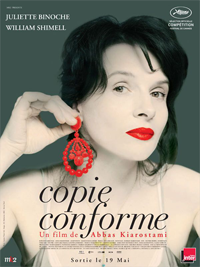 Certified Copy is certainly in the running for one of the best films I have seen in 2011. You would not guess this by looking at the poster or the anonymity of its title. Two things do stand out to me immediately: actor Juliette Binoche and director Abbas Kiarostami. Binoche is one of the greatest of her generation, able to transform herself at will. Kiarostami is not a household name but is nonetheless a master of intimate cinematic storytelling (A Taste of Cherry). Certified Copy is about an English writer (William Shimell) and a French art dealer (Binoche) who spend the day in Tuscany together. He is there on a book tour, and she is there ostensibly as his handler.
What transpires requires some delicacy in explaining. While having coffee in a small village, a presumption is made about them by a local: that they are a married couple. The presumption and all that follows lies at the heart of what is a masterful piece of work by Kiarostami. Cutting is kept to a minimum, but that’s fine because often the actors are staring right at us (rather than each other), and what actors: Binoche displays such a range of emotion and depth of feeling in her role as the conflicted half of the presumed couple, and Shimell – an opera singer in real life (believe it or not, this is his first film) – is hypnotic as the edgily self-consumed, emotionally opaque other half.
I am tempted to compare this film in some respects, stylistically at least, to Michael Haneke (Funny Games, Caché), with whom Binoche has collaborated many times. And yet, Certified Copy lacks the brutality, the near-misanthropy of Haneke. Which is not to say that you won’t be kept on the edge of your seat wondering just what is going on between the two leads, and within them. A must-see for anyone looking for depth in their drama.
Two TIFF Reviews
The Keyhole world premiere at TIFF went over quite well (see here for more). I had the opportunity to catch two other films over the same weekend:
360: Fernando Meirelles’ latest film is a continent-spanning, Wim Wenders-esque meditation on fidelity and perseverance in a world whose inhabitants’ stories are increasingly inter-threaded. The cinematography is beautiful, with exquisite long shots which accentuate each locale intimately, while the characters sort out their broken hearts and wandering eyes. The cast is solid: Jude Law, Anthony Hopkins, Rachel Weisz, and many others, with yet another gritty, soul-churning performance by Ben Foster. It is a movie with a clear moral conscience at its core, which may disappoint some who are looking for a string of happy endings, and others who alternately want the world to conform to a cynical philosophy. One to elicit discussion, for sure.
Anonymous: It’s weird to see a movie at TIFF which you know will be rolled out into movie theatres soon. Weirder still to stand in line and see a massive-sized poster for the movie you are about to see across the street from you, telling you that it will premiere in a month’s time. The tickets were comps, so I didn’t let this hang me up. 
Anonymous isn’t a great film, I will say that now. In an effort to dramatize its thesis – that our notion of Shakespeare is based on a ruse, and that The Bard’s works were actually written by a nobleman, the Earl of Oxford (Rhys Ifans) – it crams in so many plot points to justify its theory (and it is a leading Shakespeare-alternate theory, for what that’s worth) that I felt separated from the characters (and eventually the story) on the screen. And this is a shame, because it’s a gorgeous-looking film and the filmmakers obviously spent a dear load of time making everything look authentic. The performances as well are quite strong, with a cast which also includes Vanessa Redgrave as Queen Elizabeth I and David Thewlis, who all but lives beneath the skin of the calculating William Cecil. The great tragedy, if you will pardon the pun, is that Rhys Ifans’ affecting lead performance, an actor who for so long has held films together in often comic-serving supporting roles, seems sacrificed to some degree – scattered across a time-spanning storyline – so that we only see him intermittently. Pity. Still, for those who love movies with codpieces and horse hooves clop-clop-clopping on cobblestone, you could do worse.
Chaos Cinema
I posted this for my Humber College students on their blog. I posted this on Facebook and Twitter. As such, I should probably post it here.
If you are a film lover who feels increasingly unable to understand or orientate yourself watching action movies made in the last decade, I implore you to watch this video essay about what the author calls chaos cinema.
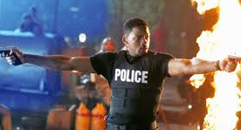 It describes quite succinctly what has frustrated me as a film viewer: action sequences (or entire films) are becoming little more than jagged-edged stimulation devices and not the shared experiences that they should be (see: chase scene in Batman: The Dark Knight)
Essential viewing.
TIFF a-hoy!
Looks like the film I worked on earlier this year, Keyhole, will have its world premiere in Toronto this September @ TIFF. Some press here.
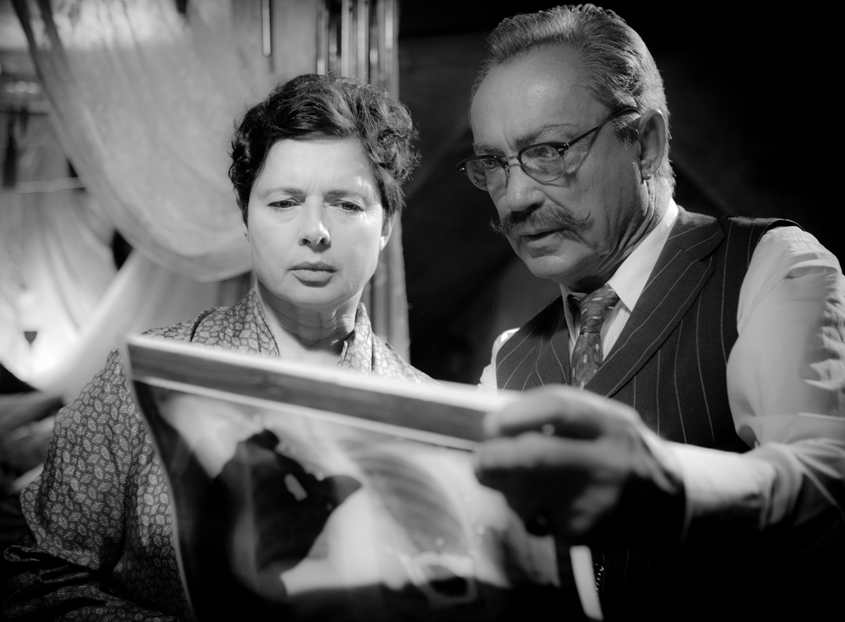
For those new to this site, I have had a parallel journal chronicling the film, called Guy Maddin’s Keyhole: A Post Production Diary, which I wrote in tandem with my work on the project.
Needless to say that I’m very happy to have another film premiering at TIFF, and I hope that it is well-received. Keyhole is a challenging film, even for fans of Guy Maddin’s work, yet I think it’s perhaps his most personal and – in that regard – bravest work to date.
Guy Maddin’s Keyhole

Good news #1: I’m supervising the post production on the new film by Guy Maddin, Keyhole.
Good news #2: I’ve been asked to do a blog/diary of its progress. Sweet!
Here’s the link to my Keyhole post production blog. Don’t be surprised if it takes my attention away from here for the next while. I will endeavour to keep Imaginary Magnitude updated.
My "I Hate Award Shows" Article is up!

Brief Reviews: The Town vs. Animal Kingdom
When Ben Affleck’s The Town came out, many praised it as a powerful crime drama/action film. And yet, the shine seems to have come off of that project, probably as a result of people chasing the hype and actually watching it.
First, let’s discuss its poster. In recent years, I’ve become sensitive to bad marketing. A good example of this is the film Forgetting Sarah Marshall: the ad campaign (in Toronto at least) consisted of anonymous black and white bus and streetcar ads, with hand-scrawled “I HATE YOU SARAH MARSHALL!” (and the like) written on them*. In short, the campaign was cheap-looking, lame, and soured any potential expectation I had for the film – it wasn’t until much later, at my wife’s urging, that I caught it on DVD and found it to be one of the highlights of the year.

Similarly, the poster for The Town (displayed here) is a marketing mystery to me: it looks like a horror movie. It’s directed by and stars Ben Affleck, yet the poster is covered in evil nuns with automatic weapons. In short, I don’t get it: sure, it’s a “serious movie” but what were they thinking? Was it reverse psychology? Who knows. If it were me, it would be a close-up photo of John Hamm licking Ben Affleck’s unshaven face, with the caption: “Holy shit! It’s the guy from MadMen with Ben Affleck! And they shoot weapons!”
Then there’s the film itself. Technically, it’s very impressive. Affleck’s direction is solid. The performances are gritty and engaging. It’s free of stunt-casting. Camerawork, editing, sound: great. But when the credits rolled, I realized what was wrong. The story’s been done a hundred fucking times before – twice by Michael Mann. So, for me, there was nothing being risked as a viewer because, having watched more than one crime drama in my life, there were no surprises in the script. Believe me when I say that I wanted this film to be as good as it promised – and, in fact, it is good. Just not as good as it clearly could’ve been when you take into account all that it has going for it.
So what did I want The Town to be? I wasn’t sure…until I saw the Australian crime drama Animal Kingdom on DVD. It has all the grit, tension, and complexity of The Town, with less overt style and more substance, and no actors recognizable to most North American audiences (outside of Memento‘s Guy Pearce). Its poster? Have a look:
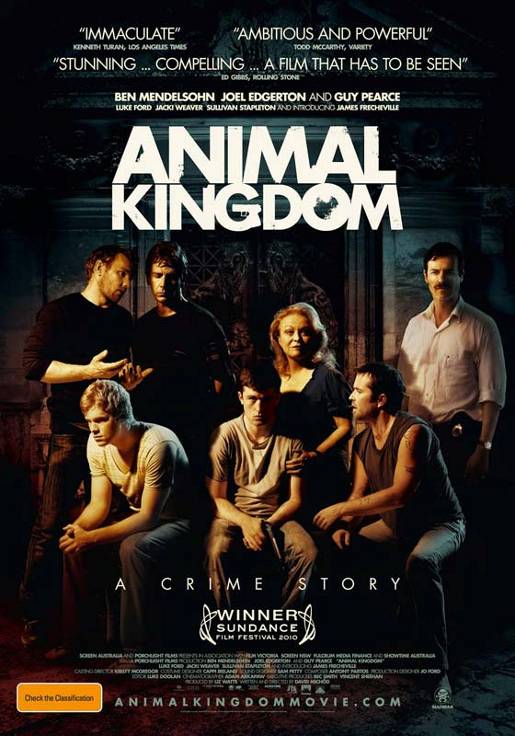
It reminds me of a Jeff Wall photograph. And in the middle of it all is the crafty look on the face of actor Jacki Weaver (nominated for Best Supporting Actress at the 2011 Oscars).
Animal Kingdom is a film fluent in the crime drama language – it even shares some of the tropes of The Town (the nervous druggie robber, the dutiful police detective) yet never once feels as if you are watching a re-treaded story. It is unpredictable and the performances are naturalistic and subtle.Its lack of artifice keeps us watching, whereas with The Town, each successive car chase weighed it down with Hollywood cliché. Where one carries broader tension, the other is quietly disturbing and takes a more nihilistic view of the cops and robbers game.
The good news is that both are available for your perusal on DVD, and both are extremely watchable. Neither, ultimately, will disappoint: it depends on where your expectations are set. I feel that Animal Kingdom is the film The Town wanted to be.
* I admit I’m particularly sensitive to ads which don’t make it clear that they are ads, especially if they look like actual public messages of hatred.
Movies & A Book: Some of The Best Things I’ve Witnessed in 2010
Here’s the best of what I’ve seen this year. I haven’t seen everything. You may disagree with what I have seen. This is life.
FILM:
Inception
Go ahead. Try. Try disagreeing that this is one of the most technically (and perhaps conceptually) elaborate mainstream Hollywood productions released in years which also happens to work as a “movie” that a wide variety of audiences would enjoy watching.
There has been a backlash against Inception. I don’t know how or why this is – perhaps it was over-sold as a deep “puzzle-solver” film, which it is not. And yes, the NYT’s A.O. Scott has a point in his comment that the film’s literal depiction of dreams are lacking psychological heft (outside of Marion Cotillard’s performance as DiCaprio’s wife). In any case, something has caused a revolt against this film and I say this revolt is missing the point.
Inception is, generally speaking, the most watchable, the most fascinating film of 2010. You are allowed to hate it.
A Prophet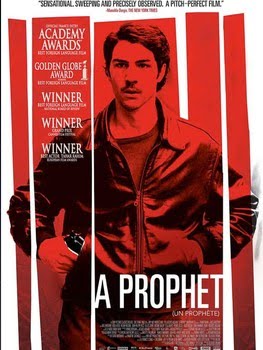
I am a huge fan of Jacques Audiard, a French director who has always rewarded the viewer with films (Read My Lips, The Beat My Heart Skipped) that balance passion with style. With A Prophet, Audiard expands his canvas, creating a gritty, novelistic masterpiece on-par with The Godfather (yes). The story concerns a young incarcerated Muslim who slowly rebuilds himself from within the treachery of prison life, rising from under the thumb of a vicious mob leader to become his own person and create his own empire. Epic, patient, and in places extremely violent. People will be referring to this film for years to come even if it has not really made a mark in North America. Again, a masterpiece.

The Eclipse
I realize this Irish film was released in 2009, but it didn’t get here until now. A compelling ghost story which eschews the two-dimensionality of ghost story films. It was around the twenty-minute mark that I realized it was a film which was going to confound my expectations (expectations based upon years and hundreds of similar plot lines): it wasn’t going to squander what it was and fall prey to hackneyed cliché. A gorgeous, touching, ultimately humanistic film with a stand-out performance by Ciarán Hinds as a grieving father of two children who must swallow his pride to escort a loud-mouthed Aidan Quinn through the motions of a book tour of the small coastal city of Cobh, in County Cork. A sublime achievement by director Conor McPherson.
Notable: Winter’s Bone – see it. It’s on DVD now. Like A Simple Plan, it’s a self-contained “rural thriller” (ugh) with a chilling undertone of barren hopelessness. Unlike A Simple Plan, it’s uncomplicated which is what gives it more of an honest strength. Exit Through The Gift Shop is the perhaps best film made about art and the art world that I have seen – like Inception, it’s not trying to be deep, just smart. Scott Pilgrim vs. The World blew me away because I expected it to be weak (perhaps because all the publicity photos inexplicably used a static image of Michael Cera standing against a fucking wall…imagine if you will, trying to sell Star Wars with a picture of Mark Hamill sitting cross-legged in the desert – sounds awesome, eh?). Not only was it not weak, it was the strangest case of “I don’t know why I love this movie but I really do”. Painstakingly, sublimely Toronto-centric (which, unlike the inexplicable promo photos of Michael Cera, shouldn’t be factored into explaining why it didn’t fare well at the box office) and wildly imaginative – those two things have never met before…oh but wait, I forgot the perfect companion piece: Kick Ass – also shot in TO, and also exceedingly expectation-defying (although the climax is kinda drawn-out). As far as performances go, Jesse Eisenberg (The Social Network) and Colin Firth (The King’s Speech) stand out, along with Winter’s Bone‘s Jennifer Lawrence, and Hailee Steinfeld for True Grit (who, at 14-years, shows huge promise as an actor).
BOOK:
I would have said “BOOKS”, but due to work and school I haven’t read anything published this year (that I can remember), with the exception of John Vaillant’s The Tiger. Lucky for me, since it is without doubt one of the best non-fiction titles I’ve read in years.
The Tiger is a meaty real-life tale of vengeance by the titular beast, in the winter hinterland of the Russian Far East (which the author calls, paradoxically, “the boreal forest”). Vaillant describes an environment historically, politically, and biologically unique, inhabited by hardened outcasts. The shadow of a predator male tiger, known never before to attack without cause, creates a wave of dread throughout the land, with only a small band of volunteers to figure out the mystery. Vaillant provides wave after wave of fascinating detail – examples of how man and beast have evolved throughout time, how human and animal behaviour have worked in similar paths – that by the end of the book you feel as if you should have a credit in Ethology. This is truly a page-turner and I cannot recommend it enough.