Book Review: Never Let Me Go, by Kazuo Ishiguro

Sometimes things just line up in such a way that you can’t help feeling they were put there on purpose. Early this month, as part of a course I’m taking, I went to a weekend retreat, held at a secluded compound by the Credit River. It was a bit eerie, because many of my dreams take place in expansive compounds: wherever I go, even if it seems I’m outside, I just have to look up to see that there is a roof, or some sort of enclosure to remind me that I am not free. So, what book from our library did I take with me at the last minute? Why, Kazuo Ishiguro’s Never Let Me Go, of course. What I didn’t realize is that much of it takes place on a compound…but I’ll get back to this.

I’ve not read any books by Ishiguro – I haven’t even seen the movie adaptation of Remains of the Day. That said, I did work on Guy Maddin’s The Saddest Music In The World, an adaptation of one of his short stories. I’d heard good things about Never Let Me Go, and had always meant to read it. With it being released as a film recently (I don’t think it did that well, despite the critical praise), and since I needed something to read during my time away, I thought it would be a good pick.

Never Let Me Go concerns the story of Kathy, Ruth, and Tommy. It’s told from Kathy’s perspective in the present. She is a carer, who drives from centre to centre, visiting those she looks after. Very soon we are introduced to their beginnings, as children, in a place called Hailsham. It’s an isolated educational enclave, somewhere in England, where the students live, go to school, and grow up. But there’s something a little odd about it all. Perhaps it’s the isolation from the rest of the world. Something in the way some of their guardians regard them. All too soon, their sun-dappled childhood in Hailsham becomes something which haunts them as they grow into young adults. It’s practically all Kathy can use to mark the passing of her time.

Within these reminiscences, we are introduced to Tommy and Ruth, who become the foundational friendships Kathy clings to through adolescence, regardless that Ruth oscillates from friend to enemy – a colourful rather than careful individual who becomes a voice of danger in the fog of their relationship.

The magic of this book is the skill with which Kathy’s perspective is written. There is a purpose for Hailsham, for their being there. There is a reason she is a carer. Never Let Me Go is a capital-H haunting novel, inhabited by people who are slightly cold but reaching out, never quite managing to touch a meaning they hope is there. I can’t say much more without spoiling things, not that it’s a book laden with surprises, so much as layered with subtle, sad observations. A beautiful book for a rainy day.

Kazuo Ishiguro’s Never Let Me Go (ISBN: 978-0-676-97711-0) is available at an independent bookstore near you, or at various online retailers.

Share

I Don’t Want To Know

As a writer, even though I am not part of any sort of literati, I am still plugged into the lit scene. You need to be if you want to understand the general to-and-fro of any industry you are interested in becoming a part of (same goes for TV, music, theatre, etc..). That said, I must make an admission. I am making this admission because I think there are a lot of people like me out there who feel the same but are reticent to admit it.

Here goes: I don’t take any particular interest in the life of the artist outside of his or her art.

When I read a book, I don’t care if an author comes from the East Coast and studied journalism, had a drug problem and now lives in a shed with a mastiff. It’s not that I don’t care about this author personally, it’s that these facts shouldn’t have anything to do with the book that I am about to read. I should be able to pick up the book, knowing nothing about said author, and be able to read it, enjoy it, be fully affected by it, without substantially missing something due to a lack of familiarity with the author’s biography.

And yet, when you are culturally plugged-in (and by this I mean, you check out industry blogs, trade mags, etc.) there is so much white noise about the artists themselves that it seems divergent from what it is they are supposed to be doing: their work. We can talk about Picasso’s passions, but 100 years from now there will probably only be discussion of his work – your work is the only thing left after you and everyone who knew you has died. And if people are still talking more about you than your work after this point, then I would think the quality of your work was overstated.

Would knowing that Stephen King battled drug addiction offer an insight into some of his writing? Yes. But, my point is that if that insight is necessary in order to fully appreciate a piece of work then there is a problem. The work doesn’t work if you need a biographical cheat sheet to inject context into the material.

I think Bryan Ferry is an fantastic vocalist – and I don’t want to know anything more than that. Nor the details outside a director’s films, nor what inspired the playwright to write her play. I’ve got my own shit going on, thanks very much.

Ephemera is for journalists, fanzines, and those working on their Ph.D. The general public should not feel inadequate if they pick a DVD or book off a shelf, sit down in a theatre, or load a song without being prepared with supplemental information not contained within the medium which contains the work. The work inevitably has to stand up for itself. I write this for two reasons: first, with the likes of the AV Club and traditional print/TV media clamouring to add as much web-based context as possible to every article, there’s a growing sense that – for the everyman – if you aren’t savvy to the smallest details of each artist’s passings and goings, you are nothing but a tourist. Secondly, embracing social media to a claustrophobic degree, we can now read endless commentating on authors reading their work for a live audience!…something no one really asked for outside the publishing companies themselves and perhaps the authors’ parents. Let’s face it: most authors can’t read aloud to save their lives – it’s not their specialty.

There are reasons for digging deeper, but that’s up to the individual. It was interesting to learn more about HP Lovecraft when I reviewed Michel Houellebecq’s quasi-biography of him and his work. What’s funny, however – using that same example – is that when I proceeded to read the two works by Lovecraft contained in that same book, I don’t recall thinking to myself “Ahh – this is where his uncomfortable relationship with women takes shape!”. That’s because the stories were two of his masterpieces, and when you witness a masterpiece, peripheral biographical information is going to gunk-up your enjoyment.

The medium may be the message, but the work contains the words. Outside of this we are left with cultural “bonus features”. Nice to have, but not necessary.

Share

Swirl

I am trying (desperately) to avoid a “boy, it’s been a wacky ride these last few months!” post. It certainly isn’t for lack of things to talk about, news to update you with, opinions to confess/shout.

Thing is, I don’t know who you are. Sure, I know there are some of you who are semi-regular visitors. There are others who happen upon this place by accident (via Blogger or StumbleUpon). There are also those who come here via Google searches, either via my name or – most likely – a book review (which admittedly I haven’t done in, oh, a year or so *). And no, this isn’t going to be a “Matt wittily evading accusations of being a lazy bastard by turning the camera on the reader” post.

I’ve been posting artsy stuff, writerly stuff, industry opinion stuff. I don’t mind the randomness, so long as there’s no fluff. I do mind the lack of output. I wish, for one, that I could post more photographs (which is to say, I wish I had a better selection of photos to post **).

It comes down to the fact that I’ve been working like a dog since May (note: this happens every year that I’m working on a SAW film). When I come out of these periods, I feel like Rip van Winkle: a little dazed, slow on the up-take. Whereas last year this time I started teaching, this time this year I am a student (part-time) †. I have a small (but good) feature and a small (but good and potentially controversial) TV show on my plate from now till February. If funds allow, I also hope to have an editor working with me on my novel, with an eye to approaching a publisher or self-publishing if that doesn’t seem feasible ††. I’m collaborating on a musical.

My plate is full.

– – – 

* which isn’t to say that I’m not reading or that I don’t want to do any more book reviews. I’m reading a lot of non-fiction, thank you. Much of it either out of professional or academic interest. However, if only to improve my Google ranking, here’s a quick book review of Antwerp by Roberto Bolaño: What the fuck was that? (ISBN-13: 978-0811217170)

** another casualty of working so much is my photography. I still have the same roll of film in my camera that I’d loaded in June. I think I’ve only taken 4 exposures since then. Of course, my cellphone camera gets all the fun these days, unfortunately.

† I will be continuing teaching, but for only two terms this year as opposed to three (which was exhausting and… exhausting)

†† It needs a new name, for one thing. And I know this is going to drive me up the wall more than any changes to the actual content of the book.

Share

The Skinny on Stereoscopic Films, or, What’s Up With 3D?

This is one of those moments where I find myself on the inside of a phenomena which (increasingly) arouses strong opinions from members of the public. In this case, stereoscopic filmmaking – or 3D, for short (even though it’s not really 3D and tramples on a term which is used in animation for both stereoscopic and non-stereoscopic work).

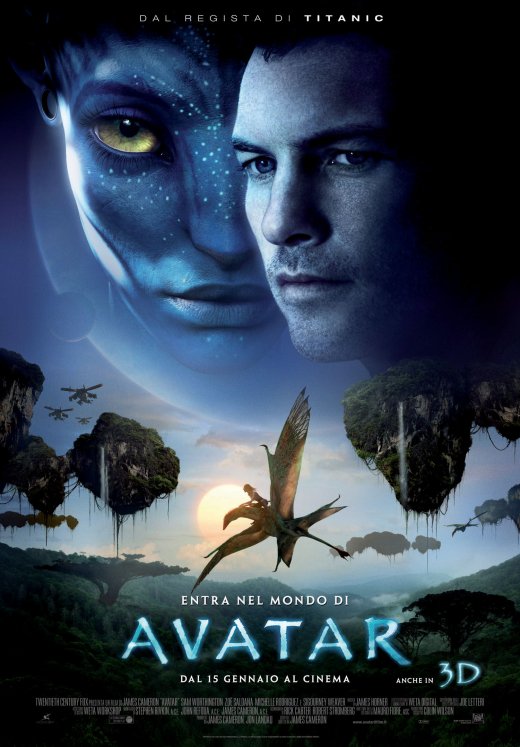
I’m currently working on a 3D film in an age (or, more precisely, over the course of a year, starting with James Cameron’s Avatar) where 3D technology is being pushed as the next in-thing. And yet there are many detractors, some of whom have some good ammunition for their opinions.

As someone who has been intimately involved with a 3D production, from beginning to end (well, almost – we’ll be in theatres in October) I find myself more and more a spokesperson for the technology, if not for the studios who currently are trying to cram every release into a 3D format, whether or not they were meant to be that way.

Let me begin by saying that I enjoy the notoriety of being the resident expert on 3D technology at parties and barbecues whenever the subject arises. Now that I have that out of the way, allow me to bitch…

Everyone keeps asking me: is 3D here to stay? The answer is a conditional “yes”. The condition being that film studios understand two things: First, that you can’t take a 2D movie and make it 3D using brain-dead rotoscoping software and expect it to be a success; second, that you can’t continue charging more for 3D films and not deliver a product that is both a good example of 3D and a relatively good film to boot.

To elaborate:

1)  Since the release of Avatar, there seem to be just as many films released in theatres boasting 3D which were never shot in 3D, nor even envisioned in 3D prior to production. Some examples would be Tim Burton’s Alice in Wonderland and M. Night Shyamalan’s The Last Airbender. These films were taken by the studios after completion and put through a 2D-to-3D conversion process, using software to rotoscope the 3D effect, frame-by-frame, a process unsupervised by the director.

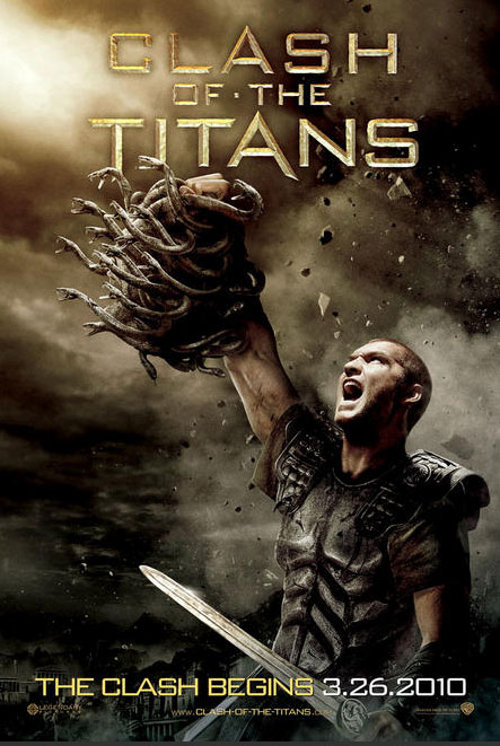
This process, while handy for converting short bits from 2D to 3D for films which originate in 3D, ignores a very large consideration for those producers and filmmakers who shoot in 3D from the outset: you have to plan to shoot in 3D from the start. You cannot take a script or a shot list for a 2D film and superimpose it onto a 3D film: your set design, your camera lenses, your blocking, your picture editing…so many things change as a result of switching from 2D to 3D. When you simply take a 2D show and auto-render it in faked-out 3D you get something which most viewers – critics and plebes alike – will say isn’t necessary. At worst, you get Clash Of The Titans – the current poster child for anyone with an axe to grind about 3D in general and post-converted 3D specifically. Not only was it a weak remake of the original (from what I hear), but the 3D post-conversion was done in two weeks. Two weeks. From what I hear, the subsequent “3D” is ridiculous to view.

2)  Considering that theatres charge a premium for 3D films (about $3 more than usual depending upon where you go – sometimes more), when a poorly rendered post-converted 3D film is released it damages the viability of an already vulnerable new technology. It’s one thing if a film is bad, but when it’s bad in two dimensions, bad in a crappily-rendered pseudo-third dimension, followed by the sucker punch of having to pay MORE to see it…you get my point. I hope. Movie audiences can be forgiving, but there comes a point of revolt which I can see happening if there aren’t enough 3D films released which originate on 3D. Furthermore, the studios do no service to themselves if they don’t make a point of clarifying this to audiences: why can’t they say when a film is originally shot in 3D? Isn’t that a selling point? Likewise, why not be honest and say when a film has been post-converted? If it’s a case that no one wants it to be known that their film was post-converted…then why post-convert to 3D in the first place? There’s certainly no audience I know that is clamouring for blocky cut-out shapes which look like they were poorly separated from the background using Photoshop. To summarize this point, content is king: the quality of content, not the volume of illegitimate content.

Up until Avatar (and god knows how I long for the day when another film takes its place as the “gold standard”), the greatest accomplishment in 3D technology was the few seconds of the guy in House of Wax, standing outside a theatre with a ping-pong mallet, knocking the ball directly toward the camera. You could imagine people ducking for cover at the time. That was 1953. From that point onward, 3D technology didn’t change, largely due to the format never winning over audiences: the films were oft-times gimmicky and there were never enough 3D films at any given time to make it feel as if the aesthetic was going anywhere. With the recent advent of digital cinematography, 3D is much easier (logistically and technically) to achieve. And while I would love someone to make “art” (are you reading this, Wong Kar Wai?), I’m happy if, for the time being, the format stakes its territory in the ghetto where its strengths have always been: action/sci-fi/fantasy – hey, if it works, why not? I don’t hear anyone clamouring for a 3D Terms of Endearment

Technicians and filmmakers are doing their part: they are taking a risk and trying to push forward innovatively with something daunting and new. Is 3D here to stay? Again, a conditional “yes”. What we need are studios and theatre chains to be honest with the audience and not do irreparable damage to the very thing they are hoping to profit from.

Share

Why You Should See "SUCK" (And Why It Shouldn’t Have To Be On DVD)

In 2008/9, I worked on the indie feature, SUCK. It’s a rock-and-roll vampire road-movie comedy directed by Toronto’s Rob Stefaniuk and produced by Capri Films’ Robin Crumley. For a low-budget feature (and I realize that’s not the best way to preface a compliment) SUCK is well-written, well-cast, funny, and in places very funny.

However, despite being well received at both the Toronto International and South-By-Southwest Film Festivals, it was denied any interest in a theatrical release by Canadian distributors. The longer I waited for someone to pick it up, the more I wondered what the problem was. Sure, you could argue that vampire films have saturated the market lately, but that’s seeing things from the late-summer of 2010 (SUCK was completed over a year ago). It was a no-brainer, even for a limited release: who wouldn’t like a rock vampire comedy w/ cameos by Iggy Pop, Alice Cooper, and Alex Lifeson (among others)? It’s the sort of smart-but-not-overly-self-conscious effort which seems perfectly balanced for a theatrical audience.

Nothing happened. Well, actually, less-than-nothing happened: a lot of crap was released in Canadian theatres instead. Crap like the widely-released and quickly forgotten Gunless, which begged the question: if nobody is interested in seeing Westerns in theatres, what could possibly have been the selling point of a comedy-romance-Western with (as you might have guessed) no gunfighting? The answer is that it doesn’t matter: this is Canada, and film distributors prefer to release crap like Gunless and GravyTrain than anything which could hold an audience’s sustained interest. Evidently, the point of film distribution in Canada is to go through the motions.

Well, it’s too late for Canada. While SUCK secured a limited theatrical distribution in the U.S., it’s out on DVD here (the US DVD release is September 28th). This means it will only be screened here through niche film festivals. While that’s not a bad thing, it pisses me off that a funny, well-produced film (rare creature that is) should be all but abandoned after a successful festival run. This situation is certainly not helped by SUCK‘s (pardon the pun) anemic website: it makes no mention of any upcoming film screenings, DVD release dates, or even contact information. Who the hell is the site for? This is what happens when you don’t have a distributor to help with publicity. Not even the local indie journals can help: NOW Magazine completely omits any mention of it, as a film or DVD release. How’s that for hometown support? Thankfully, The Toronto Star’s Peter Howell is the only mainstream film critic to put the DVD release of SUCK on public record (in glowing terms no less…and slagging Gunless ).

I want people to see this film. Not because I worked on it, not because I want to punish producers who keep banking on dead-brained populist Paul Gross vehicles, but because this is a worthy film. It’s not Sophie’s Choice, it’s not going to change your life. But you’ll laugh. I just wish it had been allowed the opportunity of a theatrical run, which it so clearly deserved. It works better in a theatre than on DVD: with a pumped-up audience rather than in the controlled confines of your livingroom. That said, I will be pleased if, by my writing about it, one more person will see this movie than if I hadn’t.

Share

The Dark Side

I was flipping through the NYT last Sunday and came across a short collection of riffs from filmmakers about their favourite “Holiday Movies”. The following, submitted by screenwriter David Benioff, was regarding Planes Trains and Automobiles by the late John Hughes:

Hughes once wrote: “I understood that the dark side of my middle-class, middle-American suburban life was not drugs, paganism or perversion. It was disappointment. There were no gnawing insects beneath the grass. Only dirt. I also knew that trapped inside every defeat is a small victory, and inside that small victory is the Great Defeat.”


I immediately caught the reference Benioff (via Hughes) was making and it struck a chord. You see, when we (in filmic terms) discuss the “dark side” of the middle-class in America, who else is this synonymous with? Correct: David Lynch. And was it not Lynch’s seminal dark-side-of-middle-class-America, Blue Velvet, which features – literally – gnawing insects beneath the grass at the beginning? Oh, and the drugs and sexual perversion? Still don’t believe me? Try this: Blue Velvet came out in ’86. Planes Trains and Automobiles? That was 1987.

When I read Hughes’ quote, I knew he had more to say about it. I could tell that he thought Hughes’ film (and perspective on America) got short shrift.

In any case, what I’m saying is Hughes was picking on Lynch, perhaps more so picking on all of the cineastes and self-styled torch holders of American Surrealism. Look, he’s saying (or I’m paraphrasing), why does any intelligent discussion of the “dark side” have to fast-forward to the DevilWhy are we in such a rush to point to the murkiest common denominator?

I think Hughes’ perspective is more realistic. Perhaps even more frightening because it is anything but abstract. If there’s anything which immobilizes the positivism of American  can-do – an adult Boogeyman if you will – it is the spectre of defeat. It is, after all, failure. There is nothing which cuts to the heart of our civilized fears with more power than failure, pure and simple. We do not want it infecting us. We do not want it living beside us, dying slowly.

I like the drama (nee opera) of Lynch’s perspective. But it is only that: one perspective. I feel we cheat ourselves by claiming that one perspective as definitive before we’ve truly allowed ourselves to look at the whole landscape of the human psyche.

I also think John Hughes had a good soul.

Share

quote

“Celebrities are not superlatives in our field of expertise. If celebrities that are schnoring in on our field started out trying to do what we do and were held to the standards we started out upholding, a great many of them would’ve never made it.”

Billy West, voice actor (“Futurama”) on the use
of celebrity voice work in animated films.

Share

It Doesn’t Need To Be This Way

I was having brunch in the Market with my friend, Lady B, whom I’ve known for over 10 years. We were talking about “life changes” (we both being close to 40). We got onto the topic of how her and I sometimes are conditioned to expect the worst.

“With the house, didn’t you feel that, somehow, everything would inevitably go wrong and you wouldn’t get it after all?” she asked.

“Yes!”

It was as if she had read my mind. We were eating palacsinta at a small Hungarian bistro.

We talked about this, because she’d felt the exact same way when she and her partner bought their house. She speculated, correctly in my estimation, that this mode of thinking – let’s call it auto-tragic thinking – was the result of her and I coming from divorced families (the divorces or circumstances surrounding them being particularly destructive). The end-result, if not in all cases then certainly in ours, was that we were conditioned to expect gift horses to have mouth cancer and every silver lining to have a cloud moving in its way. Happiness was a pulled rug away from tragedy.

I thought about moments in my life – moments that everyone experiences – like applying for a job, asking someone out for a date. Moments where, realistically, we hope/aim for the best. The difference between the average person and people like myself and Lady B is that, in the event we don’t get the job we hope for, in the event that special someone isn’t interested in us, we tend to see it as a fateful inevitability; a symptom of a curse. Of course, we say to ourselves. Why should this be any different than any other time?

The subject clearly struck a chord for both of us.

“You expect it to be like in Carrie.” she said in a follow-up email, discussing how we became conditioned to expect the worst. “You’re at the prom, thinking that everything’s turning around in your life and then suddenly you’re covered in pig blood.”

The best male equivalent I could think of was Laurence Harvey’s character in (the original) The Manchurian Candidate; a tragic puppet whose fleeting tastes of freedom coincide with horrific end results.

So, no, neither Lady B nor I are cursed. Our houses have not fallen down or been taken away from us by a nightmarish bureaucracy. If anything we are only beginning to sense just how much re-wiring is necessary for us to see things clearly, without the faulty psychological infrastructure that led to us to believe that, indeed, the odds were stacked against us.

The mind is a frightening thing. This is why I read books and watch films which challenge my preconceptions. This is why I am lucky to have friends such as Lady B.

Share

And The Nominees Aren’t…

I will do what most major news outlets won’t do and say upfront that there are an enormous amount of more important things going on in the world (or, conversely, not going on) than this…

That said, I’m a film hound and thus can justify this mirage of mostly-useless information

The 834th Academy Award (ie. The Oscars) nominations were announced this morning. I don’t think there has ever been an Oscars year where I’ve been satisfied that the right films were (or weren’t) nominated for the right category (or at all). And yet…

  • WALL-E didn’t get nominated for Best Picture, but was instead victimized by the mostly-useless ghetto category of “Best Animated Film of the Year”, where it shares it’s chances with such a memorable classic as Bolt. I will admit, I loved WALL-E; it was one of the most subversively humane films made in years. The sooner the “Academy” can eliminate the Animated Film category the better.
  • The Reader…I haven’t seen it. I don’t know anyone who’s seen it. Yet while it seemed to get slightly trashed when it came out (one of the Nazi-themed Christmas 2008 releases) – and by “trashed”, I mean it was called a weak, manipulative Oscar-baiting film – it was nominated for “Best Motion Picture of the Year”. Again, I don’t want to criticize things I haven’t seen…but…
  • I haven’t seen any of the films nominated for “Best Motion Picture of the Year”. I do want to see Slumdog Millionaire (terribly), whereas Frost/Nixon and Milk – though I do not doubt their quality – will probably come into my life via DVD rentals. As for The Curious Case of Ben(*yawn*), I have no interest.
  • Editing, that category no one seems to understand seems a mirror image of the Best Picture nominees, with The Reader swapped for The Dark Knight. I’m okay with that, yet – while I liked Dark Knight, I would not necessarily nominate it for best editing; the big chase scene in the Chicago (sorry, Gotham) tunnel was terribly disorienting (as in, this is all cutty and fast and good and stuff, but why does it make no sense to me?). I don’t have a problem, on the surface, with a cutty style of editing (it was well-served in the Oscar-winning Bourne Ultimatum, perhaps one of the best action films of the decade), but it needs to make sense, which I felt was missing in parts of DK.
  • Happy that Waltz with Bashir and The Class were nominated for Best Foreign Language Film – I want to see both of them very much. Would have been nice if the Swedish film, Let The Right One In, had been nominated, but that’s me dreaming.

And now, on to more interesting things…

Share

Miscellany: November 18, 2008

  • Ingrid is approaching world domination. Her plaudit-winning reinterpretation of the cover for Cormac McCarthy’s The Road has not only received international online acclaim (Bookninja, The Guardian, Boston Globe), but her work was featured in Sunday’s New York (bloody) Times Book Review. Print and online editions (with the unfortunate misspelling of her last name in the print edition – needless to say this took a little of the shine off of the accolade. They will, however be printing a correction in an upcoming edition and the online version has her name spelled correctly).

  • I’ve sent the first revised draft of my novel to a few selected readers. Unofficially looking for feedback and consensus that what I’m doing is worthwhile. Nervous. Anxious. Perhaps as a result of this and other things, I’ve been struck by some interesting what-if’s regarding a new book idea. I must be a masochist. At least it doesn’t hurt.
  • I turned 38 on Saturday. I share that day with Ed Asner and Tilda Swinton (they were not in New York, unfortunately – I tried).
  • Two films I worked on opened within two weeks of each other. One is a franchise horror film (of the “moral error leads to violent suffering” kind) which traditionally draws massive audiences and box office gold (if not good reviews). The other is (wait for it) a gore-Goth rock opera which is only receiving an eight-theatre release (if not good reviews). They represent what I’ve been working on for the last twelve months. Working in film/TV is “what I do for money”, a distinction I wish I didn’t have to make, save for the fact that the quality stuff (often Canadian) doesn’t pay my rent. It’s a quandary punctuated by background horror-movie funhouse screams.
Share