Pain

I have this weird, recurring thing. It starts with a dull soreness in my left glute, kinda like someone kicked it the day before and it feels bruised. Then, in a day or so, an odd stiffness and soreness stretching from the glute all the way down the back of my left leg, going down to my ankle. Within a day or so it reaches the zenith of its pathology: pain.

Two weeks ago yesterday I tried getting out of bed. I swung my legs over to the side of the mattress, and between that everyday action and my feet touching the floor I became a crumbled mess, bent over in agony. I was in so much pain I was crying. I was unable to stand. I was unable to sit. I was unable to do anything without experiencing the sort of intense, unrelenting pain that makes you realize in seconds why anyone would unhesitatingly reach for opiates.

What I have goes by two names: pseudo sciatica, or piriformis syndrome. The sciatic nerve travels from the spine and down the leg where it provides sensation to the skin of the foot and the lower leg. Unlike classic sciatica which involves irritation of the nerve from the spine via a disc, what I got is caused by the irritation via the piriformis muscle — something you’ve likely never hear of, but it’s a band of muscle in the core of your glutes. If the piriformis is aggravated it can bother the sciatic nerve in a similar way to classic sciatica. [Update: please see the follow-up post]

I’ve described the pain to people as like having your hamstring replaced with razor wire. It’s actually worse, because of how the pain “glows” all through the leg. At its worst, the pain cuts through your thoughts, your feelings. It takes priority over everything. It doesn’t care if you are happy or if you had plans to go somewhere that day. I’m always humbled by how quickly physical pain cuts through everything, taking priority, and how it terrorizes me with its power. I end up impatient with others, downright angry 24/7. I catastrophize: this is never going to end, I’m going to be like this forever.

I can afford physiotherapy, which makes me lucky. I don’t have health benefits because I’m self-employed, so anything not covered by provincial health care comes out of my wallet. I immediately checked myself into a physio clinic and I remember being furious: this again. This being physio. Physiotherapy (and related physical therapies) is something I have a good deal of experience with and I never hesitate to recommend it to people; the irony is that when I find myself being forced to return to physio it feels as if I’ve failed at something. Something tells me I’ve been irresponsible, which is silly.

Piriformis syndrome can happen to people who sit a lot. While I’m one of the most physically active people I know (I walk to work every day, I go to the gym, I run, I practice baguazhang) my job as a psychotherapist means I’m sitting for an hour at a time. Piriformis syndrome also prefers distance runners, which makes me a prime candidate.

For the last two weeks I’ve been doing physio exercises three times a day, combined with visits to a clinic, combined with acupuncture and Chinese medicine. Progress was very, very slow. The last time I had this it lasted all of a week or so, and I was able to work it out on my own with stretching and massage. This time it’s been remarkably more painful and long-lasting.

Yesterday, on the two week anniversary of not being able to stand out of bed, it felt like something had subtly changed. My mobility felt more easy, I didn’t have the feeling like I couldn’t extend my lower leg when I was walking on the sidewalk doing errands. I stayed outside, pushing myself a little, forcing myself to stay active. Today, for the first time in many weeks (partly because of the terrible weather we’ve had) I was able to practice ba gua outside on our terrace. I nearly cried.

My relationship with physical exercise is a personal one. It allows me to connect with my body. It is embodied movement, whether it’s running a 10K circuit or doing ape offers fruit. I’ve gone two weeks without any chance of significant exercise, and so the things that gave me internal relief — running, baguazhang, gym — were off-limits, which in turn made me miserable, feeling imprisoned.

I suppose I’m sharing this because it’s important to take a moment to reflect on the relationship between body and mental health. How it directly affects my spirit. The pain is slowly receding, I have my mobility, and I know that soon I’m going to be able to run outside and feel better. But my experience pales beside anyone with chronic pain, and I am humbled when I consider anyone who has to go through life under such conditions, be they due to injury or living conditions. Not to mention the fact that, when this has passed, I will have spent hundreds of dollars on physical therapies that many cannot access.

Share

A book, some photos

I swear I’m not a packrat, but sometimes you hold on to things for reasons that seem more intuitive than logical. Which brings me to a book on our shelf at home — The Chrysalids, by John Wyndham. This was from Grade 9 English class, if I’m not mistaken.

oneIMG_20190308_1420386

Let’s get something out of the way, in case that book cover looks cool. It has absolutely nothing to do with the story, its characters, the themes. I am afraid to say there are no weapon-wielding anthropomorphic insects, which was a crushing blow as I turned the pages at the time. Don’t get me wrong, it’s a good book, and John Wyndham (The Midwich Cuckoos, The Day of the Triffids) was no slouch.

However, a couple of years ago, when I took it from the shelf to have a look, I found two photographs inserted. You see, back then I was a yearbook photographer, and these were a couple of photos I’d probably printed off at the time (this would have been 1985?) perhaps to give to one of the people pictured should I have seen them in the hallway between classes. It’s possible it was just a fancy bookmark. I don’t honestly remember, but I’m struck by the good condition of the paper (printed on glossy stock, which was verboten in the darkroom because of its cost and scarcity). If you look at the bottom margin of the upper photo below you can see that I didn’t square the cut.

twoIMG_20190308_1421453

This is not a John Hughes film. At the end of the day, we’re looking at three teenagers standing at the rear (smokers’) entrance to Memorial Composite High School, in Stony Plain, Alberta. I sorta knew a couple of them. The guy in the middle was an asshole straight out of Stephen King’s Christine. I suppose I could grab my yearbook and look up their names, but all that’s going to give me are facts, right? What strikes me about the Wyndham book, the photographs, is how much of a time capsule it all is, as a somewhat complete package. Of a kid who was yanked from town to town, school to school, who didn’t get to have much say of where I went, what I had to endure along the way, who became more preoccupied with getting through it as opposed to (cue Hughes, whose movies I grew up watching) Having The Time Of My Life.

I suppose there’s a clever thing I could do: to connect the misrepresentation of the cover of The Chrysalids vs the more complex content, to the misrepresentation of how high school is sold to us vs the reality of growing up for many of us. So I will.

Share

A new novel

So, in case you think I’m a complete sloth, one reason I haven’t been posting much is that I’ve been busy the past few years working on a new novel, called Radioland. The reason I can write about it now is that I’m convinced it doesn’t suck (or no longer sucks, depending upon the draft). Very soon I will hand it to my agent and all the publishers will be bidding on it hopefully it will find a good home.

This was a hard one. Not as story-driven as The Society of Experience, but similar in that it features two first-person perspectives. This is very much a “trauma book” and it pissed me off when I realized this was the case. Writing about trauma takes a lot of heavy lifting, and is draining as fuck.

Here’s the Official Synopsis:

Kris is an alt-rock musician who abruptly drops out of his popular band to rake over an unprocessed trauma from his childhood; Jill is an outcast who operates in the shadows of the city, cursed with a dangerous type of magic that draws mysterious strangers to her. By chance, they start a correspondence with each other and a strange relationship begins – one that coils around their lives like a macabre spell. As they share their stories with one another, they each approach the source of their misery and risk losing themselves, even their lives, in a darkness that seems destined for them.


Everything Jill senses tells an intense story, so she numbs herself with alcohol to keep her head clear, hoping she’ll meet someone who can tell her how she came to be the way she is. Kris struggles to maintain his grip on reality as he pulls apart the threads that make up his identity. Working through fallen mentors, splintered identities, and substance dependency, the two of them try to help each other make sense of their lives, though it may ultimately reveal one of them as a serial murderer.


Radioland explores the absurdity of fame, the toxicity of trauma, and the morbid dangers unearthed as we seek a greater understanding of ourselves.


Interesting, huh?

Writing this book (and applying for grants which are never granted), I feel I’m coming closer to describing my approach. I call it metaphysical social realism; that there can be fantastical things such as time travel and actual magic…but these facts don’t change the rest of the world which contains us — rent is due, relationships require maintenance, the responsibilities of adulthood call on us whether we are ready or not.

I hope to provide more updates on Radioland as they happen.

Share

Hello, world (2019 version)

For all intents and purposes, I abandoned this blog. Not willingly or intentionally. To be honest, I didn’t (and still somewhat don’t) know what to do with it. You see, it contains a lot of crap; this is what happens with any blog over time: you change, the world changes, your knowledge/opinions develop. You end up with a blog where you squint at parts, hoping nobody looks too closely at the early stuff. I’ve been doing this since 2006, so cut me some slack.

I’m here to say that I’m back. I just don’t know what form this is going to take. You see, at some points this blog has been philosophically driven, psychologically driven, artistically driven…and I always feel bad when I change the mandate.

Why can’t you be more consistent? Does that question sound familiar? For those of us who are outliers (not by choice but by design), there is a great deal of downward pressure on us by society to fit the fuck in. Because if you’re not consistent then you’re difficult, and difficult means people have to spend more time than they anticipated trying to figure you out. People who are difficult or inconsistent typically find themselves struggling to figure themselves out — why the hell am I taking a path that only makes things harder for me socially?

Often, there’s no choice. Because being consistent typically means disregarding complexity, and if you have an innate appreciation for complexity then this is going to be a problem. And so, getting back to this blog, I’m not going to sweat the inconsistencies. I’m not going to pretend to stand by everything I wrote in 2012 or 2009 — this is why most posthumous memoirs shouldn’t be published: if the author had an opportunity, they would probably throw them into a fireplace for fear of looking like an asshole/monster. Thankfully, I don’t think I come across that badly.

Kerry Clare has some interesting points to make about returning to blogging. For me, I can relate to wanting to shift away from the disposability of social media. Particularly as I’m wrapping up work on my next novel, I think I have time for this.

I hope you’ll stick around.

Share

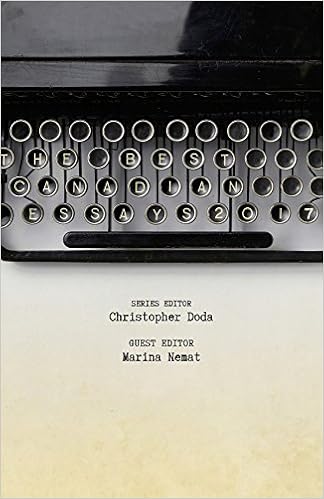
The Best Canadian Essays 2017

I’m proud to announce that my essay, On Madness Within Imagination (previously published in the Humber Literary Review) has been chosen for inclusion in The Best Canadian Essays 2017. It’s now available in-store and for online purchase.

Other authors included in the collection: Peter Babiak, Deni Ellis Béchard, Jane Campbell, Leonarda Carranza, Francine Cunningham, Larissa Diakiw, Alicia Elliott, Suanne Kelman, John Lorinc, Lauren McKeon, Susan Peters, Russell Smith, Joanna Streetly, Richard Teleky, and Jane Edey Wood.

If you live in Toronto, there’s a launch planned for November 16th @ Ben McNally’s on Bay Street. I will be reading along with a selection of other authors.

Share

Update: May 2017

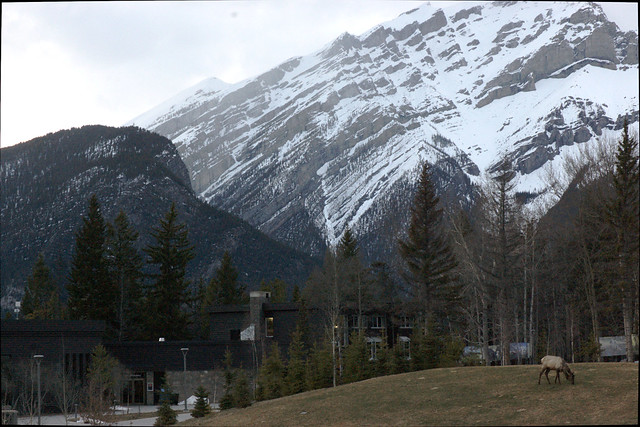
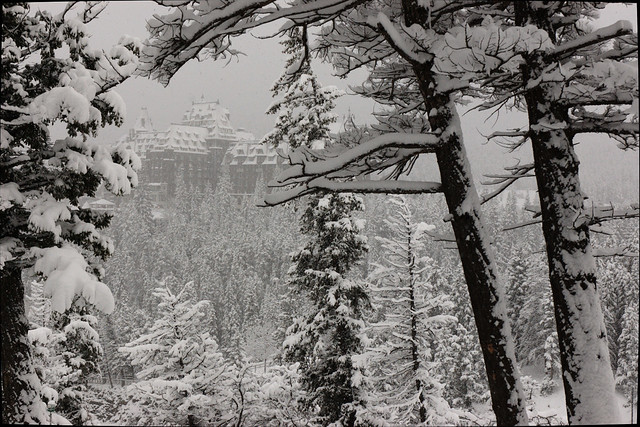
My lack of updates (at least over the last few years) represent activity elsewhere (offline, or online somewhere else). In April I had the wonderful pleasure of being accepted at the Banff Centre for Arts and Creativity for a self-directed writing retreat. I hadn’t been to Banff since I was in my teens, so it was a great refresher on a very unique part of the country. It was also my second time visiting Alberta in the space of 6 months (previously over 20yrs before that), so with all that (including altitude and time changes) it was an intense, and dizzying, yet ultimately productive week. 

When I say “productive” I mean that I’ve been working on the next novel. I can’t say that I achieved any fist-pumping wordcount, but the quality of the content was my focus. I realized when I began to work that I’d written much of the “easy” stuff beforehand, leaving this idyllic escape the setting for me to enter a very challenging series of character mindsets. Not fun. There was beer. 

This past weekend, I got to take a getaway to Prince Edward County for some much-needed not work/not writing time away from home. I really love that neck of the woods. I have an affinity for rural environs: the smell of manure, the birdsounds, the expanse. And yes, the wonderful wine and beer, and cheese. Yet, coming back to Toronto, I realized that there were things missing that I would struggle to live without. Rural areas don’t have a lot of diverse culture (I will say that Picton has a very nice movie theatre, and Bloomfield has a cool-looking drive-in), and they also happen to be very white. By “very white” I mean they are almost exclusively enclaves of white people. I grew up in those sorts of enclaves and I am in no rush to return without some evidence that [wherever I fancy moving to one day]  welcomes POCs (persons of colour).

I’m working through a lot of ideas as a result of these two trips, some fictional, some filtered through autobiographical experience. Along the way, I’m hoping to begin posting writing-related ideas here (I say “ideas” because I’m not comfortable with “tips,” which springs from my work as a psychotherapist who eschews advice-driven approaches).

Stay tuned.

Share

ReLit 2016 Nomination!

I am honoured to have The Society of Experience shortlisted for the 2016 ReLit Awards. What are they, you ask, and wasn’t 2016 last year?

The ReLit Awards are, to quote the blurb on their site, “to acknowledge the best new work released by independent publishers — may not come with a purse, but it brings a welcome, back-to-the-books focus to the craft.” In other words, rather than being about money and televised coverage, it’s about quality. One distinguishing element of the ReLit Awards is that they select books from the previous year. Thus, the 2016 ReLit shortlist represents fiction, poetry, and short fiction from 2015.

I am with some good company:

The Capacity for Infinite Happiness, Alexis von Konigslow (Buckrider)
All-Day Breakfast, Adam Lewis Schroeder (Douglas & McIntyre)
One Hit Wonders, Patrick Warner (Breakwater)
Split, Libby Creelman (Goose Lane)
Chinkstar, Jon Chan Simpson (Coach House)
Too Much on the Inside, Danila Botha (Quattro)
Martin John, Anakana Schofield (Biblioasis)
Winnie’s Tongue, Nic Labriola (Insomniac)
One Hundred Days of Rain, Carellin Brooks (BookThug)
The Theory of Light at Midnight, Elizabeth Ukrainetz (Tightrope)
A Superior Man, Paul Yee (Arsenal)
A Free Man, Michel Basilieres (ECW)
The Man Who Saved Henry Morgan, Robert Hough (Anansi)
The Hunter and the Wild Girl, Pauline Holdstock (Goose Lane)
The Society of Experience, Matt Cahill (Buckrider)
Where Did You Sleep Last Night, Lynn Crosbie (Anansi)

I expect the selected category winners to be announced in a month’s time.

Share

Essay in Humber Literary Review #6

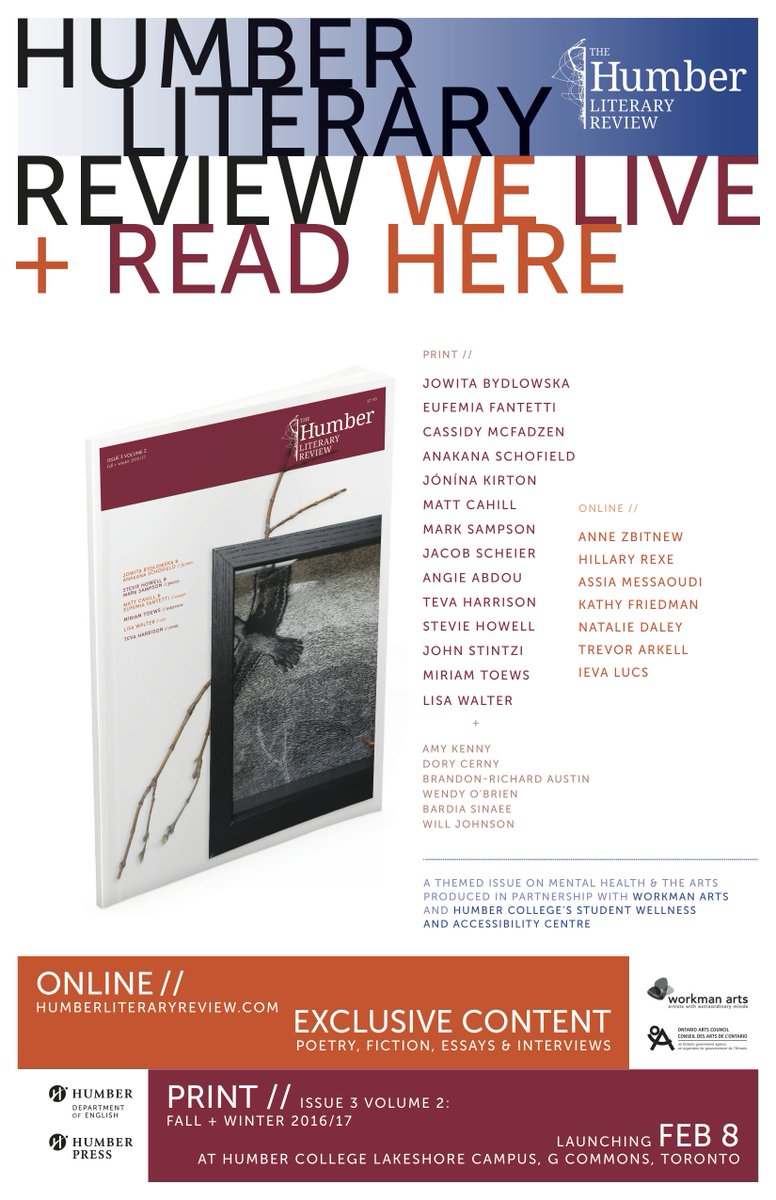
I’m happy to say that the latest issue of Humber Literary Review (#6) is out, and I have an essay included. This is their first themed issue, and it’s about mental health. Because I’m a psychotherapist who is deeply reflective about the way in which we choose to see the world, I saw this as a golden opportunity to submit a pertinent perspective; my essay, On Madness Within Imagination, confronts a cultural blindspot – the depiction of madness in fiction.


It is available at the following Toronto bookstores:

Another Story (on Roncesvalles)
Book City on the Danforth
Book City on Queen
Book City on St Clair
Book City in the Village
Presse Internationale on Bloor
Presse Internationale in the Beaches
Type Books (on Queen)

It is available elsewhere, of course, but I have no clue where. You can also purchase a subscription from HLR.

Share

December

Driving from Camrose to Calgary AB in November

It’s been a hell of a run. I am exhausted and happy to focus on my (very busy – not complaining) day job.

November’s tour of Alberta was wonderful, and I’m happy I pushed myself to make it happen (and grateful my publisher was able to wave her travel grant wand my way). I met readers, old friends, new friends, and relatives. I saw Alberta — a place I haven’t set foot in for almost 30 years — with fresh eyes (and a driver’s license). I could not have asked for a smoother tour, and I am thankful.

I am also tired, and am happy to put The Society of Experience to rest so that I can focus on the next book. I don’t want to publicize anything for a while. That said, I will have an essay coming out in the next issue of the Humber Literary Review, looking at our skewed depictions of madness in film and literature – that’s coming out in January, I am told.

If you are reading this, I hope you have a good December, and are able to find light in what was quite a dark 2016 for many.

Share