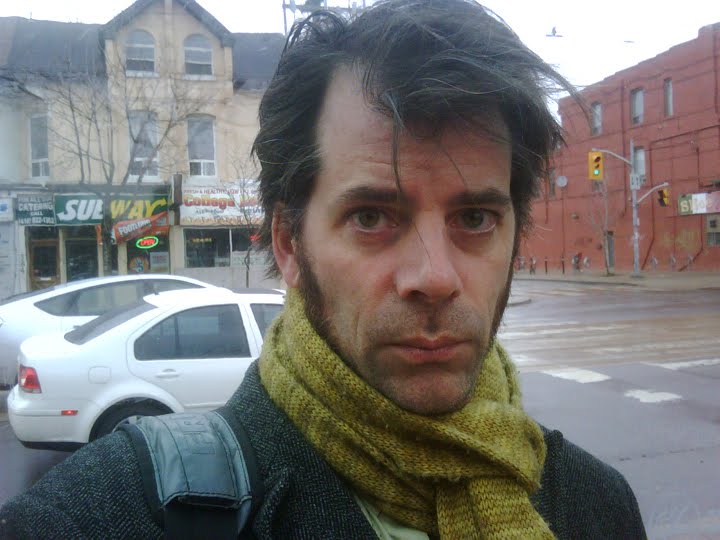
Happy New Year & More…

Hello all,

Not much updating lately. There is a reason. Actually, two:

1)  I’ve signed with a literary agency who are interested in my current novel. This is great/fabulous/OMG news. However, because there are substantive revisions to be made (in order to clarify some of the details in the book and make it easier to sell to a publisher), my time is taken up with that.

2)  I am beginning my career transition, from film/TV Post Production Supervisor to Psychotherapist. I haven’t really made that public here, but it’s happening. I will begin to discuss it soon, because obviously it will need some explanation. Part of the transition has been renovating our basement to be an office – while this is a great idea (even still), it’s also been a great deal of work and stress and cost.

So, as you can see, particularly when you factor-in work-work, my plate is full. I will send updates here as they happen – or you can simply subscribe to updates. I will obviously have much to share with you about how both of these developments…um, develop.

Needless to say, it’s an exciting, somewhat scary time.

Share

Renovations

In the attempt to import 400+ pages from Blogger to here (via WordPress), there were several (try over 75) pages whose subject-tags were not properly imported. They became auto-assigned to “Uncategorized”. So, I’ve spent time each day re-categorizing them. They were mostly older posts – a lot from when I started in 2006. That was <checks watch> over five years ago.

The difference between blogging and writing fiction is that with a blog you’re not supposed to correct or revise things past a certain freshness date. It’s a journal: you don’t screw with it. The past is ultimately the past, and if you look like a moron in the past then, perhaps, that’s you being a moron in the past. Contrarily, with fiction, there is no straight jacket: when you look at past writings your lithe reflexes unravel a cloth roll of surgeon’s tools, all necessary for cutting and cleaning what you’ve written, regardless of how brilliant or not brilliant your ideas.

Thus with fiction, sensitivity to the whole is greater than the brilliance of the individual turn of phrase. With blogging, respect for The Record supersedes the ego: you must be careful not to disturb The Record.

And so I unearth and renovate quietly. I open the “Uncategorized”, scan them to make sense of how I should properly re-categorize them. Some I want to delete. Some I do delete (two posts: trust me, they were stupid). Others I begrudgingly leave. Renovation inevitably exposes weaknesses: of thought, of argument. It also lays bare ideas and passions you’d put aside in favour of other pursuits, but which you read today with fascination as if someone else had written them. This is the good thing about writing – fiction, poetry, magazine articles, blogging – no matter what your focus is, if you do it long enough you inevitably have something with which to reflect upon.

Share

Book Review: Therafields, by Grant Goodbrand

It was with considerable surprise when, browsing the shelves of our favourite used bookstore, Balfour Books, I was handed a book by my wife. “Did you see this?” It was purporting to be about a massive psychoanalytic commune which had its roots in downtown Toronto during the 60s and 70s. I was surprised because I’d never heard of it before – the group was called Therafields. I was immediately struck by the communal angle, the era, the emphasis on psychological investigation – it was like being handed a screenplay by David Cronenberg. The fact that I am studying psychotherapy and its theoretical/historic development made it irresistible.

Subtitled The Rise And Fall of Lea Hindley-Smith’s Psychoanalysis Commune, Grant Goodbrand’s Therafields is just that. From the mid-60s till the early-80s, what was eventually coined Therafields, became one of the largest active communes in North America (significant considering both the era and that it happened with virtually no physical or cultural traces left in this city), owning as many as 35 houses within, and 400 acres of farmland just outside Toronto. At its apex it had over 900 members.

Starting out with a modest practice in the Annex, Welsh émigré Lea Hindley-Smith began by seeing people in her home. Her open embrace of students combined with an uncanny ability to get to the bottom of her clients’ problems (not to mention her real estate acumen) conspired along with the socially progressive ideals of the 60s to develop a remarkable experiment in psychotherapy: a live/work environment which operated also as an ongoing group-process for its members, all under the auspices of Hindley-Smith who became their professor, CEO, and den mother. More houses were bought so that more living spaces could be added to accommodate new members, and new groups were developed. The story of Therafields is an account of how this creative hive eventually became an unmanageable empire. It is also an invaluable reflection of the changes happening at the time, guest-starring those stranded by the revoked promises of Vatican II, the back-to-the-farm movement, and the idea that psychotherapy could be about society rather than the individual.

I am a child of the 70s. Nothing could possibly be less meaningful than that statement. However, culturally speaking, I was surrounded by the 70s. The mid-70s to mid-80s were a formative time in Canadian television. In other words, we saw a lot of ourselves. And what we saw was produced and inflected by those who came of age in the 60s and early 70s (that’s the way it always worked until recently, by the way – the older generation helped the younger generation identify with their own generation). In other words, I can imagine Therafields, while reading about it. Goodbrand has done a good job of contextualizing the era in which his book takes place. It also helps that Goodbrand was a key member of Therafields himself, and as such is gifted with a familiarity which an outside author would struggle to develop. The flip-side to that statement is that an outside author might have had a better chance of keeping the rhythm of the book’s story consistent: there is a habit of temporal back-and-forth which does not make for smooth comprehension at times.

Considering Goodbrand’s credentials, Therafields unfortunately suffers from a detached perspective. He is as qualified as anyone to write about Lea Hindley-Smith and those who were key to the group’s skyward development – like esteemed poet bpNicol, for example – yet it seems only an accumulation of actions, the plotline of a biography, which gives us clues to the hearts beating behind the cast of characters. Goodbrand’s book sometimes reads like an account rather than an experience.

And here we come to a marketing dilemma: I’m not sure who the intended audience is. I am thankfully, luckily, well-suited to read, understand, and enjoy Therafields. Yet… With its insistence on differentiating what Hindley-Smith practiced (Kleinian) from classical psychoanalysis, without necessarily providing a debriefer for the reader on what makes Kleinian psychoanalysis different from it, I cannot imagine the “average reader” walking away knowing what that all should mean. Perhaps that won’t matter if they are keen on digging into a prime slice of Toronto history – complete with addresses, one could conceivably operate a motor-tour of where Therafields took place.

It is, nonetheless, an insightful read and an invaluable chronicle of a peculiar social/cultural phenomenon. Therafields, by Grant Goodbrand (ISBN: 978-1-55022-976-9), is available (evidently) from a used bookstore near you, and also online.

Share

Another One Bites The Dust

ARG! One of my favourite literary blogs is ending its run! I encourage you all to visit Ward Six. I really appreciated their approach: to book reviews, to the art of writing. To art itself.

The reasons they give are sensible, yet I will be selfish and whinge that I am now left with oh so very few relevant, intelligent, knowledgeable literary blogs to follow.

Nonetheless, I wish John and Rhian all the best.

Share

Update

First off, things are going very well on the Keyhole blog. If you haven’t checked it out, please do. Yes, this is me, shilling for myself (and the film).

It is a departure from Guy’s previous works, which tended to rely on the aesthetic of film itself as a language; Guy has been very upfront about his love of tropes from the early days of cinema. The difference is that in Keyhole these elements are reordered in priority, toward the background as mise-en-scène and not a character in and of itself. Keyhole is subliminally deeper and more purely emotional than his earlier films; a drawback is that I’m not sure how much people will be able to absorb in one viewing. If there is one challenge that I am experiencing, it is balancing the educational, editorial, and entertainment-oriented components of the diary/blog.

Aside from this, teaching, student-ing, writing are going well. I am working on a submission letter to a literary agent for my novel. The weather is getting warmer. I can’t complain

Well, I will complain: we have a federal election coming up May 2nd. I don’t mind the election per se, but we have exceeded three weeks of campaigning already and not one word of either Afghanistan or Libya – two wars which require a position, regardless of whether you are the sitting government or one of the contenders. Oh, and health care. It’s the weird-assed priorities which bug me – who are they trying to appeal to? Swing voters and pundits, it seems.

Share

Guy Maddin’s Keyhole

Good news #1: I’m supervising the post production on the new film by Guy Maddin, Keyhole.

Good news #2: I’ve been asked to do a blog/diary of its progress. Sweet!

Here’s the link to my Keyhole post production blog. Don’t be surprised if it takes my attention away from here for the next while. I will endeavour to keep Imaginary Magnitude updated.

Share

Book Review: The Tiger, by John Vaillant


(I had done a mini-review of this on my end-of-the-year post, but thought it merited its own entry)

I found myself flipping through the Globe and Mail book section one weekend in the fall of 2010, and found myself staring at a review for a non-fiction book called The Tiger, by author John Vaillant. Let me begin by saying that I am a prolific reader, yet not someone fazed by what’s new so much as what interests me. To this extent, given my eclectic tastes, I will switch from Turgenev to Bukowski, from John Ralston Saul to Stanislaw Lem, and so on. I sometimes don’t have a lot of time to read books, period, owing to a fairly full schedule of projects (which includes working on a novel). As a result, I sometimes feel a little out of touch with the contemporary world of books, especially when there are people on Twitter who are aiming to read fifty books this year.

Getting back to me and the review, I glanced at the synopsis and was struck by how meaty it was: the Russian far east, a vengeful killing machine, a dark exploration of our ties to nature. It seemed to be everything I was looking for (especially as a Russophile) and gave me an opportunity to actually read something published in the year that I was reading it.

It is, in short, a fabulous book. Fabulous, above all, because of the depth of Vaillant’s research into his subjects and his skill at balancing this collective learning against the white knuckle tension that is at the heart of the story. The Tiger begins with the stalking and subsequent killing of a tayozhnik – a Siberianism for forest dweller – named Markov and the series of events it sets in motion against the backdrop of the merciless taiga (or “boreal forest”) surrounding the little logging town of Sobolonye.

The tension is established early, not by Markov’s demise so much as the complex relationship between humans and tigers in this paradoxical part of the world, much of the relationship predicated on the aboriginal teaching that a tiger will never attack a human, so long as the former respects the latter’s spiritual and physical superiority. This superiority is laid out in full measure: from a zoological perspective, the tiger is perhaps the most sublime killing machine that exists in the world of mammals and Vaillant spares no time outlining how every inch of the beast exceeds any comparable hunter on the planet – both in physicality and mentality. The tiger thinks. The tiger learns. Most compelling of all, the tiger remembers.

It is this last quality which lends much tension, because, as the tiger is tracked by a team of professional hunters over the course of two weeks, the question is repeatedly asked: did Markov bring this on himself? And how?

The Tiger is a stunning combination of layered storytelling and educational insight into the evolutionary relationship between man and animal. Indeed, given the barren environment of the setting, it feels sometimes as if the conflicts between man and animal are staged in a prehistoric past rather than their modern setting in the late 90s. There are also some sad truths made about the aftereffects of the economic collapse of the former Soviet Union and the perennial designs China has on the taiga’s natural resources – tigers included.

The Tiger, by John Vaillant (ISBN: 978-0307268938) is published by Knopf and is readily available in your local, independent bookstore.

Share

Book Review: Never Let Me Go, by Kazuo Ishiguro

Sometimes things just line up in such a way that you can’t help feeling they were put there on purpose. Early this month, as part of a course I’m taking, I went to a weekend retreat, held at a secluded compound by the Credit River. It was a bit eerie, because many of my dreams take place in expansive compounds: wherever I go, even if it seems I’m outside, I just have to look up to see that there is a roof, or some sort of enclosure to remind me that I am not free. So, what book from our library did I take with me at the last minute? Why, Kazuo Ishiguro’s Never Let Me Go, of course. What I didn’t realize is that much of it takes place on a compound…but I’ll get back to this.

I’ve not read any books by Ishiguro – I haven’t even seen the movie adaptation of Remains of the Day. That said, I did work on Guy Maddin’s The Saddest Music In The World, an adaptation of one of his short stories. I’d heard good things about Never Let Me Go, and had always meant to read it. With it being released as a film recently (I don’t think it did that well, despite the critical praise), and since I needed something to read during my time away, I thought it would be a good pick.

Never Let Me Go concerns the story of Kathy, Ruth, and Tommy. It’s told from Kathy’s perspective in the present. She is a carer, who drives from centre to centre, visiting those she looks after. Very soon we are introduced to their beginnings, as children, in a place called Hailsham. It’s an isolated educational enclave, somewhere in England, where the students live, go to school, and grow up. But there’s something a little odd about it all. Perhaps it’s the isolation from the rest of the world. Something in the way some of their guardians regard them. All too soon, their sun-dappled childhood in Hailsham becomes something which haunts them as they grow into young adults. It’s practically all Kathy can use to mark the passing of her time.

Within these reminiscences, we are introduced to Tommy and Ruth, who become the foundational friendships Kathy clings to through adolescence, regardless that Ruth oscillates from friend to enemy – a colourful rather than careful individual who becomes a voice of danger in the fog of their relationship.

The magic of this book is the skill with which Kathy’s perspective is written. There is a purpose for Hailsham, for their being there. There is a reason she is a carer. Never Let Me Go is a capital-H haunting novel, inhabited by people who are slightly cold but reaching out, never quite managing to touch a meaning they hope is there. I can’t say much more without spoiling things, not that it’s a book laden with surprises, so much as layered with subtle, sad observations. A beautiful book for a rainy day.

Kazuo Ishiguro’s Never Let Me Go (ISBN: 978-0-676-97711-0) is available at an independent bookstore near you, or at various online retailers.

Share