An Unspoken Rule: It’s Never Simple

For the last few years, I’d get the odd inspiration to write something suitable for the Facts & Arguments section of the Globe and Mail. For those unacquainted, it is a daily feature of one of our national newspapers; a personal essay between 800 and 1,000 words, open to the public for submissions.

Easy, right?

Truth: no. Every time I’ve tried in the past, I can’t pull it off. Can’t even get past two paragraphs. It’s not a question of writing 800 words of personal essay, but rather pulling off 800 words of personal essay that actually is interesting to a wide array of people which isn’t intellectually disingenuous at the same time. I say this because it’s easy to make fun of the Facts & Arguments essay (or at least I find it easy). “In the end,” I’ve joked to my wife, “what I learnt from my cat is that it’s not the travails I endured, but the lessons contained therein which have enriched my life. Ha, ha“. They are all, clichés aside, about personal experiences which lead to larger realizations. You could compare this (somewhat) to the essay featured at the back of the New York Times Sunday magazine, only longer and not as consistently curated.

Again: easy, right? After all, it’s just 800 words of personal stuff. You’re a writer, eh Cahill?

Truth: no, not easy. No, not at all. One misty Sunday morning over the Christmas break, I got the inspiration and decided that I was going to finally hunker down and do it. Me, the fiction-writing blogging sorta guy was going to sit his ass down and write an honest to goodness Facts & Arguments-style essay if it killed me. And it had to be good. And it had to be honest. No bullshit. No cynical kiss-ass formula-copying. It would, after all, have my name on it, published or not.

I realized several things immediately:

  1. Even though I write for this blog, which could be construed as “personal non-fiction” (or whatever the latest strain of non-fiction terminology is), it’s still pretty free-form stuff. It’s not like I have an editor, aside from my own middling expectations. In other words, it was not a load of help.
  2. Unlike fiction, I couldn’t write it all down as a semi-coherent story and then revise-by-whim from there. I don’t write enough non-fiction to have those strengths. My first “draft” (and trust me, that word deserves those odious quotation-marks) was a stinky grab-bag of overly-literary ideas which made no sense to the world outside my head, which for the most part seemed up my ass at the time that I wrote it.
  3. Being honest in a blog and being honest in a personal essay intended for mass (as in nationwide) publication are two totally (totally) separate things. I had to pay attention to a lot more than I had bargained for. And no swearing.

It has been torture. I’ve spent more time on this than I care to mention (at last count, thirteen revisions in two weeks). And yet, I didn’t want to give up. The format was a challenge and as a writer/artist/whatever it’s important to be challenged, especially if one wants to be versatile. In the end (ha ha), I’ve finally got something worth submitting. Whether it actually gets published (and, God knows, I’ve done my best on this sucker) is no longer a chief concern. The goal was to submit my best effort and that is what I’ve done (though of course I’ve cursed my chances of this ever happening, having written about it beforehand and all).

Many lessons learnt, indeed.

Share

Miscellany: November 18, 2008

  • Ingrid is approaching world domination. Her plaudit-winning reinterpretation of the cover for Cormac McCarthy’s The Road has not only received international online acclaim (Bookninja, The Guardian, Boston Globe), but her work was featured in Sunday’s New York (bloody) Times Book Review. Print and online editions (with the unfortunate misspelling of her last name in the print edition – needless to say this took a little of the shine off of the accolade. They will, however be printing a correction in an upcoming edition and the online version has her name spelled correctly).

  • I’ve sent the first revised draft of my novel to a few selected readers. Unofficially looking for feedback and consensus that what I’m doing is worthwhile. Nervous. Anxious. Perhaps as a result of this and other things, I’ve been struck by some interesting what-if’s regarding a new book idea. I must be a masochist. At least it doesn’t hurt.
  • I turned 38 on Saturday. I share that day with Ed Asner and Tilda Swinton (they were not in New York, unfortunately – I tried).
  • Two films I worked on opened within two weeks of each other. One is a franchise horror film (of the “moral error leads to violent suffering” kind) which traditionally draws massive audiences and box office gold (if not good reviews). The other is (wait for it) a gore-Goth rock opera which is only receiving an eight-theatre release (if not good reviews). They represent what I’ve been working on for the last twelve months. Working in film/TV is “what I do for money”, a distinction I wish I didn’t have to make, save for the fact that the quality stuff (often Canadian) doesn’t pay my rent. It’s a quandary punctuated by background horror-movie funhouse screams.
Share

Art & Suicide

As reported in the news over the weekend, spilling into the papers this week, American novelist/essayist David Foster Wallace took his life. He had hung himself in his home, only to be discovered later by his wife.

To be honest, I’ve only read one piece by Wallace – an essay in an issue of Harper’s almost ten years ago on the release of the revised Oxford English Dictionary – and yet it left an indelible impression on me. It made me laugh out loud with its quirky honesty and his style was unique and strong; in short, it made me take notice of writing and writers at a time when it simply was not on my radar (for various reasons). I always swore I would read one of his books, but the prospects of picking up the one he is best known for, Infinite Jest, all 1,000 pages of it, was intimidating. It still is, but that has more to do with the fact that I’m in the middle (or, factually, just past the middle) of War & Peace with Joyce’s Ulysses staring at me from the bookshelf longingly.

Wallace’s suicide is the second in the last few years by an artist who’s work I’d kept an eye on. The first was that of American humorist and performer, Spalding Gray, who – it is assumed – leapt from a ferry into the Hudson River and drowned. I saw him at Massey Hall (one of the most venerable venues in Toronto) many years ago. As with Wallace’s essay, I remember crying with laughter during Gray’s droll monologue.

Which brings us to the question of artists and suicide.

Someone on Bookninja had this to say in reaction to the story:

In my work (psychiatry) I’ve seen so many creative people who are so tortured inside. I’ve often wondered if, given the choice, they’d choose peace over creativity. Maybe suicide is exercising that choice.

I thought about this. I wanted to respond, because I had something to say, but in the end I decided it would only be a tangent and while tangents are allowable in most online situations, an obituary is not exactly the place for one.

The answer is that artists do not want peace, or at least an artificial peace. To do so would be to abandon the tension which is inherent in art (and science, for that matter). In their art, over the course of their lives, artists attempt to resolve this tension; to articulate what it is that is at the centre of a storm which motivates them to create. The tension is the artist. Them against an outside world which does not work. Art becomes a philosophical expression of an existential dilemma. With this as the case, how many artists would willingly barter peace for creativity if such a trade were even possible? Not many, I would wager. What is peace when art allows you to reach higher than ever before, to touch the cookie jar of euphoria with your fingertips?

Like Wallace and Gray, I too suffer from depression. Their passing gives me pause, to put it lightly. Last night over dinner, Ingrid and I had a long talk about this – Wallace, Gray, art, and suicide – and she used a quote from Wallace that she’d read in one of the obituaries, that suicide happens very slowly. He is right. It is not, as commonly portrayed, an impulsive decision, but rather something which gestates very gradually within the mind of the sufferer. The danger is that this internalized dialogue, over the course of years, may eventually lead to the rationalization or acceptance of suicide as a logical option or self-fulfilling prophecy.

Art, however, is not depression, and depression should not be construed as something which only afflicts those in the arts. When you are depressed, anything can inflame the situation. Both the fire and the water used to douse it. It is for this reason that I take a moment to bring this up. So that people may understand what is, for lack of a better term, a mental illness. Allow me to suggest a wonderful series in the Globe and Mail, perhaps the best collection of stories and first-person recollections on the subject to be found in any newspaper.

I tip my hat to Wallace, to Gray. I mourn for the grief experienced by their loved ones.

Share

Film Informing The Word

Reading Shelly Lowenkopf’s blog – which he should consider titling Opium for Fiction Writers – one does not need to look too closely to see he likes the TV program The Wire; he often references the show to demonstrate whatever aspect of story-crafting he has chosen as his subject that day. I’ve never watched The Wire, but I’m sure some day I will, if only because it seems to genuinely merit the attention.

Being more of a film person, it got me thinking what films have influenced me as a writer, or which – should I ever find myself in a situation to dispense wisdom – I would choose, if only because they demonstrate some part or element of writing very well. What follows are a few films which, for lack of a better term, have writerly aesthetics. Coincidentally, most of what I’ve picked ended up being based on novels.

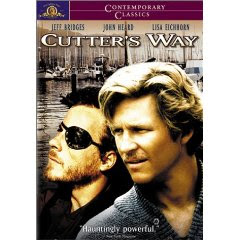
Off the top of my head, I would begin with Cutter’s Way (1981), a little-known/little-shown film with Jeff Bridges and John Heard. On the one hand, it’s about a drifter in San Francisco who thinks he witnessed a murder one night, who’s suspicions are heightened by his best friend, a self-destructive Vietnam veteran. Yet, the more ornate (and by the ending, spectacular) elements of its drama serve as a background, a nuisance to the drifter protagonist, and it ultimately becomes a story about someone who discovers they’ve spent their life dodging the responsibility of making tough choices. Based on Newton Thornburg’s novel Cutter and Bone.
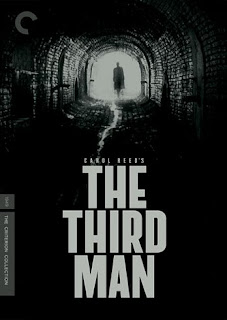
I would then travel back in time to The Third Man (1949), with Joseph Cotton and Orson Welles, a film-noir set in post-WWII Vienna (then occupied, as wonderfully described in the film’s opening narration, by the American, British, and Russian armies, and of course, the black market). An American novelist discovers on his arrival to the city that the only person there he knows – his old friend, Harvey Lime – was recently killed in an accident. Yet, the longer he stays, the more splintered are of the accounts of Lime’s passing, and the more strange are the cast of characters who claim to be his deceased friend’s associates. Add love interest and stir. Strangely, though written by Graham Greene, it wasn’t based on one of his published stories; he wrote a novella as a means of creating a template on which to base the screenplay, later published in book form after the film’s release.
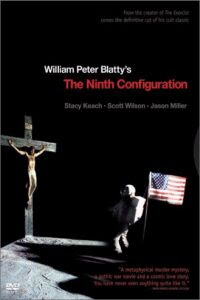
Fast-forward to 1980 and The Ninth Configuration, with Stacy Keach and Scott Wilson. It is the story of a shadowy military psychologist assigned to a remote castle in the Pacific Northwest, used as an asylum for those temporarily discharged from service in the Vietnam War. However, as the colonel is inspired by his discussions with the asylum’s star patient, an astronaut who abruptly terminated his mission to the Moon just prior to take-off, the staff discover the colonel’s methodry is more unorthodox than expected. This is the one film I knew was based on a novel, seeing as I read both the first incarnation (Twinkle, Twinkle “Killer” Kane) and its subsequently re-titled revision prior to the film being released. Written, produced, and directed by none other than William Peter Blatty (author of “The Exorcist”, and a damn good director in his own right).
So, what is it? What is it about these random picks which touch upon fiction writing, aside from their literary pedigrees? Well, they all instill in the viewer a wider, more long-range idea of the story being told – much in the way that a good novel is capable, with the inclusion of just a few words inserted into the right spot, of suggesting dimensions which exist beyond the edge of the book pages. All three films include characters who stand out; characters who you can imagine living beyond the breadth of the films’ respective duration times, if not from the beginning then surely afterwards. In all three films, we have protagonists who are thrust into a gnawing responsibility they did not request to be part of, a responsibility which in The Ninth Configuration is karmic, in The Third Man is seductive, and in Cutter’s Way a question of conscience over desire. However, like all good stories, these responsibilities are seminal for the characters, and for the viewer with literary influences, perhaps inspirational.

[Post-script: it is not lost on me that all three of these stories are essentially mysteries, influenced by the remnants of armed conflict, namely WWII and Vietnam. I’m tempted to delve into why this is, but again, this is a blog and not a doctoral thesis. Perhaps another day. In the meantime, I’ve got a film mix to supervise…]

Share
“Enter late, leave early.”

– advice to writers, origin unknown.
Share

Getting Better: Take It Outside

Writing programs, whether they be of the one-day or the week-long-getaway variety, can be good or bad things. In particular, I think anyone who is a closeted writer (ie. short stories and poetry hidden on your computer like pornography) and feels the need to affirm (or reaffirm) their direction should consider – at least as an option – a writing program. Provided you do some research and find a good course, a writing program allows you to unload your craft in front of others, receive honest feedback, and illuminate your shortcomings as well as your strengths.

Of course, there are always risks. Your teacher/mentor may not get along with you at all, for stylistic or personality-related reasons. You could be a poet in a room full of prose writers. You may find your peers to be full of themselves. You may find yourself an unintentional participant in a Self-Congratulations Society, where no one will accept or voice constructive criticism.

I lucked out, to put it briefly

Many years ago, I hooked up with a Toronto-based group, headed by someone who ran a web-based forum for local writers. It was ok. It wasn’t what I wanted then, though of course I can articulate it perfectly now. The person coordinating the meeting I attended (and as an aside, being someone who coordinates a couple of groups now, it can be a thankless, dispiriting job) was not, at least on the surface, someone focused on the art or spirit of writing. She seemed more interested in writing events (contests and the like) rather than writing itself. This, I contend, is not wrong, but rather – being the sensitive philosophical type I am – it simply didn’t jive with what I wanted. But even this is good, because the more you investigate the more you learn about what you need versus want. As a result of trial-by-error, your desires become less metaphysical and more concrete.

Fast-forward years later…my then-fiancée, Ingrid, who works in publishing, recommended the Humber College School for Writers’ Summer Workshop. I had a novel. I didn’t know whether it was good or bad, and it wasn’t helped that I had no writer friends to bounce it off of for feedback. I looked into the program and decided to attend (financed by American Express). I ended up spending a week in a classroom of eight, with poet/novelist DM Thomas (The White Hotel) as our mentor. It was perfect. I could not have asked for a more seminal experience. Everything clicked. I walked away at the end, having attended seminars, Q&A’s, and forums, with a much more evolved viewpoint of both the art and business of writing.

That week I learned to love and respect the art of revising/editing, something I’d always treated like poison. I met some great people who, for the first time, I could actually talk to about writing without having to explain what writing was in order to help them understand me. I was publicly confronted with a then-serious illness (habitually using it’s when I should’ve been using its). I was flattered by the positive feedback I received but not stung or made sullen by honest critiques either.

As a result of that single week, my outlook, philosophy, and activity in writing was immensely deepened. I started a monthly writers’ group – the very same sort of group I was searching for in vain before – which carries on successfully to this day (we celebrate our 3rd “birthaversary” this summer, in fact). The novel which had consumed so much of my time back then has since been shelved, having realised that it needed so much work that it was better for me to start from scratch and return to it later (under the axiom, “if you love someone set them free”). Now, of course, I have a new novel which I’m very happy with (along with a nice collection of short stories).

I write this because sometimes – particularly when you are an artist, alone, in an environment seemingly bereft of people who can empathize with what you do – it’s important to look outside for that next important step: getting involved so as to help yourself. As writers, we can’t allow ourselves to fall into the trap of thinking we are failures if we do not wake up at 5am, complete four chapters by lunch, followed by spending the afternoon staring solemnly out of our 3rd storey “writing nook” windows while we wait for the absinthe to kick in. That’s mythology.

I should also mention an extremely good (short) book, called Art & Fear: Observations on the Perils (and Rewards) of Artmaking, by David Bayles and Ted Orland [ISBN: 0961454733]. I recommend it to anyone from any artistic background who is looking for some objective advice, written by people who truly understand. Lastly, even though I mention this book and provide a link to the Humber College course previously, it’s just as important for people to discover what’s right for themselves – there are many options out there. Please do your research.

Share

Writing on Writing

I would like to say that I’ve been prolific in my writing over the last few weeks, but that would be a lie.

My first focus has been the novel. It is complete (in the sense that I don’t believe it requires anything new to be added: chapters, characters, story arcs, etc..), yet requires a good revision to smooth over the parts which were put in place (not unlike a temporary glue or kludges) so that I could carry on telling the story without getting bogged down with detail work. Thankfully, the amendable bits are easy to recognize and not too draining for me to clarify.

A few weeks back, my tangential focus was on submitting two stories to two separate entities (one a contest, another a lit mag). Again, revisions were needed, as I don’t think it’s very safe to blindly submit something, even if you were perfectly happy with it previously.

In other words, the novel’s coming along very well, submissions are submitted (and the inevitable lottery entered). There’s just not a hell of a lot of “new” writing happening these days, which bugs me.

It would bug me more if it wasn’t for the fact that I seem to be in a “research” period. Quite involuntarily, I find that I’m following leads which present themselves to me without my seeking them: clues, ideas, conjectures. Most influential, at least currently, is Karl Popper, whose “Unended Quest” I have been devouring for the last while. His insights into the theory of knowledge and its application across the spectrum of art, science, and politics is – if anything – thought provoking. The goal of philosophy, I am reminded when reading someone who understands exactly what he or she is talking about, is not to blindly adopt beliefs because they sound good, but to digest them. To try them on like a pair of garish sunglasses and look at the world through them; rarely will even the most profound philosophy not require adjustments made to it in order for you to still be and think like you, and not someone else.

I’m reminded of Hesse’s Siddhartha, where the protagonist, upon meeting the Gotama Buddha, rejects his offer for Siddhartha to join his group, stating that the Buddha himself came to his wisdom not by following others, but through making the necessary mistakes needed to attain wisdom.

Somewhere, far away, I am *this* close to something.

Share