The Vocabulary of Conflict: Afghanistan and Iraq

If there are two things I’ve avoided mentioning since the inception of this blog, it is Iraq and Afghanistan. For anyone who has casually surfed a blind selection of blogs in their spare time, I think you can understand why I’ve chosen not to get involved in the often mephitic atmosphere of this debate. It’s chaotic and reflects the lack of clarity in the wars themselves.

Six Canadian soldiers were killed yesterday by a roadside bomb. The media refers to these bombs as IED’s (improvised explosive devices), following the vocabulary of military spokespersons. In response to these latest deaths, here is an excerpt to more effectively demonstrate this vocabulary, from the Globe and Mail:

The Taliban’s increasing use of roadside bombs has also taken a toll on civilians, Brig.-Gen. Grant said. “They have managed to kill six great young Canadians today, which is an absolute tragedy,” he said. “The other part of this is that they’re killing lots of Afghans. They’re attacking the weak, they’re killing women, they’re killing children, they’re killing policemen. These are not the tactics of anything other than terrorists.”

[…]

Asked whether this represents an “Iraqization” of the conflict, Lieutenant-Colonel Jean Trudel, who serves as chief of staff for the Canadian headquarters in Kandahar, shook his head.

“Not particularly,” he said. “It indicates a loss of control by the insurgents.”

Canadian troops faced insurgents in the farmland southwest of Kandahar city last year in the largest battles Afghanistan has witnessed since the collapse of the Taliban regime. Those fights have taught the Taliban that it’s fruitless to openly confront the Canadians, Lt.-Col. Trudel said.

“The fact that we’ve lost a lot of soldiers from IED attacks indicates a success, in the sense that our conventional operations have succeeded against the Taliban,” the chief of staff said.

Where to start…

1) These roadside bombs – sorry, IED’s – are not, historically speaking, the “tactics of terrorists”. They are the tactics of guerrillas. Crashing planes into buildings and floating boats laden with explosives into aircraft carriers are tactics of terrorists. There is more than a semantic difference between the two classifications; when you paint civilian-based militias as terrorism you are admitting a loss of control and belying a critical problem with the military operation at-hand. See: Corsica.

2) If by “Iraqization”, the journalists mean “people who were under a tyrant who barely kept a fractious mix of misplaced ethnicities (largely due to Western colonial folly) under control and who now are now occupied by Western forces (yet again) whose motives increasingly speak more about global economics than humanitarianism” then there are some similarities. However, the way in which the term is implied in the article suggests that the “tactics of terrorism” are being imported from Iraq, which itself is an interesting bit of circular logic given that Afghanistan is the only one of the two countries that had anything to do with the destruction of the World Trade towers.

3) To suggest that the killing of six of our soldiers (along with civilians and police) represents a “loss of control” by the insurgents is perhaps one of the more grotesque distortions of military logic I’ve read (recently). Sounds to me as if the insurgents are in control if by their actions they are disrupting the lives of its citizenry and the work of the soldiers who have been put there to resurrect what is becoming the Romantic dream of a post-Taliban Afghanistan.

All things considered, no matter how passionate or well-reasoned your opinion, it simply isn’t enough to oppose either of these wars, at least not anymore. Three or four years ago, perhaps. However, there is a marked difference between the two conflicts. With Afghanistan there was, at the very least, a reason for NATO troops to get involved; it was, after all, the training ground for Al-Qaeda and, considering the devastation of 9/11/01, arguing for a military response was not an irrational (ie. purely emotional) action. Iraq, however, was and is a debacle of historic proportions. It would depress me to recount just how ill-conceived (and corrupted) the decision to invade Iraq was. There are many other sites out there which can do a better job of summing up the horrible negligence of the latter invasion.

One thing I will mention, and I do so on behalf of my countrymen who are stationed in Afghanistan, is that, failing “success” – itself a contentious ideal in any war – the blame for the lack thereof can be directly attributed to two factors:

1) Iraq. If the United States and Britain had not diverted (and thus fragmented) their troops so that they were intervening [or invading, whichever way you wish to see it – I’ll leave the Semantics of Conflict essay for another day] in not only one but two countries, NATO would’ve had the maximum available response in order to accomplish whatever goals there were in the Afghanistan mission. Instead, by pulling troops out of the latter and into the former, they hobbled the efforts of the only justifiable military action of the two and endangered both.

2) Although there are 37 countries involved in the NATO/ISAF deployment in Afghanistan, there is a disproportionate amount of Canadian troops on the frontline in the most tumultuous areas (read: Kandahar), despite repeated calls for other participating countries to commit troops for support. Say what you will about the Afghanistan mission (and again, a lot of contentious arguments are to be had), it angers me to see such reluctance on behalf of other participating countries: either you’re there and fight or you should rightfully leave. You simply can’t have it both ways on the battlefield.

Canada has a tragic history of its soldiers being used as gun-fodder in armed struggle, most notably in the trenches of WWI. This perhaps explains why we did not involve ourselves in Vietnam or Iraq; though we have our share of military controversies to deal with (much of it due to financial stagnation and federal meddling), we have generally learnt not to follow into armed conflict when the goals of the coordinating military power (usually the US and/or England) are suspicious. The difference this time is that our public is looking very critically at the war in Afghanistan, asking the right questions, and putting pressure on our politicians to ensure that this latest involvement does not devolve into the sort of pandemonium currently underway in Iraq.

I would be lying if I thought the current plan in Afghanistan was particularly clear or that our politicians (and some of the bureaucratic upper ranks of our Armed Forces) had the best interests of our soldiers, Afghanis, or the reputation of Canada in mind. The former Soviet Union went bankrupt as a result of their involvement in the 80’s, with the U.S. funding, arming, and training the civilian insurgency. The shoe is on the other foot, with Russia and China supplying the insurgency via Iran. Whether we call them terrorists or not, vocabulary alone is not enough to soften the blow of rising casualties in a conflict sorely in need of clarity.

Share

A Vote For Uncertainty

ag·nos·ti·cism [ag-nos-tuh-siz-uhm] –noun

  1. An intellectual doctrine or attitude affirming the uncertainty of all claims to ultimate knowledge.
  2. The doctrine that certainty about first principles or absolute truth is unattainable and that only perceptual phenomena are objects of exact knowledge.
  3. The belief that there can be no proof either that God exists or that God does not exist.

[Origin: 1870–75; agnostic + -ism]

I don’t want to wade into the current (or latest, if you look at this historically) spat between atheists and theists, but I find it tragic that – and I don’t know why I’m surprised – there is no middle ground of perspective in the discussion. It’s not much of a “discussion” to begin with, is it?

I don’t particularly care about Richard Dawkins, his followers/imitators, fundamentalist zealotry of any sort, and atheism in general. I think atheism, while legitimate, is about as interesting and constructive as a “zero” on a chalkboard. Of theoretical curiosity, but not much else. Yet lately there have been many books published – the latest of note being Christopher Hitchens’ – throwing down the atheist gauntlet against organized religion.

I have a healthy wariness toward organized religion and I understand, in light of the recent alignments in many parts of the world between fundamentalists and political/military activity, why the gauntlets are hitting the ground on either side of the theist atheist debate.

Or at least I think I understand – I’m just a layman.

Yet agnosticism is never mentioned. Atheists joke that agnostics are just vacillating fools and leave it at that. The problem is this: history proves that certainty has a best-before date. Anyone remember the Age of Reason, when classical physics had reached such austere heights that it became referred to as the Age of Certainty? And then those crazy guys, like Neils Bohr and Albert Einstein, had to go and blow the head off of it – essentially showing that presumptions about time and space (as well as lot of other things) were not as they had been presumed to be. And yet, perplexedly, many pro-atheism websites contain quotes from Einstein proudly questioning the limits of God.

You can be certain that the sun will rise every morning (even if obscured by clouds), yet, technically speaking it’s in the process of burning out (when it reaches thermal equilibrium with that cold “space” stuff). So, not even that is certain.

I argue that our need for certainty is an ancient one, and whether it be expressed in theistic or nihilistic terms, it is always coupled by Thoth’s ape: the spectre of an annoying footnote which clearly states “You know this could all change at any minute.”.

What’s wrong with embracing uncertainty – does it not open more doors, feed more thoughts, raise more questions? Is it not more analogous to the inherently uncertain and complex world around us? Allowing for uncertainty is being honest with the way life works; it is neither cynical nor pessimistic. In fact, I consider it more spiritually genuine (although agnosticsm itself does not need to be used only in those terms) than holding a fixed idea of what “lies beyond”, whether it be God or maggots.

I just wanted to put this out there, as I’m tired of only hearing two sides to an argument which cannot be limited to such a static form.

Share

Comments on Media Bias

I don’t like to mention American news channels, for the very basic reason that I’m not American and that I don’t live in the U.S.. As a Canadian, however, I have an advantage in that I have easy access to American news programming. It’s easy to get swept up in what happens down there and you forget that it doesn’t even concern you (or if it does, it’s by example, not by fact).

Tony Burman, of the CBC, posted an interesting comment on a current controversy over something CNN personality (anchor? those days are gone, sorry) Lou Dobbs said. Something about attributing a studied increase in leprosy to a less-than studied association with increased immigration from Mexico. Oh my. You understand why it’s important not to get swept up in another country’s news now?

I like Tony. He’s not a bullshitter, and as a result, doesn’t have the sheen or explicit eye-grabbing “savvy” of more recent newsmen. He makes some interesting observations (which, as a Canadian, we are experts at providing to a world which doesn’t listen):

News anchors — at least in the U.S. — are increasingly revealing their own personal opinions in an effort to ‘connect’ with audiences in this very competitive media environment.

[…]

As I wrote in a column last September, the line between ‘news’ and ‘opinion’ is gradually becoming blurred, and in many newsrooms this is challenging conventional journalistic views about ‘objectivity,’ ‘bias’ and ‘opinion.’

If the patterns in the U.S. take hold, there seems to be a greater desire on the part of audiences to ‘relate’ to news and current affairs anchors whose views and perspective are known to them. The mask of journalistic ‘objectivity’ can seem forced and false to growing numbers of people who revel in the wide-open environment of the Internet.

However, what really struck me were some of the comments to Tony’s article. In particular are two:

Joe Chip from Saskatoon [responding to *yet another* accusation from a previous poster that the CBC is some sort of liberal star chamber, and should be ashamed of casting aspersions on the likes of Mr. Dobbs]

[…]As someone who actually follows media sources from around the world, I can assure you that they are an (relatively) objective news source. As living beings, we cannot avoid bias – we need to interpret the world around us in a meaningful way. The CBC reports in almost as professional a manner as the BBC, which is, despite what you and others may think, the gold standard for broadcast news. Have you noticed how their “At Issue” panel has one person on almost every week from the National Post and one from the Toronto Star? That’s not an accident, it’s about balance, and Andrew and Chantel accomplish that nicely.

Finally, I suggest that you do a comparison of how the three national leaders (Martin, Harper and Layton) were covered in the past election. You will find that Harper got the most positive coverage, while Martin was largely panned, and Layton often ignored. This was consistent throughout most major Canadian media, with more positive portrayals of the Conservatives in right wing papers and media (i.e. the National Post, etc.), and more flattering coverage of left wingers in media such as the Toronto Star. The CBC remained fairly balanced, though I thought they were a bit hard on poor Martin.

and…

Charles Barrett in Florida

As a Canadian citizen living in the US, I have perspective from both sides.
The question being dealt with here isn’t so much about Lou Dobbs [whom I do like and agree with on a lot of the points he discusses on his program].
Traditional media sources have long ago lost their way. In paying attention to a broadcast or the written story most times I’m struck by either the wrong question being asked or the answer given is either inadequate or no answer at all. The reporter/interviewer doesn’t follow-up to hold the respondant [sic] to task about their evasive answer.

It’s seems that the truth/answers are just commodities and any response to a posed question will do. Media sources, particularly television media, are just production houses.

We, the public, need start thinking of what is not asked and also hear what is not said, in a response to a question/interview.

I thought it was the media/journalists job to obtain the truth whereever [sic] it was rooted. Not just report answers.

As for Lou Dobbs and his cohorts, opinion is just that, opinion. You don’t have agree with what anybody/everybody says/believes. It’s his opinion not yours.

That is what makes it GREAT to live in the part of the world that we do, we have the FREEDOM to disagree and NOT pay with our lives.

I think my previous posters would all AGREE with this.

Both of these comments are very insightful. I didn’t want to waste your time regurgitating what they said into some sort of personalized polemic, but rather show that there *are* thinking people out there who show just how complex our seemingly left vs. right society truly is. And I absolutely LOVE the line that “media sources are just production houses” – zing!

Share

Leonard: Thank-You

So…

There I was, sitting in an edit room, trying to output last-minute changes to the show I’m working on. I get a call on my cell. Even with the ringer turned off it bugged the crap out of me – I *hate* interruptions when I’m focusing on technically detailed tasks. Furthermore, I didn’t recognize the number.

Grrrrr…

“Hello, Matt?” says the voice on the other end.

“Yes.” I said, wanting to keep the conversation as brief as possible.

“My name is Leonard. I have something for you. From [the name of a prominent film/tv payroll company].” he said.

I scratched my head…I just got my cheque yesterday and I haven’t even cashed it yet.

“Um…I’m not expecting a cheque – what’s this regarding?”

I was suspicious – this payroll company doesn’t personally deliver *anything*.

“I’m at Queen and Bathurst – are you at home?”

“No – I’m on the east end.” I responded, not appreciating the confusion.

He insisted on meeting, though he also insisted he only had a half-hour until he had to go home. Meanwhile, I’m thinking to myself: what the hell is going on?. We agreed to meet at a mutual location, a post production house @ Adelaide and Sherbourne. All the while, I’m irritated and flummoxed as to who the hell it is and what the hell is going on [sidenote: contrary to what most people think film/tv work is about, this is me: all business].

When I get to the post house, I told the receptionist: “Okay…” I rolled my eyes, “…there’s this guy, named Leonard. He’s got some sort of cheque or package for me – I haven’t any clue. If you could please let me know when he comes in, that would be grand.”

I proceeded to go to my workstation. Soon enough, the receptionist calls. Leonard is here. I go to the foyer, not sure what to expect, and sure enough there is a young gentleman sitting there, smiling. It’s a smile that you don’t attribute to someone I anticipated being a gofer for a payroll company. Then I noticed he was dressed in clothing I would not necessarily attribute to a gofer for a payroll company – a cream coloured vest with matching dress pants.

“Here you go.” he smiled.

It was an envelope…a cheque was inside. Scribbled on the cheque were the directions I’d given him to the post house. Then I looked at the date on the cheque. Then I looked at him and then it dawned on me…

“You don’t work for [..], do you?”

“No.” he smiled.

It dawned on me that, earlier that day, when I was doling out cheques to the sound editors, I’d tucked mine in my back pocket. It must’ve fallen-out. This man had travelled half-way across town to return my cheque. He didn’t know me. He’d called the production office and they’d given him my cell number. Remembering what he’d said about “going home”, and taking note of his attire, my guess is that he had just finished a work-shift somewhere.

I couldn’t believe it.

I shook his hand in shock and thanked him profusely, not believing what had just happened. I also gave him $20 for travel expenses – it was all the money I had on me.

I still can’t believe it.

It is circumstances like this which remind me how unpredictable, and sometimes miraculous, the events of the world can be. Indeed, it is people like Leonard who set the bar for the rest of us. I rushed to my laptop to post this; it’s the least I can do.

Thank-you, Leonard. Wherever you are.

Share

Waters of March

(Yes…I know it’s May. Don’t take me so literally.)

One of the most captivating songs – a song that seems destined to have an everlasting power, despite a gaggle of jazz performers hanging their hat on it to fill out an album or hope upon hope for a Billboard spot – is a bossa nova piece, originally written by Antonio Carlos Jobim in 1972, called Waters of March (or Águas de Março in its native Portuguese). Remarkably, one of the definitive versions (although there are so many beautiful renditions) is captured on YouTube here, performed by Elis Regina. [sidenote: watch this side-by-side with the early 80’s video for Every Breath You Take by The Police – the similarities in the look, style, direction, and editing are uncanny]

What I love about the song, ever since I first became aware of it long, long ago (and still, it took me years to find the name of the song – I was convinced that Astrud “The Girl From Ipanema” Gilberto had done it originally, which turned out to be a red herring…as so many things I’d naively attributed to her – but that’s another story) is its flow and stream of consciousness; considering it was written during Rio de Janeiro’s downpours in late March – the end of summer in the Southern Hemisphere – it’s a stunning bit of onomatopoeia.

Though originally written in Portuguese – the language of Brazil, for all you junior ranchers out there – Jobim eventually re-worked the lyrics into an English translation which is actually longer (which was necessary to keep the feel/structure of the original). For more information on this song, please see this entry in Wikipedia.

Here are the Portuguese lyrics and their English re-working:

Águas de Março

“É pau, é pedra,
é o fim do caminho
É um resto de toco,
é um pouco sozinho

É um caco de vidro,
é a vida, é o sol
É a noite, é a morte,
é o laço, é o anzol

É peroba do campo,
é o nó da madeira
Caingá candeia,
é o matita-pereira

É madeira de vento,
tombo da ribanceira
É o mistério profundo,
é o queira ou não queira

É o vento ventando,
é o fim da ladeira
É a viga, é o vão,
festa da cumeeira

É a chuva chovendo,
é conversa ribeira
Das águas de março,
é o fim da canseira

É o pé, é o chão,
é a marcha estradeira
Passarinho na mão,
pedra de atiradeira

É uma ave no céu,
é uma ave no chão
É um regato, é uma fonte,
é um pedaço de pão

É o fundo do poço,
é o fim do caminho
No rosto o desgosto,
é um pouco sozinho

É um estrepe, é um prego,
é uma ponta, é um ponto
É um pingo pingando,
é uma conta, é um conto

É um peixe, é um gesto,
é uma prata brilhando
É a luz da manhã,
é o tijolo chegando

É a lenha, é o dia,
é o fim da picada
É a garrafa de cana,
o estilhaço na estrada

É o projeto da casa,
é o corpo na cama
É o carro enguiçado,
é a lama, é a lama

É um passo, é uma ponte,
é um sapo, é uma rã
É um resto de mato,
na luz da manhã

São as águas de março
fechando o verão
É a promessa de vida
no teu coração

É uma cobra, é um pau,
é João, é José
É um espinho na mão,
é um corte no pé

São as águas de março
fechando o verão
É a promessa de vida
no teu coração

É pau, é pedra,
é o fim do caminho
É um resto de toco,
é um pouco sozinho

É um passo, é uma ponte,
é um sapo, é uma rã
É um belo horizonte,
é uma febre terçã

São as águas de março
fechando o verão
É a promessa de vida
no teu coração”

Waters of March

A stick, a stone,
It’s the end of the road,
It’s the rest of a stump,
It’s a little alone

It’s a sliver of glass,
It is life, it’s the sun,
It is night, it is death,
It’s a trap, it’s a gun

The oak when it blooms,
A fox in the brush,
A knot in the wood,
The song of a thrush

The wood of the wind,
A cliff, a fall,
A scratch, a lump,
It is nothing at all

It’s the wind blowing free,
It’s the end of the slope,
It’s a beam, it’s a void,
It’s a hunch, it’s a hope

And the river bank talks
of the waters of March,
It’s the end of the strain,
The joy in your heart

The foot, the ground,
The flesh and the bone,
The beat of the road,
A slingshot’s stone

A fish, a flash,
A silvery glow,
A fight, a bet,
The range of a bow

The bed of the well,
The end of the line,
The dismay in the face,
It’s a loss, it’s a find

A spear, a spike,
A point, a nail,
A drip, a drop,
The end of the tale

A truckload of bricks
in the soft morning light,
The shot of a gun
in the dead of the night

A mile, a must,
A thrust, a bump,
It’s a girl, it’s a rhyme,
It’s a cold, it’s the mumps

The plan of the house,
The body in bed,
And the car that got stuck,
It’s the mud, it’s the mud

Afloat, adrift,
A flight, a wing,
A hawk, a quail,
The promise of spring

And the riverbank talks
of the waters of March,
It’s the promise of life
It’s the joy in your heart

A stick, a stone,
It’s the end of the road
It’s the rest of a stump,
It’s a little alone

A snake, a stick,
It is John, it is Joe,
It’s a thorn in your hand
and a cut in your toe

A point, a grain,
A bee, a bite,
A blink, a buzzard,
A sudden stroke of night

A pin, a needle,
A sting, a pain,
A snail, a riddle,
A wasp, a stain

A pass in the mountains,
A horse and a mule,
In the distance the shelves
rode three shadows of blue

And the riverbank talks
of the waters of March,
It’s the promise of life
in your heart, in your heart

A stick, a stone,
The end of the road,
The rest of a stump,
A lonesome road

A sliver of glass,
A life, the sun,
A knife, a death,
The end of the run

And the riverbank talks
of the waters of March,
It’s the end of all strain,
It’s the joy in your heart.

Share

Anonymous Taunts and Random Fools

Pay no attention to what the critics say;
there has never been set up a statue in honor of a critic.

– Jean Sibelius

There is a class of person in our online world whose existence, it seems, is defined by stalking news forums and user-comment sections so that they can anonymously spew views which seem crafted to achieve nothing more than outrageous reaction. Within the vernacular of the internet, these people are trolls. I can only assume that, when the internet included more than five people, the term was coined shortly thereafter.

Microsoft vs. Linux, Liberals vs. Conservatives, Anglicans vs. each other, the list goes on. Essentially, wherever there is a potential conflict, a troll will shortly be there to stir the pot and create, as trolls do very well, more anger.

For example, on the Globe and Mail website, within seconds of an article being posted about either the minority governing party or their rivals, the trolls go to town, essentially blaming one side or the other for the fall of society (which, while we’re talking about it, I believe happened somewhere in-between John Lennon’s assassination and the advent of “grunge” music).

Of course, I’m no angel. Sometimes, I’ll go on the G&M comment section and, irregardless of what the article is about, post something wildly accusing “Liberal judges” as the source of the problem (even if the article is about, say, busing rural students). I do this to demonstrate the rash (and frighteningly predictable) mindset of the trolls. Now, whether people enjoy my little play-theatre is another question. Perhaps I’m being a jerk and making things worse…mind you, you could use that phrase for anything.

I suppose I wouldn’t have a problem (or a blog for that matter) if people simply conducted themselves semi-professionally in public. I’m not asking for a formal essay from people submitting comments on the G&M – just keep the generalizations to a minimum and leave the partisan politics to…um…the politicians.

Share

Note: The "Book of Days Murder" on America’s Most Wanted

############################################
Update: the story is up on the AMW site here.
############################################

For those who have kept an eye on this blog for the last year, you might remember an article I posted, called “Remembering Michael Cahill“. It was linking to a front page article in the Austin American Statesman written by Denise Gamino: “A Calendar Book, A Guitar, And A Very Cold Case“.

On April 13th, 1979, my uncle, Michael Cahill, had his acoustic guitar stolen from his apartment in Austin. In the midst of the foot chase, Michael was shot in the forehead and killed instantly. His guitar was never found, and – like all murders and killings – the event has permanently etched itself into the hearts and minds of those who knew and loved him.

My family’s history is rather odd – not in a depraved daytime talkshow sense – but odd enough. I’m not going to go into details, but I never got to meet or to know my uncle. I was 8 years old and 2,658 kilometres away on the Friday night he was shot. He was in Texas, I was in Ontario. I remember a few occasions being told by my father how much I reminded him of his little brother, especially when I got glasses for the first time.


In any case, the reason I’m mentioning this is that America’s Most Wanted is showcasing this story in their next broadcast (this Saturday @ 9pm on the Buffalo FoxTV affiliate, WUTV).

If you’d asked me this time last year whether I would ever be watching the story of a family member on America’s Most Wanted…well, like most of you, doubtful would be an understatement. You certainly wouldn’t take the thought seriously.

Aside from the abrupt tragedy itself, what makes the story interesting for the outsider are the strange circumstances that surrounded it, the centrepiece being a community art project called The Book of Days. It was a calendar showcasing the works of local black-and-white photographers, among them Berkeley Breathed – who would go on to create the Bloom County comic strip. It seems some of the photographers included in the 1978 edition of The Book of Days, some of whom were friends with my uncle, had also had some of their possessions stolen. Investigators believe my uncle’s murderer and the peculiar thief who preyed upon Leica cameras are one and the same person.

To be honest, I have a personal stake in this post: I hope they catch the bastard who did it.

#####

UPDATE (April 2020): http://imagitude.com/michael-cahill/michael-cahill-coda/

Share

Article/Comment: Watch Your Language

(This post is currently in competition in the Philosophy Blog War. Feel free to cast your vote for it. If you like, you can vote directly by pressing this button.)

I read a very interesting essay on the BBC News website entitled “Chaotic world of climate truth”. It’s written by Mike Hulme, Director of the Tyndall Centre for Climate Change Research and in it he criticises the hyperbole which casts a pall on the discussion of global warming.

This is not a partisan piece, in the sense that Mr Hulme is not one of a seeming endless army of paid-for voices in the climate change debate. By virtue of his office and his profession, he makes his argument clear from the outset:

Climate change is a reality, and science confirms that human activities are heavily implicated in this change.

But over the last few years a new environmental phenomenon has been constructed in this country – the phenomenon of “catastrophic” climate change.

It seems that mere “climate change” was not going to be bad enough, and so now it must be “catastrophic” to be worthy of attention.

The increasing use of this pejorative term – and its bedfellow qualifiers “chaotic”, “irreversible”, “rapid” – has altered the public discourse around climate change.

This blog entry isn’t about climate change (notice there are no stock images of ensuing storm clouds and other nature metaphors for imminent disaster). I’m not apathetic to the topic but, reading his essay, Mr. Hulme’s description of how hyperbole cheapens legitimate debate rang very true and has implications outside of the context of this particular subject.

We’re living in an increasingly ideological age. I cannot remember a time (I’m 36, so I gather there are precedents beyond “my years”) when words such as intolerance, fundamentalist, and radical were used so extensively (the trope intolerant fundamentalist radical, for example, is no longer the sole jurisdiction of religious persecution but rather has extended itself to include such diverse groups as environmentalists and, my personal favourite, secular progressives). I’ve written here about the decline of discussion and true debate in N. American society; it’s as if we feel that no one will listen to us unless we raise our voices to the sky and colour our points with invective. Nothing is important anymore: it’s imperative. Nothing is troubling anymore: it’s a crisis.

In exaggerating the situation with alarmist language (which is often disingenuously intended to get attention rather than be realistic/logical) we fall into a trap. Like the boy who cried wolf, if our standard for discussion is hyperbole, then who will truly believe us when there truly is something to be alarmed about?

I see this behaviour not only in the usual suspects (blogs, user groups, forums), but also emanating from supposedly respectable institutions (governments, scientific research institutes, charities). It’s in the newspapers, it’s on television, it’s in our RSS feeds. I suppose it’s the scale of it, and the feeling (or fear) that this is the “new normal” of discourse which concerns me.

The language of catastrophe is not the language of science.

Those words start Mr. Hulme’s summary. In the context of how I feel I would say that “the language of catastrophe is not the language of an evolved society”, but rather one that is becoming more and more tribal and classist.

Share

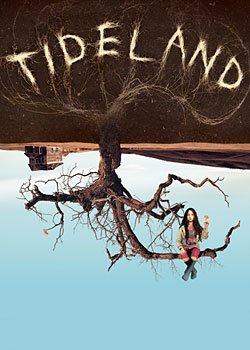
Defending Tideland

As well as working in the industry, I am first and foremost a fan of films. Films are just as capable of articulating the world (inner and outer) as any other art form 1. I’m taking it upon myself to defend a film which will undoubtedly appear on many Worst of 2006 lists, which is a shame.

Tideland is a film by Terry Gilliam, a director who has a reputation for being a maverick. He packs his work with unbridled fits of imagination and passion – often much to the chagrin of his investors. One only needs to research the making of films such as The Adventures of Baron Munchausen (1988), Brazil (1985), and more recently his unfinished Don Quixote project 2 to understand that this is someone who doesn’t listen to reason if reason gets in the way of a neat idea. Tideland is no exception.

Though released only weeks ago it was actually completed in 2005 and spent a long time floating around festivals until it dropped into theatres unceremoniously in October. With few exceptions the film was summarily eviscerated by the critics and subsequently shunned by the movie-going public. It will go on Gilliam’s track record as yet another “ambitious failure” 3.

I’m here to say that I’ve seen Tideland, and it’s good. Beguiling at times, but good. The story concerns Jeliza-Rose (Jodelle Ferland), a ten-year-old girl whose abusive mother dies of a drug-overdose. Escaping the city with her scallywag father (played by Jeff Bridges), they wind up at a ramshackle house in the middle of the prairie that once belonged to her grandmother. It has since been abandoned and pretty soon – after her father suffers from a fate similar to her mother – Jeliza-Rose is left alone to fend for herself. The greatest weapon at her disposal, however, is a seemingly bottomless imagination (her friends, from the beginning of the film, are three doll heads she fits onto her fingers and engages in conversation with). Along the way, she encounters her neighbours (which, on the prairie, means a mile away), Dell and Dickens, a rather odd brother and sister; she (played by Janet McTeer) is a taxidermist with a witch-like demeanor and a dire fear of bees. Her brother (wonderfully rendered by Brendan Fletcher) had his brain operated on long ago to counter epilepsy and seems to be more child than man. Dickens and Jeliza-Rose becomes close friends, seemingly mental and emotional equals.

As much as I don’t like to say what a film (or any piece of art) is “about”, it’s clear – particularly given Gilliam’s repertoire – that one of the key messages of the film deals with the power of imagination in the face of bleakness. It is a bleak story, I won’t kid you (in case my synopsis didn’t get it across). However, the key difference between Gilliam and other directors is that his philosophy is never misanthropic; he always shows us a type of reality that is equal parts magical and bittersweet. Jodelle Ferland’s performance is this best I’ve seen this year and an astounding achievement for a child of her age; she is able to render the inner world and perspective of her character without ever being less than convincing.

I went into this film expecting a stinker and I walked away with a lot of haunting questions about childhood and the resilience of imagination. It’s a fair criticism to say that, in a film that so intimately (and disturbingly) inhabits a child’s world, there could have been an injection of objective perspective so that the audience had a better sense of what was real and what was fantasy. However, aside from that, the film stands comfortably on its own and proudly – in my opinion – beside the best of Gilliam’s work. This makes it all the more unfortunate that it got trounced in its theatrical release. While not the first time Gilliam has experienced such disappointment, it seems the price he has had to pay to give us some of the most inspiring and wild flights of fancy.


1. It was Sergei Eisenstein who said that editing is the only art form native to filmmaking (all its other elements originating in either theatre or photography)

2. See: Lost in La Mancha

3. Aside from Munchausen which reported a record-loss in its day, his last feature, The Grimm Brothers was characterized by the sort of producer-led sabotage the Weinstein brothers are famous for. It’s not a very good film and I don’t quite understand what the intent was behind it – but that’s another story. I’m a champion of Gilliam but I won’t stop short of staring at Grimm suspiciously.

Share