Content Discontent

I think I’ve had my fill of TV (streaming or otherwise) and mainstream films.

The first problem is mine, and is one of saturation. I worked in film and TV post-production for 20 years, watching everything from 15-second TV commercials to multi-part TV series, to box office-busting films. And part of working in film and TV is keeping up your fluency so that you can communicate effectively with each other (if a director makes a reference to Picnic at Hanging Rock you better be ready to watch it if you haven’t seen it already). Also, I’ve watched hundreds of films and countless TV shows over the course of my life — the seminal and forgettable, the laughable and the revelatory.

I’ve pretty much seen every storyline at least once. I’ve seen every twist and turn, every “surprise ending.” I’ve seen every plot device, every sort of villain, every sort of (male) anti-hero, every sort of Disneyesque sentimentality and every sort of nihilist purging of the arthouse soul. It’s hard for me to be taken in by a show or movie — either to suspend my disbelief or my anticipation of what the creators are going to do.

The second problem is out of my hands. In this age of streaming services, we are awash with content. Netflix, Amazon Prime, Crave, etc. all require things to put on their virtual shelves so that we can be enticed to part with our money in order to explore their goods. I have no problem with this business model — it’s basically turned into (back to?) cable TV. The problem is one of quality. It seems that, in the effort to fill the shelves  seasons are lengthened with filler and show renewals are rubber-stamped that end up being samizdat versions of the preceding season. Multiplexes are filled with the faddish (and profitable) notion that (see: Marvel) everything can be part of a franchise. If I hear another producer say “We originally imagined this as a trilogy/series in four-parts” I’m going to scream.

What bugs the shit out of me is how this affects what’s presented as upper tier programming. A good example is Good Omens, the heralded adaptation of Neil Gaiman & Terry Pratchett’s collaboration. I haven’t read the original book — I have a notion that it’s written in a larger-than-life, Douglas Adams-y style — but the show is painful to watch. It wants to be sly and slick satire and it has strong early moments, but it’s all so buffoonishly overplayed — the actors who aren’t line-reading chew their way through the scenery — to the degree where I had to wonder whether the producers might’ve considered making it for children. The worst is that for a six-part series there’s barely enough story to take up three. I lost count of how many time-sucking flashbacks and side-stories are introduced in order to lead to the telegraphed, overdue finale. Speaking of Gaiman, adaptations, and overdue finales, please see the meandering second season of American Gods (which I abandoned).

For the record, I don’t have a problem with the Marvel Universe franchise. They’re not hiding anything: it’s a stream of big-ass popcorn epics. They aren’t being released as exemplars of anything other than “hey, here’s a well-executed adaptation of a comic book most people haven’t read.” Sure, given the choice I’d rather watch an imperfect  Olivier Assayas film over Ant Man, but at least I can watch the latter and know where to keep my expectations dialled.

While I’m bleating, a trend I wish would die, pardon the pun, are films where it’s obvious the protagonist won’t get a scratch despite killing 100 hired assassins (see the three John Wick films, The Equalizer, and Colombiana). Where’s the suspense if you don’t allow the audience to imagine that, no, the protagonist might not make it. This is an inherent problem with films and TV shows that are made in the hope of infinite reboots: no suspense (see: Orphan Black, a prime example of where the producers missed multiple opportunities to draw more attention by killing off one of the clones).

Why can’t we make something, leave it be to stand on its own merits, and move on without exploiting its success with sequels and prequels and remakes and reboots? As good as the original was (and it is), who in god’s name, save for the cast and crew, asked for a second season of Big Little Lies? What part of that story begged for extended development? Note: Liane Moriarty, the author (whom I share a birthday with) whose novel was adapted into the show never wrote a sequel until the HBO adaptation achieved success (she ended up writing a novella by request, not exactly the way any author would like to work, let alone revisit characters, though I don’t blame her).

Anyhow, I sometimes wonder, in the industry’s effort to satisfy its appetite for content, whether we are sacrificing the magic of our relationship with entertainment for the sake of Say’s Law, the (questionable) belief that supply creates its own demand.

Share

Writing Adv*ce: Character

I’ve been thinking lately about a couple of short stories I’ve been working on over the last few years that don’t seem able to find a home with a publication. Now, there are a thousand reasons for a story to get rejected, and some of these have little to do with whether or not a story has issues to be worked out: subject matter, “fit,” philosophical angle. The stories I’ve been thinking about felt fleshed out and yet I suspected — no matter how badly I wanted to believe they were “done” — they were missing something that kept them from being as good as they promised to be, and, if I were honest with myself, the sort of work I want to be known for: complex, nuanced, readable.

One clear-headed morning on my walk to work, I was feeling comfortable enough to get over my nearsighted, belligerent writerly arrogance and apply some frank analysis to these two works.

Rather than bang my head against the wall staring at the works themselves, which I’d done previously, I took a different tack and investigated what it was that made some of my previously published work resonate and these current works not. And I realized, thinking specifically about Snowshoe and There Is This Thing About You, that the characters in these works were relatable — you might even despise them, yet there was a rapport with the reader, an “in”. These are difficult characters, conflicted, and sometimes there will be the desire to sublimate these characters onto a two-dimensional plane that makes it easy to dislike them. Yet, though we might grow impatient with their lack of finesse, accomplishment, and patience, the reader can’t help but want to relate to them, to understand what makes them tick. And in the stories I’ve been troubleshooting I discovered this very thing — relatability, respect, empathy — to be at least part of the missing element.

I recognized that each of these problematic stories featured a supporting character who was, to some degree, the bane of the main character’s journey; in each story the protagonist couldn’t possibly move forward without the effort of this unwitting adversary for whom in each story the protagonist lacked respect on some basic level. And it occurred to me that if the protagonist so clearly lacked respect for them on the page then on some level maybe I did too.

Despite this revelation, the work ahead is not paint-by-numbers. If anything, I realize that there’s a deeper layer that’s missing and by nature deep layers don’t just get applied like false eyelashes. It’s going to take some more reflection before I understand the meaning of what needs to be done, otherwise whatever I do is going to have QUICK FIX written all over it and the wily reader will see it a mile away.

Oh, and for anyone reading this who is under the impression that once these changes are made getting these stories published is a slam dunk, think again. Unless your name is Alice Munro you’re always going to find yourself at the whims of an editor or editorial reader — that’s just the way it goes.

(* I hate advice-giving, so rather than doing that, I’m going to provide something more meditative and complex, and maybe useful to some)

Share

A book, some photos

I swear I’m not a packrat, but sometimes you hold on to things for reasons that seem more intuitive than logical. Which brings me to a book on our shelf at home — The Chrysalids, by John Wyndham. This was from Grade 9 English class, if I’m not mistaken.

oneIMG_20190308_1420386

Let’s get something out of the way, in case that book cover looks cool. It has absolutely nothing to do with the story, its characters, the themes. I am afraid to say there are no weapon-wielding anthropomorphic insects, which was a crushing blow as I turned the pages at the time. Don’t get me wrong, it’s a good book, and John Wyndham (The Midwich Cuckoos, The Day of the Triffids) was no slouch.

However, a couple of years ago, when I took it from the shelf to have a look, I found two photographs inserted. You see, back then I was a yearbook photographer, and these were a couple of photos I’d probably printed off at the time (this would have been 1985?) perhaps to give to one of the people pictured should I have seen them in the hallway between classes. It’s possible it was just a fancy bookmark. I don’t honestly remember, but I’m struck by the good condition of the paper (printed on glossy stock, which was verboten in the darkroom because of its cost and scarcity). If you look at the bottom margin of the upper photo below you can see that I didn’t square the cut.

twoIMG_20190308_1421453

This is not a John Hughes film. At the end of the day, we’re looking at three teenagers standing at the rear (smokers’) entrance to Memorial Composite High School, in Stony Plain, Alberta. I sorta knew a couple of them. The guy in the middle was an asshole straight out of Stephen King’s Christine. I suppose I could grab my yearbook and look up their names, but all that’s going to give me are facts, right? What strikes me about the Wyndham book, the photographs, is how much of a time capsule it all is, as a somewhat complete package. Of a kid who was yanked from town to town, school to school, who didn’t get to have much say of where I went, what I had to endure along the way, who became more preoccupied with getting through it as opposed to (cue Hughes, whose movies I grew up watching) Having The Time Of My Life.

I suppose there’s a clever thing I could do: to connect the misrepresentation of the cover of The Chrysalids vs the more complex content, to the misrepresentation of how high school is sold to us vs the reality of growing up for many of us. So I will.

Share

Update: May 2017

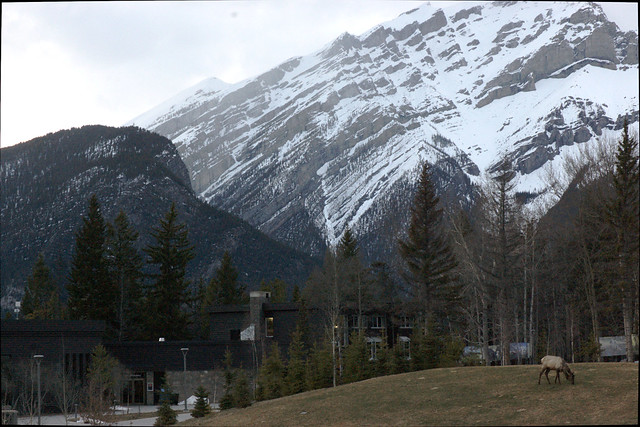
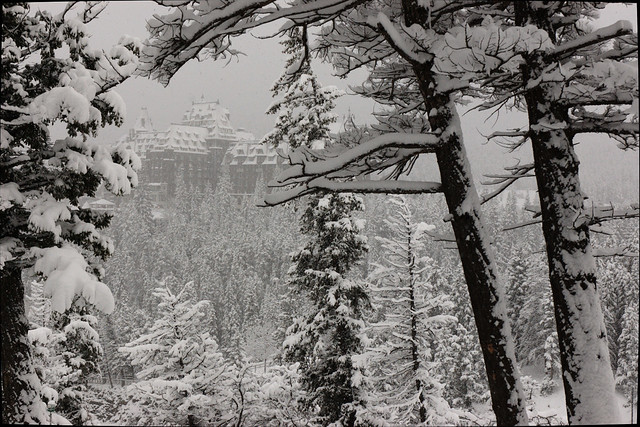
My lack of updates (at least over the last few years) represent activity elsewhere (offline, or online somewhere else). In April I had the wonderful pleasure of being accepted at the Banff Centre for Arts and Creativity for a self-directed writing retreat. I hadn’t been to Banff since I was in my teens, so it was a great refresher on a very unique part of the country. It was also my second time visiting Alberta in the space of 6 months (previously over 20yrs before that), so with all that (including altitude and time changes) it was an intense, and dizzying, yet ultimately productive week. 

When I say “productive” I mean that I’ve been working on the next novel. I can’t say that I achieved any fist-pumping wordcount, but the quality of the content was my focus. I realized when I began to work that I’d written much of the “easy” stuff beforehand, leaving this idyllic escape the setting for me to enter a very challenging series of character mindsets. Not fun. There was beer. 

This past weekend, I got to take a getaway to Prince Edward County for some much-needed not work/not writing time away from home. I really love that neck of the woods. I have an affinity for rural environs: the smell of manure, the birdsounds, the expanse. And yes, the wonderful wine and beer, and cheese. Yet, coming back to Toronto, I realized that there were things missing that I would struggle to live without. Rural areas don’t have a lot of diverse culture (I will say that Picton has a very nice movie theatre, and Bloomfield has a cool-looking drive-in), and they also happen to be very white. By “very white” I mean they are almost exclusively enclaves of white people. I grew up in those sorts of enclaves and I am in no rush to return without some evidence that [wherever I fancy moving to one day]  welcomes POCs (persons of colour).

I’m working through a lot of ideas as a result of these two trips, some fictional, some filtered through autobiographical experience. Along the way, I’m hoping to begin posting writing-related ideas here (I say “ideas” because I’m not comfortable with “tips,” which springs from my work as a psychotherapist who eschews advice-driven approaches).

Stay tuned.

Share

ReLit 2016 Nomination!

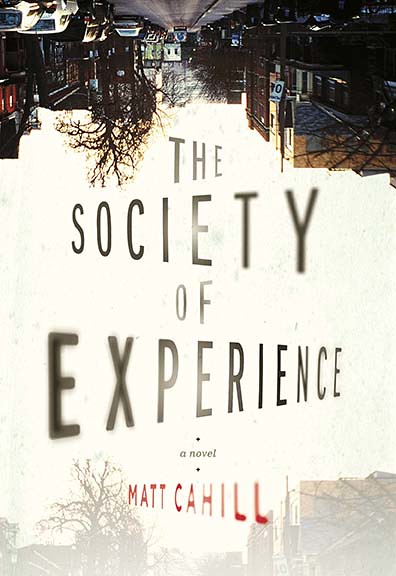
I am honoured to have The Society of Experience shortlisted for the 2016 ReLit Awards. What are they, you ask, and wasn’t 2016 last year?

The ReLit Awards are, to quote the blurb on their site, “to acknowledge the best new work released by independent publishers — may not come with a purse, but it brings a welcome, back-to-the-books focus to the craft.” In other words, rather than being about money and televised coverage, it’s about quality. One distinguishing element of the ReLit Awards is that they select books from the previous year. Thus, the 2016 ReLit shortlist represents fiction, poetry, and short fiction from 2015.

I am with some good company:

The Capacity for Infinite Happiness, Alexis von Konigslow (Buckrider)
All-Day Breakfast, Adam Lewis Schroeder (Douglas & McIntyre)
One Hit Wonders, Patrick Warner (Breakwater)
Split, Libby Creelman (Goose Lane)
Chinkstar, Jon Chan Simpson (Coach House)
Too Much on the Inside, Danila Botha (Quattro)
Martin John, Anakana Schofield (Biblioasis)
Winnie’s Tongue, Nic Labriola (Insomniac)
One Hundred Days of Rain, Carellin Brooks (BookThug)
The Theory of Light at Midnight, Elizabeth Ukrainetz (Tightrope)
A Superior Man, Paul Yee (Arsenal)
A Free Man, Michel Basilieres (ECW)
The Man Who Saved Henry Morgan, Robert Hough (Anansi)
The Hunter and the Wild Girl, Pauline Holdstock (Goose Lane)
The Society of Experience, Matt Cahill (Buckrider)
Where Did You Sleep Last Night, Lynn Crosbie (Anansi)

I expect the selected category winners to be announced in a month’s time.

Share

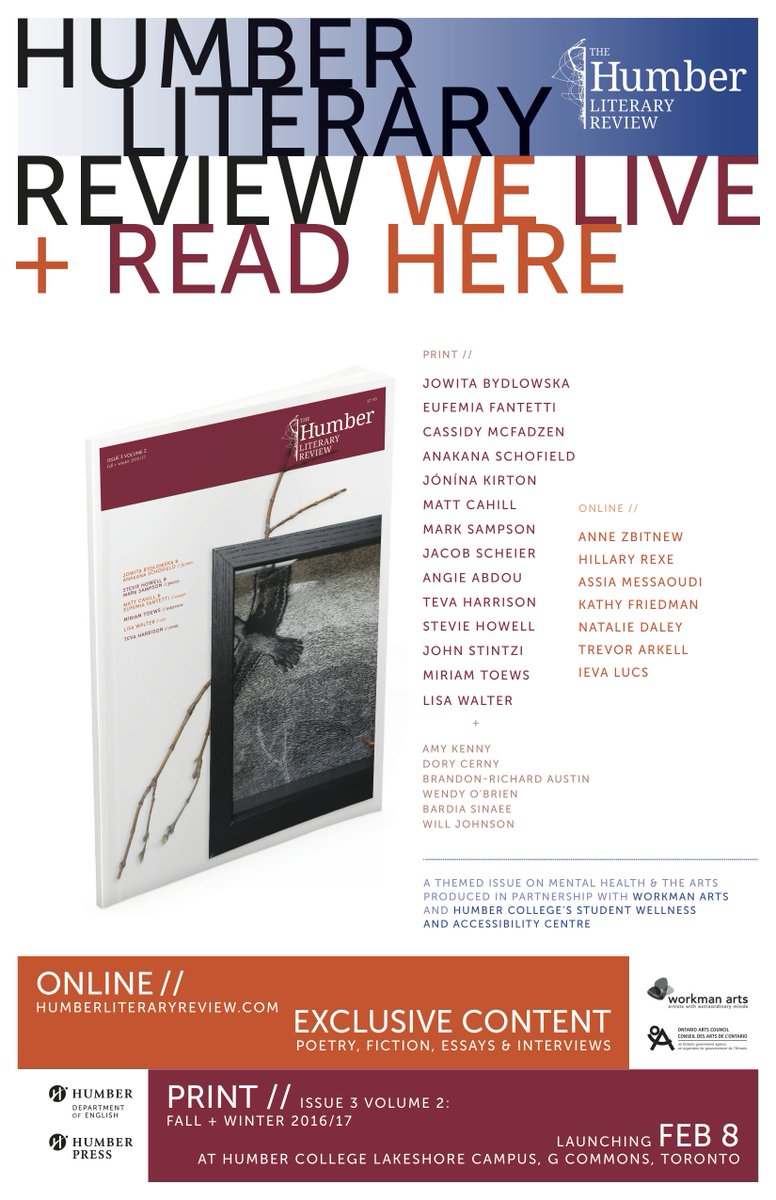
Essay in Humber Literary Review #6

I’m happy to say that the latest issue of Humber Literary Review (#6) is out, and I have an essay included. This is their first themed issue, and it’s about mental health. Because I’m a psychotherapist who is deeply reflective about the way in which we choose to see the world, I saw this as a golden opportunity to submit a pertinent perspective; my essay, On Madness Within Imagination, confronts a cultural blindspot – the depiction of madness in fiction.


It is available at the following Toronto bookstores:

Another Story (on Roncesvalles)
Book City on the Danforth
Book City on Queen
Book City on St Clair
Book City in the Village
Presse Internationale on Bloor
Presse Internationale in the Beaches
Type Books (on Queen)

It is available elsewhere, of course, but I have no clue where. You can also purchase a subscription from HLR.

Share

December

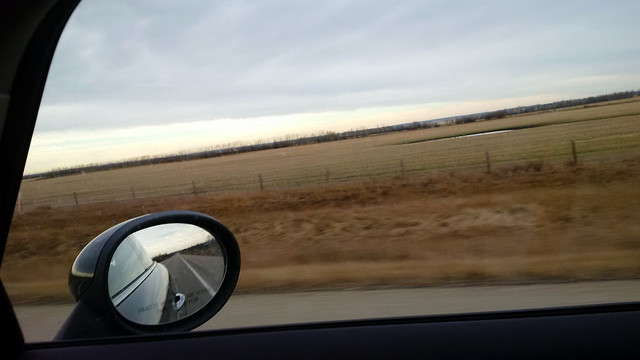
Driving from Camrose to Calgary AB in November

It’s been a hell of a run. I am exhausted and happy to focus on my (very busy – not complaining) day job.

November’s tour of Alberta was wonderful, and I’m happy I pushed myself to make it happen (and grateful my publisher was able to wave her travel grant wand my way). I met readers, old friends, new friends, and relatives. I saw Alberta — a place I haven’t set foot in for almost 30 years — with fresh eyes (and a driver’s license). I could not have asked for a smoother tour, and I am thankful.

I am also tired, and am happy to put The Society of Experience to rest so that I can focus on the next book. I don’t want to publicize anything for a while. That said, I will have an essay coming out in the next issue of the Humber Literary Review, looking at our skewed depictions of madness in film and literature – that’s coming out in January, I am told.

If you are reading this, I hope you have a good December, and are able to find light in what was quite a dark 2016 for many.

Share

Alberta Tour 2016

Here’s the short and sweet on my upcoming tour of Alberta:

The Society of Experience Matt Cahill Alberta Tour 2016

November 9 — University of Alberta, Augustana (Camrose) campus: reading from The Society of Experience at the bookstore @ 2pm. Books will be sold and signed. If you are in Marina Endicott‘s creative writing class, you will have the added bonus of having me hang over your shoulder and talk about writing and stuff on November 10th!

November 12 — Calgary, Literary House Concert, from 2pm to 5pm: the inaugural launch of a literary salon that is going to be awesome, but due to its intimate location will be RSVP only. Go here to find out more. I’m reading with Nikki Reimer & Shannon Maguire! Books will be sold and signed.

November 13 — Edmonton, at Audreys Books, reading from The Society of Experience. @ 3pm  I’ll be joined by writers Tim Bowling and Greg Bechtel! Books will be sold and signed. Facebook invite here!

Updates will be made as the week progresses. I hope to meet new friends and readers during this whirlwind-ish five days!


Share

IFOA Reading, Alberta Tour & A New Essay

I’ve got some great things in store for the next month or so:

October 25th: I’m going to be reading at the Literary Press Group‘s Boos & Books event, which is part of the International Festival of Authors. I’m thrilled to have been selected as well as honoured to be part of the IFOA. Because it’s a Halloween-themed event, I’m going to be reading an excerpt from my short story, Snowshoe (if you haven’t read it, it’s available at Found Press for the price of a cup of coffee – super cheap!)


November 9th – 13th: I’m going to be on a (very fast) tour of Alberta, reading/promoting my novel, The Society of Experience. Current dates are as follows:

November 9 – Camrose (University of Alberta campus)

November 12 – Calgary (location tbd)

November 13 – Edmonton (Audreys Books)

Somewhere in here I’m hoping to make an appearance in Red Deer – stay tuned! I’m looking forward to seeing old friends from when I lived there, as well as meeting readers, not to mention members of the Alberta publishing community (this last part may not sound exciting, but I think it’s significant!)

Lastly, I have an essay coming out in the next Humber Literary Review (due in November). This is a themed issue whose topic is mental health. My essay explores fictional depictions of madness in contemporary mainstream media, their worrisome undertones, and the challenges with working with the idea of madness. This is a very challenging piece, written from varying perspectives (as a psychotherapist, as an artist, and also someone who has a personal perspective on mental health challenges).

Stay tuned for updates — this is going to be a busy last quarter for 2016…

Share