
Keyhole Trailer
Here’s a trailer for Keyhole, the Guy Maddin film I worked on:
Remembering Michael
It’s the 32nd anniversary of my uncle’s murder. Details here: http://www.amw.com/fugitives/brief.cfm?id=44215.
Sad, numb.
I was in a mood when I wrote this – hard not to be, I suppose. However, I don’t want it to come across as maudlin, so I thought I’d add some context.
I chose this year to make a statement about it, on social media especially (Facebook, Twitter). Why? Because, outside of the initial blog posts I published around the time of the America’s Most Wanted episode, it’s been a source of untapped grief. In making it public, I was unabashedly putting it out there – to friends and acquaintances, and strangers alike – instead of it being this twisted little secret which swims around my head.
The fact is, my uncle’s death has nothing to do with me. I never had the chance to meet him. I am involved in the sense you would be involved if you were researching a stranger from another age, another country, who just happened to be related. And yet his story is woven into mine, distant though our two lives were. I am older than he was when he was shot. I wasn’t even 9 years old back then, and I didn’t learn about it until I was 17. The tragedy was delayed for me: time-released.
In any case, this is my sorrow, shared briefly with you. It is, I should add (in all fairness), a necessary exploitation of a crime, in the faint hope someone will happen across an old Guild D40 guitar, or know what happened to a burglar with a Leica fetish. Faint hope, for sure, but it’s part of the process of grief.
Update
First off, things are going very well on the Keyhole blog. If you haven’t checked it out, please do. Yes, this is me, shilling for myself (and the film).
It is a departure from Guy’s previous works, which tended to rely on the aesthetic of film itself as a language; Guy has been very upfront about his love of tropes from the early days of cinema. The difference is that in Keyhole these elements are reordered in priority, toward the background as mise-en-scène and not a character in and of itself. Keyhole is subliminally deeper and more purely emotional than his earlier films; a drawback is that I’m not sure how much people will be able to absorb in one viewing. If there is one challenge that I am experiencing, it is balancing the educational, editorial, and entertainment-oriented components of the diary/blog.
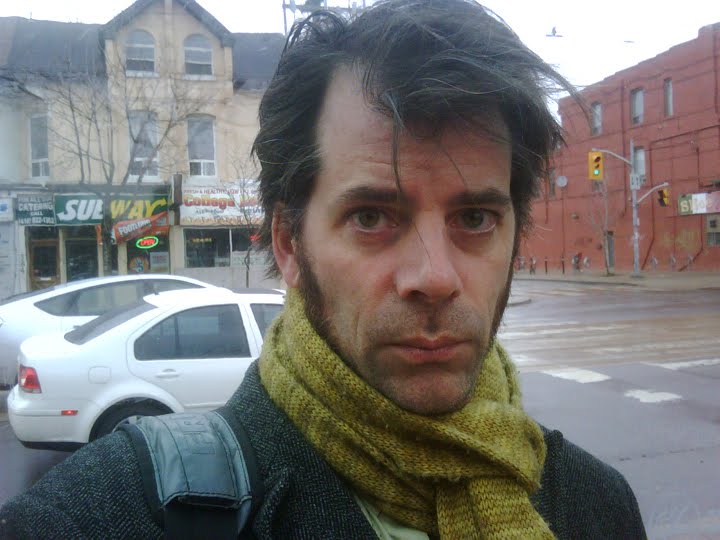
Aside from this, teaching, student-ing, writing are going well. I am working on a submission letter to a literary agent for my novel. The weather is getting warmer. I can’t complain
Well, I will complain: we have a federal election coming up May 2nd. I don’t mind the election per se, but we have exceeded three weeks of campaigning already and not one word of either Afghanistan or Libya – two wars which require a position, regardless of whether you are the sitting government or one of the contenders. Oh, and health care. It’s the weird-assed priorities which bug me – who are they trying to appeal to? Swing voters and pundits, it seems.
Guy Maddin’s Keyhole

Good news #1: I’m supervising the post production on the new film by Guy Maddin, Keyhole.
Good news #2: I’ve been asked to do a blog/diary of its progress. Sweet!
Here’s the link to my Keyhole post production blog. Don’t be surprised if it takes my attention away from here for the next while. I will endeavour to keep Imaginary Magnitude updated.
Movies & A Book: Some of The Best Things I’ve Witnessed in 2010
Here’s the best of what I’ve seen this year. I haven’t seen everything. You may disagree with what I have seen. This is life.
FILM:
Inception
Go ahead. Try. Try disagreeing that this is one of the most technically (and perhaps conceptually) elaborate mainstream Hollywood productions released in years which also happens to work as a “movie” that a wide variety of audiences would enjoy watching.
There has been a backlash against Inception. I don’t know how or why this is – perhaps it was over-sold as a deep “puzzle-solver” film, which it is not. And yes, the NYT’s A.O. Scott has a point in his comment that the film’s literal depiction of dreams are lacking psychological heft (outside of Marion Cotillard’s performance as DiCaprio’s wife). In any case, something has caused a revolt against this film and I say this revolt is missing the point.
Inception is, generally speaking, the most watchable, the most fascinating film of 2010. You are allowed to hate it.
A Prophet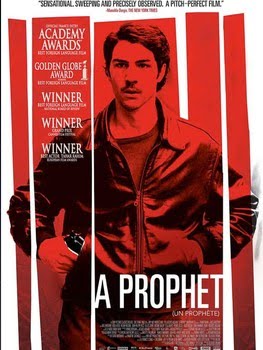
I am a huge fan of Jacques Audiard, a French director who has always rewarded the viewer with films (Read My Lips, The Beat My Heart Skipped) that balance passion with style. With A Prophet, Audiard expands his canvas, creating a gritty, novelistic masterpiece on-par with The Godfather (yes). The story concerns a young incarcerated Muslim who slowly rebuilds himself from within the treachery of prison life, rising from under the thumb of a vicious mob leader to become his own person and create his own empire. Epic, patient, and in places extremely violent. People will be referring to this film for years to come even if it has not really made a mark in North America. Again, a masterpiece.

The Eclipse
I realize this Irish film was released in 2009, but it didn’t get here until now. A compelling ghost story which eschews the two-dimensionality of ghost story films. It was around the twenty-minute mark that I realized it was a film which was going to confound my expectations (expectations based upon years and hundreds of similar plot lines): it wasn’t going to squander what it was and fall prey to hackneyed cliché. A gorgeous, touching, ultimately humanistic film with a stand-out performance by Ciarán Hinds as a grieving father of two children who must swallow his pride to escort a loud-mouthed Aidan Quinn through the motions of a book tour of the small coastal city of Cobh, in County Cork. A sublime achievement by director Conor McPherson.
Notable: Winter’s Bone – see it. It’s on DVD now. Like A Simple Plan, it’s a self-contained “rural thriller” (ugh) with a chilling undertone of barren hopelessness. Unlike A Simple Plan, it’s uncomplicated which is what gives it more of an honest strength. Exit Through The Gift Shop is the perhaps best film made about art and the art world that I have seen – like Inception, it’s not trying to be deep, just smart. Scott Pilgrim vs. The World blew me away because I expected it to be weak (perhaps because all the publicity photos inexplicably used a static image of Michael Cera standing against a fucking wall…imagine if you will, trying to sell Star Wars with a picture of Mark Hamill sitting cross-legged in the desert – sounds awesome, eh?). Not only was it not weak, it was the strangest case of “I don’t know why I love this movie but I really do”. Painstakingly, sublimely Toronto-centric (which, unlike the inexplicable promo photos of Michael Cera, shouldn’t be factored into explaining why it didn’t fare well at the box office) and wildly imaginative – those two things have never met before…oh but wait, I forgot the perfect companion piece: Kick Ass – also shot in TO, and also exceedingly expectation-defying (although the climax is kinda drawn-out). As far as performances go, Jesse Eisenberg (The Social Network) and Colin Firth (The King’s Speech) stand out, along with Winter’s Bone‘s Jennifer Lawrence, and Hailee Steinfeld for True Grit (who, at 14-years, shows huge promise as an actor).
BOOK:
I would have said “BOOKS”, but due to work and school I haven’t read anything published this year (that I can remember), with the exception of John Vaillant’s The Tiger. Lucky for me, since it is without doubt one of the best non-fiction titles I’ve read in years.
The Tiger is a meaty real-life tale of vengeance by the titular beast, in the winter hinterland of the Russian Far East (which the author calls, paradoxically, “the boreal forest”). Vaillant describes an environment historically, politically, and biologically unique, inhabited by hardened outcasts. The shadow of a predator male tiger, known never before to attack without cause, creates a wave of dread throughout the land, with only a small band of volunteers to figure out the mystery. Vaillant provides wave after wave of fascinating detail – examples of how man and beast have evolved throughout time, how human and animal behaviour have worked in similar paths – that by the end of the book you feel as if you should have a credit in Ethology. This is truly a page-turner and I cannot recommend it enough.
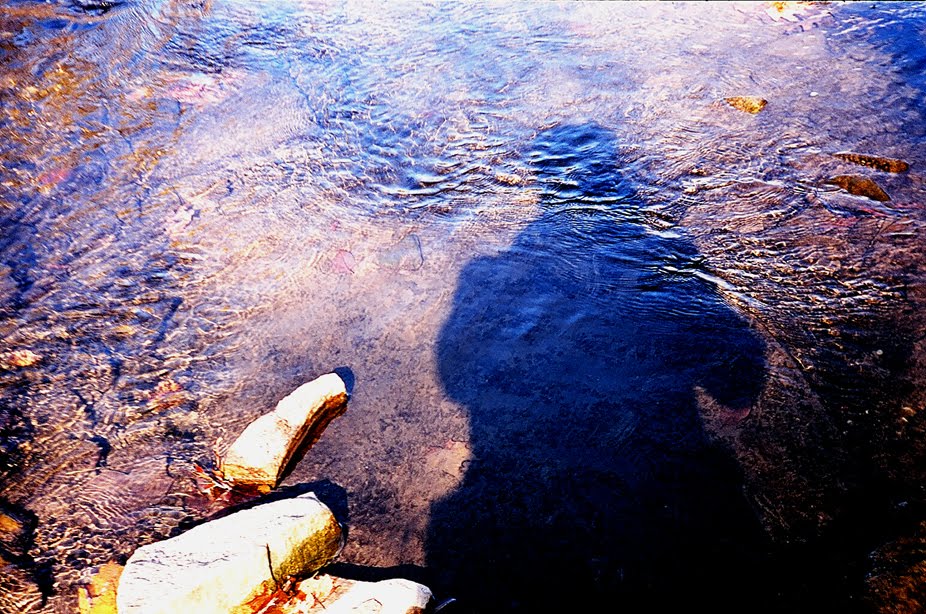
Photo: Self-Portrait, Credit River
Taking a Breath
For the first time in a few Decembers, I approach the end of the year without a knot in my stomache, without a brain scrambled by the to-and-fro of this and that. This is not to say that I’m not busy, that I do not (as I type this) sit with a few plates spinning above my head. This is also not to say that I do not face an onslaught of tasks once the merriment of New Year’s Eve has ebbed.
I feel compelled these days to start putting things in perspective. Perhaps this is what happens when you turn 40 – perhaps I am being cliché. Seeking context and sketching narratives seem like writerly enough goals to aim for, but even as a writer there are a lot of things – tangents, curves, frays, tears – to reconcile within that task.
A strong influence stems from my current study of psychotherapy, which requires that I be in therapy also. You find yourself relating a story from your past – from your childhood, from your 20s – and you find yourself saying something you realize you haven’t really mentioned to anyone before. Not necessarily secrets, but impressions of events. Sometimes events themselves. It allows you to discover how unintentionally secretive we can all be.

I have been struck by as often as I have been able to dodge the things thrown at me in life. Sometimes you don’t have a choice: I think that’s one of the first things you learn, but the hardest to reconcile. That is, if you don’t want to subscribe to fatalism (which isn’t to say that everything should boil down to some atheist/libertarian screed). Ultimately, life has but one author, and if you do not have a hand on the pen there is a problem.
It is thus, in the spirit of pen holding, that I try to take some time over the next while to add to the picture of my understanding of my self, with the aim of broadening that understanding (as opposed to solipsism) so that the rest of the (human) world may not be as strange and foreboding as it can seem.
Perhaps, some day, we will see that we are all artists.