Article/Comment: Watch Your Language

(This post is currently in competition in the Philosophy Blog War. Feel free to cast your vote for it. If you like, you can vote directly by pressing this button.)

I read a very interesting essay on the BBC News website entitled “Chaotic world of climate truth”. It’s written by Mike Hulme, Director of the Tyndall Centre for Climate Change Research and in it he criticises the hyperbole which casts a pall on the discussion of global warming.

This is not a partisan piece, in the sense that Mr Hulme is not one of a seeming endless army of paid-for voices in the climate change debate. By virtue of his office and his profession, he makes his argument clear from the outset:

Climate change is a reality, and science confirms that human activities are heavily implicated in this change.

But over the last few years a new environmental phenomenon has been constructed in this country – the phenomenon of “catastrophic” climate change.

It seems that mere “climate change” was not going to be bad enough, and so now it must be “catastrophic” to be worthy of attention.

The increasing use of this pejorative term – and its bedfellow qualifiers “chaotic”, “irreversible”, “rapid” – has altered the public discourse around climate change.

This blog entry isn’t about climate change (notice there are no stock images of ensuing storm clouds and other nature metaphors for imminent disaster). I’m not apathetic to the topic but, reading his essay, Mr. Hulme’s description of how hyperbole cheapens legitimate debate rang very true and has implications outside of the context of this particular subject.

We’re living in an increasingly ideological age. I cannot remember a time (I’m 36, so I gather there are precedents beyond “my years”) when words such as intolerance, fundamentalist, and radical were used so extensively (the trope intolerant fundamentalist radical, for example, is no longer the sole jurisdiction of religious persecution but rather has extended itself to include such diverse groups as environmentalists and, my personal favourite, secular progressives). I’ve written here about the decline of discussion and true debate in N. American society; it’s as if we feel that no one will listen to us unless we raise our voices to the sky and colour our points with invective. Nothing is important anymore: it’s imperative. Nothing is troubling anymore: it’s a crisis.

In exaggerating the situation with alarmist language (which is often disingenuously intended to get attention rather than be realistic/logical) we fall into a trap. Like the boy who cried wolf, if our standard for discussion is hyperbole, then who will truly believe us when there truly is something to be alarmed about?

I see this behaviour not only in the usual suspects (blogs, user groups, forums), but also emanating from supposedly respectable institutions (governments, scientific research institutes, charities). It’s in the newspapers, it’s on television, it’s in our RSS feeds. I suppose it’s the scale of it, and the feeling (or fear) that this is the “new normal” of discourse which concerns me.

The language of catastrophe is not the language of science.

Those words start Mr. Hulme’s summary. In the context of how I feel I would say that “the language of catastrophe is not the language of an evolved society”, but rather one that is becoming more and more tribal and classist.

Share

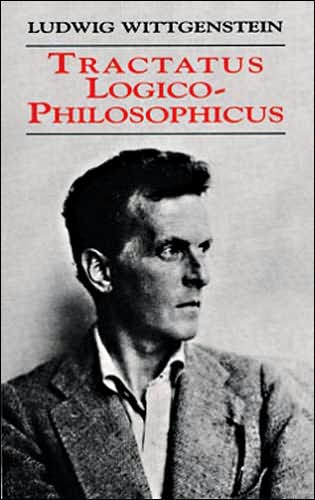
Book Review: Tractatus Logico Philosophicus, by Ludwig Wittgenstein

4.003    Most propositions and questions, that have been written about philosophical matters, are not false, but senseless. We cannot, therefore, answer questions of this kind at all, but only state their senselessness. Most questions and propositions of the philosophers result from the fact that we do not understand the logic of our language.
(They are of the same kind as the question whether the Good is more or less identical than the Beautiful.)
And so it is not to be wondered at that the deepest problems are really no problems.


I’ve been promising this review for some time. The problem has been – since this is a book not of philosophy but about philosophy – I’ve needed time for it to sink in. Furthermore, as much as I hate prefacing my opinion (or anyone else doing the same), due to the nature of this book I feel it fair to say a few words: I’m not an academic who specializes in philosophy. I do not have the names and concepts of all the world’s great thinkers at my fingertips. As such, I tackled this book as a reasonably intelligent layman. What I have to say about it should be seen through this particular lens. This is not a dissertation and most certainly this is not an academic exercise. So there.

Wittgenstein’s Tractatus Logico Philosophicus though only clocking-in at a svelte 108 pages, is a monster of a book. It is a perception-altering, densely laid treatise that attempts to clarify not a particular theory per se, but rather, pulls its focus back to comment upon the very scaffolding of philosophical understanding itself.

The way Wittgenstein sees it, there are too many fundamental errors and/or assumptions that sabotage philosophical propositions before they’re even written down on paper. The key is to first lay down exactly what a sound proposition is and to understand it in its elemental form. Technically, linguistically, even mathematically Wittgenstein has taken his understanding of what makes a philosophical proposition sound and distilled into a dense uber-logical lexicon.

It’s a fascinating (if insufferably semantic) approach: each point and sub-point are laid down like a revolutionary manifesto:


4.023    The proposition determines reality to this extent, that one only needs to say “Yes” or “No” to it to make it agree with reality.
Reality must therefore be completely described by the proposition.
A proposition is the description of a fact.
As the description of an object describes it by its external properties so propositions describe reality by its internal properties.
The proposition constructs a world with the help of a logical scaffolding, and therefore one can actually see in the proposition all the logical features possessed by reality if it is true. One can draw conclusions from a false proposition


Wittgenstein is intent on defining the way in which we attempt to interpret the world rather than the specifics of content. Wittgenstein’s reverence for the power and importance of how language is utilized in articulating the world is infectious. His approach, however, requires careful reading. I will be honest in saying that it’s difficult to review such a book without having spent a number of weeks re-reading it, making notes, checking out other people’s feelings about it, etc.. I have not had the time to do this, and have only managed to read Tractatus twice – however, I will say that while the first reading was a slog in the mud, during the second reading things became suddenly more clear and fascinating.

Who should read this book? Anyone interested in expanding their practical and theoretical understanding of language and logic. While Tractatus is dense and unsparing to the casual reader, those who give Wittgenstein’s treatise the time and effort it deserves will undoubtedly walk away richer for the experience (if not wiser). If Aristotle wrote the book on metaphysics, then Wittgenstein has written the book on metaphilosophy.

Tractatus Logico Philosophicus (ISBN 0-486-40445-5) is available at a fine independent bookstore near you. Also available online at various merchants. Note: this review is based upon the 1999 Dover republication (using the translation by C.K. Ogden, which is thought to be the definitive text).

Share

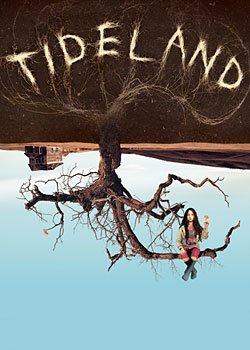
Defending Tideland

As well as working in the industry, I am first and foremost a fan of films. Films are just as capable of articulating the world (inner and outer) as any other art form 1. I’m taking it upon myself to defend a film which will undoubtedly appear on many Worst of 2006 lists, which is a shame.

Tideland is a film by Terry Gilliam, a director who has a reputation for being a maverick. He packs his work with unbridled fits of imagination and passion – often much to the chagrin of his investors. One only needs to research the making of films such as The Adventures of Baron Munchausen (1988), Brazil (1985), and more recently his unfinished Don Quixote project 2 to understand that this is someone who doesn’t listen to reason if reason gets in the way of a neat idea. Tideland is no exception.

Though released only weeks ago it was actually completed in 2005 and spent a long time floating around festivals until it dropped into theatres unceremoniously in October. With few exceptions the film was summarily eviscerated by the critics and subsequently shunned by the movie-going public. It will go on Gilliam’s track record as yet another “ambitious failure” 3.

I’m here to say that I’ve seen Tideland, and it’s good. Beguiling at times, but good. The story concerns Jeliza-Rose (Jodelle Ferland), a ten-year-old girl whose abusive mother dies of a drug-overdose. Escaping the city with her scallywag father (played by Jeff Bridges), they wind up at a ramshackle house in the middle of the prairie that once belonged to her grandmother. It has since been abandoned and pretty soon – after her father suffers from a fate similar to her mother – Jeliza-Rose is left alone to fend for herself. The greatest weapon at her disposal, however, is a seemingly bottomless imagination (her friends, from the beginning of the film, are three doll heads she fits onto her fingers and engages in conversation with). Along the way, she encounters her neighbours (which, on the prairie, means a mile away), Dell and Dickens, a rather odd brother and sister; she (played by Janet McTeer) is a taxidermist with a witch-like demeanor and a dire fear of bees. Her brother (wonderfully rendered by Brendan Fletcher) had his brain operated on long ago to counter epilepsy and seems to be more child than man. Dickens and Jeliza-Rose becomes close friends, seemingly mental and emotional equals.

As much as I don’t like to say what a film (or any piece of art) is “about”, it’s clear – particularly given Gilliam’s repertoire – that one of the key messages of the film deals with the power of imagination in the face of bleakness. It is a bleak story, I won’t kid you (in case my synopsis didn’t get it across). However, the key difference between Gilliam and other directors is that his philosophy is never misanthropic; he always shows us a type of reality that is equal parts magical and bittersweet. Jodelle Ferland’s performance is this best I’ve seen this year and an astounding achievement for a child of her age; she is able to render the inner world and perspective of her character without ever being less than convincing.

I went into this film expecting a stinker and I walked away with a lot of haunting questions about childhood and the resilience of imagination. It’s a fair criticism to say that, in a film that so intimately (and disturbingly) inhabits a child’s world, there could have been an injection of objective perspective so that the audience had a better sense of what was real and what was fantasy. However, aside from that, the film stands comfortably on its own and proudly – in my opinion – beside the best of Gilliam’s work. This makes it all the more unfortunate that it got trounced in its theatrical release. While not the first time Gilliam has experienced such disappointment, it seems the price he has had to pay to give us some of the most inspiring and wild flights of fancy.


1. It was Sergei Eisenstein who said that editing is the only art form native to filmmaking (all its other elements originating in either theatre or photography)

2. See: Lost in La Mancha

3. Aside from Munchausen which reported a record-loss in its day, his last feature, The Grimm Brothers was characterized by the sort of producer-led sabotage the Weinstein brothers are famous for. It’s not a very good film and I don’t quite understand what the intent was behind it – but that’s another story. I’m a champion of Gilliam but I won’t stop short of staring at Grimm suspiciously.

Share

M is for Miscellany

Disparate notes for today…

First, this blog has hit (and since surpassed) 10,000 visits. I waited until there were at least a few hundred over the mark as I’m sure a lot are due to me being paranoid about spelling/grammar/formatting mistakes. Hoorah for me and, once again, a big vote of thanks to all of you who have passed through – particularly those who leave comments.

Secondly, photographs. Yeah…not many of them lately, huh? The answer is simple: no time, but certainly not for lack of interest and passion. Mind you, this autumn (Toronto at least) has been cold, grey, and wet – generally miserable for a season and a region known for some of the most beautiful autumn vistas in the world. In other words, even if I had the time, my output would’ve been slim (and if not, reflecting the dreary outdoors we’ve experienced since October began). I promise to publish some in the near future, even if they are not “fresh” (which is usually my preference). Thankfully, the forecast for today called for a high of 16 Celsius; I’m hoping we’ll have at least a month remaining of the autumn I’ve come to know, before the snow hits.

Thirdly, still reading Wittgenstein (book review forthcoming). I must say, there are great swaths of it that are about as easy to peruse as electrical schematics. Punishingly arithmetical. Yet, like the sun glimmering through clouds, here and there I happen upon oases of potent contemplation:

5.6 The limits of my language mean the limits of my world

Suck on that for a toothache, eh? Still, after this book I’m going to need an antidote – at this rate Anne of Green Gables will do.

UPDATE (02/11/06): It’s bloody 6 degrees outside…with a wind from the lake no less. Please disregard what I wrote about “hoping to have a balmy autumn”. Christ.

Share

Agnostic Affront

Back when I had free time (ha ha…sigh) I came across a neat little site/feature called StumbleUpon. Essentially, it allows users to add websites they like to the StumbleUpon aggregated index, which is sorted by topics. You can then “stumble” through the sites of any selected subject(s) of interest using a browser extension button that sits on your toolbar. Each time you press it, you move on to the next random website which matches the content that interests you. As a StumbleUpon user, you can rate websites on your own and add them to the aggregated content available to other users.

It’s a nice idea, however I was troubled by how the topics were gathered. Some of this, I admit, was for aesthetic or personal reasons – for example, I rather object to the separate topics “Liberal Politics” and “Conservative Politics” (under “Society”); I mean, really – are beliefs that easy to categorize? I know people who, for instance, claim to be left-of-centre but support NAFTA (if only because they work for companies that profit from the arrangement). My point being that political thought – like everything substantial – is inherently complex; if we choose to have supplied to us only the information we want to see (as opposed to a variety of differing viewpoints), our minds will turn to soggy cereal. Politics isn’t like music appreciation where one could be excused for only collecting mid-80’s Art Rock – our individual tastes in music won’t collectively affect society; however, when political information becomes individualised to the point of being cocooning, the result, I fear, is a mind which is incapable of seeing the larger picture, even if the whole picture may never be clear to us.

Anyhow… amongst other topics I selected, I chose the following, under Religion: Atheist/Agnostic.

First off, I thought it a bit odd that they would group these together, if only because there were no listed Religions that had been treated as such. Wicca was separated from Paganism for Christ’s sake. Anyhow, I squinted and pushed forward. What came about as I browsed disturbed me to no end…

But first, a fact: I’m agnostic 1.

…anyhow, what came about as I browsed disturbed me to no end: atheists were assholes. I do not mean Atheists (or atheists) in general, but – for the most part – the ones with websites proclaiming their atheism were overbearing assholes. Which I find hilarious.

The “proud atheist” sites (and I couldn’t come across any that didn’t fall into this category 2) almost uniformly included the following:

  1. Terribly disrespectful things to say about organized religion.
  2. Quotes from Einstein.

My first response was: leave Einstein out of this 3. My second response was: if these atheists were so enlightened, having supposedly thrown off the shackles of organized religion, why were they so evidently obsessed with religion as to put their refutations front and centre on a freaking website? It seemed so bizarre and irrational to see this in people who, supposedly more than any other person, espoused the rational above all else. Judging from this consistency, I can only conclude that the louder the atheist the more insecure they seemed to me. Further, as opposed to us agnostic types, atheists as a whole seemed unable to live comfortably without religion – as either a catalyst or muse.

This tangent takes me back to what I originally wanted to say: agnosticism is not atheism. Not by any stretch of the imagination. So why the hell would StumbleUpon group them together…yet find it necessary to separate Wicca from Paganism 4? I have no clue, and I’ve written to them to ask that they separate the two – or at the very least remove them as a subset of Religion.

Please fulfill my sense of irony by rating this article on StumbleUpon.


1. I’m not going to spend hours trying to define what agnosticism is or what it means to me. Let’s just say that I consider it the most sensible choice for me. If you would like a dictionary definition, try here.

2. This pertains solely to what StumbleUpon provided – this was not a self-directed attempt.

3. Why does everyone with a point to prove turn to Einstein?

4. Instead of making the former a subset of the latter.

Share

Wheel of Fire

We live in a society which thinks fortune is synonymous with providence.

Fortune is just fate, marketed well. Fate is a spinning wheel, capriciously objective and favouring no one.

Look at those lottery winners who find themselves bankrupt because they pissed away their winnings on stupid things: flying their friends to Vegas, buying cars for family members. If that’s fortune, then I’m happy it doesn’t visit me often.

As for providence – providence is for those who treat fate with respect, like fire.

Share

Thoughts on Truth & Medium

I’ve been reading Wittgenstein’s Tractatus Logico-Philosophicus. Intimidating little book. Seems to be written in its own language: cold fucking logic. Still, there are some fascinating ideas relating to how we choose to define the world around us. It’s easy to see how revolutionary this book may have been for some people, as concepts of truth and falsity take a back-seat to the greater question of a proper logical confine for the philosophy itself – in doing so, Wittgenstein is saying that the structure of a philosophy is greater than the veracity of its content.

Gleaning from this, I couldn’t help but be reminded of Marshall McLuhan’s 1 observation, “the medium is the message” (which was also the name of the resulting book he published 2), which seems resonant of Wittgenstein’s approach (if not somewhat parallel).

From Tractatus:

3.332 No proposition can say anything about itself, because the propositional sign cannot be contained in itself (that is the “whole theory of types”).

3.333 A function cannot be its own argument, because the functional sign already contains the prototype of its own argument and it cannot contain itself.

It would be rather trite to pit Wittgenstein against McLuhan based upon a couple of sentences (foundational though they may be). However, from this discourse I’m curious to take a closer look at what McLuhan was trying to say – I suppose I carry a vain hope of tripping over a Unified Theory.

You know you’re part-geek when things like this really interest you. However, I swear, I’m also part-superhero 3.

1. I always get this guy’s name mixed up with the guy who created the Sex Pistols (Malcolm McLaren)…if only they were the same person.

2. Although, technically speaking, due to a copy-edit error, the book was first published as The Medium is the Massage. I shit you not.

3. …as opposed to the Nietzschean concept of the Superman (*chortle*)

Share