Conversations With Abandoned Chairs

I’m not sure why it hasn’t occurred to me to post this here yet, but perhaps this gives an indication of how stretched my resources are at the moment. Over the last year, whenever I’ve come across an abandoned chair on the side of the road, I’ve taken a picture: a photo which does the abandoned chair justice. This has grown into a small collection of photos (with people submitting their own finds recently). I thought I would share. You can see the collection on my (ugh) Flickr site – just follow this link to see the set Conversations With Abandoned Chairs.

Share

I’ll Show You Stupid

Possibly the worst tactical mistake you can make, politically, is to make fun of an opponent’s lack of intelligence. I say this because not only is there an influx of politically active people on the world stage who fall under the category of “lacking intelligence”, but there is an absence of memory about how publicly scorning such people only empowers them (and, most importantly, voters).

It’s hard. When someone says something completely false – and stupid – the well-educated person’s knee-jerk instinct is to say “You’re an idiot”. Fair enough. But, it’s the taunting that backfires. For example, look at Sarah Palin. I think she represents a necessary evil in American politics: a self-elected Voice of The People who campaigns on the rather wispy argument that the US is run by a bunch of elitists who don’t understand “real Americans”. It’s all a bunch of crap (by elite, do you mean they have an education? don’t you want the people running your country to have an education? to have seen something beyond the borders of your own country for sake of perspective? who the hell are ‘real Americans’? does this imply ‘false Americans’?), but it serves its purpose. And what do her critics – who, to be fair, constitute most of the people on the Earth – do? They make fun of her.

She’s an idiot. A moron.

The problem is, she’s a moron who appeals to a growing number of disenfranchised people who are looking for a proud, politically and morally uncomplicated banner to wave proudly over their heads. And yes, we can argue about why this is and who the supporters are, but – not to say that history is a 1:1 reflection of the future, because it’s not – history has shown that history doesn’t give a shit about those questions. Reflection happens in the future – that is, after we politely chortle to ourselves at all the nonsense of Palin, her “Tea Party”, and her scads of uncivilized minions. That is, after they take the next election.

The elitist/commoner non-argument (it’s a ploy, really) is as old as politics itself. We’ve had something very similar (and thankfully, tamer) happen in Canada. Our current government is a coalition of reformer factions who merged in the late 90s/early 00s to take over the Canadian Progressive Conservative Party (this would be the same as if the current “Tea Party” took over the Republican Party). They removed the word Progressive from the name and lead the country as a minority government. They too campaigned (and still do, whilst in power no less) as the party of the People, as an alternative to whomever stands against their policies (aka “the elites”). It’s old hat.

Before they came into power, they – as the Alliance Party – tried very hard to unseat the ruling Liberal government (tangent: can you imagine if the US had a party called the Liberal Party?). Their leader was a man named Stockwell Day, who rode onto the scene (quite literally) on a Sea Doo. He was all charisma and commonality. But as time wore on, people found that his reformist ideas weren’t very deep and a lot of the people in his party were either yahoos or – elitists? – began distancing themselves away from him. The chrome on his veneer began to chip away and the man became a running gag; the Prime Minister of the day, Jean Chretien, joked openly that he preferred having Day in opposition (as to suggest his chances were that much better to win elections against the Alliance). Long story short, all it took was a few years, a “unite the right” movement, and a new leader who could streamline (that is, squelch) internal strife and you had a winner. That is to say, the toppling of a government.

I suppose what I’m saying is this: making fun of people like Sarah Palin because she doesn’t come across as polished, or sophisticated, or well-educated is ineffective. All you manage to do is inflame the passions of people – many of whom may have been too lethargic or apathetic to vote in the first place – so that they start creating local campaign offices. There is nothing like being intellectually offended to raise someone’s ire – anyone’s, no matter where or how they were raised. Raise the ire, that is, so as to make them active agents on behalf of those scorned by the “elites”. Agents of “change”.

George W. Bush was publicly derided by intellectuals and non-intellectuals alike in almost every conceivable medium and venue, yet he served two four-year terms as President of the US. If you want to take down the likes of Palin, take her down as you would take down Reagan or Thatcher – that is, as an opponent worthy of debate, worthy of your concern. To do less would be to knot your own noose.

Share

The Sky is Falling (Very Slowly), or, Will The Real Science Please Stand Up

The problem with having a belief in something which happens to be provocative (and by provocative, I mean something which is not embraced by the whole and which may be a bit thorny for some) is that, like in most aspects of life, all it takes is a few zealots to make you look like a fool by ideological proximity.

As I pointed out many moons ago (December of 2006!) when it comes to climate change (as opposed to the slightly misleading term global warming), outside of blind ignorance our greatest liability are people who jab an accusatory finger at every natural disaster and scream “You see! It’s global warming! Climate change caused this! If we don’t do something NOW we are doomed as a species!”. For me, it started with Hurricane Katrina, when people (a fantastic percentage of whom had no scientific accreditation) began to suggest that it simply wasn’t an old-school “act of nature”, but rather something to be blamed upon worldwide environmental collapse (as if New Orleans didn’t have enough problems to contend with). It fed into a grand conspiracy theory which gave certain people a quixotic reason to exist: that mankind was the chief culprit all along, and that it was only a question of years to fix it. Cue epilogue of Planet Of The Apes.

On the other (self-evident to the point where I wonder whether it’s worth mentioning) end of the spectrum are the usual assortment of deep-pocketed corporate “carbon monoxide is good for you” state polluters, and knee-jerk libertarian radio hosts who feel that idling their cars is akin to patriotism (and, as an aside, the whole libertarian-patriot thing seems like an oxymoron, doesn’t it?).

The thing is this, panic aside: I do believe in climate change. All that shit turning to water north of us (that would be the Arctic ice) is a sign. Much less lachrymose is all that science, provided by all those scientists, which pretty much confirms that, yes, climate change is real, and that, yes, human industry is a variable in its occurrence. The issue of how the future is looking as a result of climate change is less clear. The problem is this: remember those largely non-scientific people blaming Hurricane Katrina on climate change? The ones telling us that if we don’t do something NOW then the world’s a goner? They got a lot of attention; the cameras kept rolling. This was probably just a knee-jerk reaction of mass media which was (and is) delighted to scare the public any chance they get (it keeps ratings up). Well guess what: some scientists found that if they used the same sort of seismic analogies and kept the ticking clock of doom just a few minutes away, not only would they get attention, but they could get funding.

Inevitably, it had to end – the speculative bubble that is. You can only say that we have five more years to change the world for five years until people start asking why societies haven’t collapsed like the finale of an Irwin Allen movie. And then someone or some group hacked into the records of some climate scientists and found that some of them were acting like jerks, that some of them didn’t want to play nice with their facts (unlike all those journalists and columnists we read). To me, this was heart-breaking, because it allowed both honest sceptics and partisan political hacks alike to pull a j’accuse and call it Climategate (seriously, I look forward to a world without the silly and dated gate suffix) and call the science itself into question, as opposed to the questionable actions of a few. Some have hinted that the bad publicity fall-out could set climate science back by a decade if increased public persecution gets worse. However, I feel this is as likely as, well, the world ending in five years.

The good news is that the world hasn’t ended; neither our world, nor the world of science. If anything, reading today’s op-ed by Margaret Wente in the G&M, even people who previously took every opportunity to deny the existence of climate change are now looking at things plainly: no pro trumped-up worries about imminent global catastrophe, and no con lefty/green/hippy bullshit stereotypes. If anything, perhaps bringing those few scientists into the spotlight has, post whatever-gate, calmed everyone down a notch. Perhaps enough so that we will be able to parse our language into something which does not use fear as a means of persuasion. Perhaps so that we won’t dilute the meaning of words like green and sustainable to homeopathic degrees.

I believe (or at least I hope) we can find an entry-point where we can use science and research rather than propaganda and fear to motivate ourselves to improve our prospects (that is, both human prospects and business prospects, two things which have not always shared mutually fulfilling goals). It is heartening to see that there may be an X-Prize for fuel/energy production, similar to what was done for sub-orbital exploration. I’d also like it if we could reboot the message of environmentalism with a good ‘ol back-to-basics mantra of: use less (as in packaging, unnecessary products, natural resources). I will be happy, even if it is all a hopelessly lost cause, that we go down working on something together as opposed to a Purgatory of scoring political points against ourselves.

Share

Tripping

So we went on a trip, an idea first posited by Ingrid which we polished (oh who am I kidding, she polished – I was just a witness) into an eleven-day, three-city, three-country vacation at the end of 2009.

London was the primary location seeing as our friend Shannon (member of the Z-Rays and now a music teacher) had moved there a couple of years ago – it’s always easier when you have a friend in a strange town, especially when it’s a massive place like London. Ingrid had gone there for a visit in late-Spring (it was during this time that we bought our first house…without her ever having walked into it). In the summer, Shannon came over and stayed with us while we renovated and had the electrical pulled out. It only seemed natural that she be the person we see to end the year (and decade) and since I’d never been to London, it was the perfect choice.

Thing is, it was also an opportunity for me to visit relatives in Holland – and when I say “relatives”, I specifically mean my second cousin who lives outside the city of Leiden (notable, aside from its aged beauty, for its university – the second oldest in Europe).

Seeing as how the Eurostar train made its way from England to the continent via Brussels, Belgium, it occurred to me that it would be an excellent reason to check out a city I’d always wanted to investigate: Antwerp. Why Antwerp? Well…it’s between London and Leiden and neither Ingrid nor I had ever been there, with the exception of a couple of instances in past visits when I had to switch trains at Antwerpen Centraal station. The city always looked like a gothic gem from the station, which is quite a complement seeing as Antwerpen Centraal is one of the most beautiful train stations in the world – seriously, it’s dubbed “The Railway Cathedral” and worth the trip, if only just as a stopover.

The plan was set. And, regardless of the various chaotic things happening around (thankfully not to) us (the halted airline terrorist attack on Christmas, the stranded Eurostar trains just before then, a snowstorm in the UK just as we were leaving) it all went remarkably well, save for one missed train to The Hague.

Antwerp is a wonderful place to visit, with a mind-blowing mix of architectural styles, including some stunning Art Deco neighbourhoods. We stayed at the Mabuhay Lodgings, a conveniently located and very comfortable B&B with two very gracious hosts (and their two very cute cats). It’s a gorgeous city with much to offer and I look forward to spending more time there. I tried speaking Dutch, but between my elementary knowledge of the language and the dialect spoken in Antwerp, it was easier just speaking English.

Leiden, in the province of South Holland, is a spiritual home-away-from-home for me. 15 years ago I had stayed with my cousin and her husband, just outside of Leiden (in the village of Zoeterwoude), after I’d graduated from college. Like Antwerp, we were a little rushed for time (the aim was to celebrate New Year’s with our friend in London), but it was great to see the city again and spend time with my cousin (not to mention introducing Ingrid to her and her friends in the neighbourhood). We both look forward to returning, particularly when it’s warmer. If there was one drawback to our trip, it’s that it was unseasonably cold at times (and one can only flex one’s Canadian-ness in the cold so often before you just want to wimp out and stay inside all day).

London surprised me. It was the one place I had no ideas or preconceptions about – I never had anything against it, but alternately never had much of an understanding about it beyond the clichés. It’s a big, bustling, maze-like place which still somehow retains a convivial vibe; facing colder-than-normal temperatures while we navigated from place to place, I never felt the “silent sneer” you get from people in Toronto. I loved the pubs, I loved the beer, I loved Brick Lane (which reminds me of Kensington Market), I loved (again) the architecture, and was happy to have visited the Tate Modern (which had – coincidentally – curated a retrospective of artist Theo van Doesburg at the Stedelijk Museum in Leiden while we were there) as well as other sites and sights of interest. And yes, we even managed to hop onto one of the few remaining Routemaster buses in operation. We also met some of Shannon’s friends and enjoyed a lovely Sunday roast with them at the Carpenter’s Arms (a pub the notorious Kray brothers had bought for their mother). So much more to say, but that’s it in a nutshell.

Not bad for eleven days (mind you, at least one full day was spent travelling). Photos to follow…

Share

The Dark Side

I was flipping through the NYT last Sunday and came across a short collection of riffs from filmmakers about their favourite “Holiday Movies”. The following, submitted by screenwriter David Benioff, was regarding Planes Trains and Automobiles by the late John Hughes:

Hughes once wrote: “I understood that the dark side of my middle-class, middle-American suburban life was not drugs, paganism or perversion. It was disappointment. There were no gnawing insects beneath the grass. Only dirt. I also knew that trapped inside every defeat is a small victory, and inside that small victory is the Great Defeat.”


I immediately caught the reference Benioff (via Hughes) was making and it struck a chord. You see, when we (in filmic terms) discuss the “dark side” of the middle-class in America, who else is this synonymous with? Correct: David Lynch. And was it not Lynch’s seminal dark-side-of-middle-class-America, Blue Velvet, which features – literally – gnawing insects beneath the grass at the beginning? Oh, and the drugs and sexual perversion? Still don’t believe me? Try this: Blue Velvet came out in ’86. Planes Trains and Automobiles? That was 1987.

When I read Hughes’ quote, I knew he had more to say about it. I could tell that he thought Hughes’ film (and perspective on America) got short shrift.

In any case, what I’m saying is Hughes was picking on Lynch, perhaps more so picking on all of the cineastes and self-styled torch holders of American Surrealism. Look, he’s saying (or I’m paraphrasing), why does any intelligent discussion of the “dark side” have to fast-forward to the DevilWhy are we in such a rush to point to the murkiest common denominator?

I think Hughes’ perspective is more realistic. Perhaps even more frightening because it is anything but abstract. If there’s anything which immobilizes the positivism of American  can-do – an adult Boogeyman if you will – it is the spectre of defeat. It is, after all, failure. There is nothing which cuts to the heart of our civilized fears with more power than failure, pure and simple. We do not want it infecting us. We do not want it living beside us, dying slowly.

I like the drama (nee opera) of Lynch’s perspective. But it is only that: one perspective. I feel we cheat ourselves by claiming that one perspective as definitive before we’ve truly allowed ourselves to look at the whole landscape of the human psyche.

I also think John Hughes had a good soul.

Share

quote

“Celebrities are not superlatives in our field of expertise. If celebrities that are schnoring in on our field started out trying to do what we do and were held to the standards we started out upholding, a great many of them would’ve never made it.”

Billy West, voice actor (“Futurama”) on the use
of celebrity voice work in animated films.

Share

For *’s Sake

It’s been one of those battle-cries of mine the last while. Everything in the world, culturally-speaking (and I don’t necessarily mean high culture) seems to be evaporating into mindless bullshit.

The AV Club – a site I admittedly have a love/hate relationship with already – just posted an interview with actor Paul Giamatti. In the opening summary, the interviewer describes the plot of his latest film, which reads like a counterscript of 1999’s Being John Malkovich and yet there is no mention of this parallel anywhere in the article, something even Entertainment Tonight would do. The interviewer talks about this upcoming film with Giamatti as if it and his role – the John Malkovich role, if it were Being John Malkovich – were just soulless objects to be discussed out of necessity. In other words, it’s just like any other media-junket interview, like something you would read in InStyle or Chatelaine. Not that those examples are b-a-d, but when you pride yourself as better, especially savvy, tongue-in-cheek better, you shouldn’t even be in the same postal code as InStyle or Chatelaine if you want to retain your reputation.

The Motley Fool – again, a site previously known for being savvy, even though they deal with the stock market – now reads like Ain’t It Cool News, complete with arguments which, under rational analysis, seem completely idiotic and antithetical to what one would assume is their mission statement (ie. being different than the rest of those brain-dead-and-short-sighted Money sites).

Oh, and CNN. Not that they’ve ever been more relevant than a Reuters news ticker, but they’ve gone from mediocre to stupid by allowing one of their show hosts, Lou Dobbs, to continuously question the origin of Barack Obama’s citizenship, a paranoid suspicion virulent in the libertarian/right-wing fringe of the U.S. that has been repeatedly disproved (read: he doesn’t want Johnny Foreigner running and ruining the most-possibly-greatest-country-ever-in-the-world).

Now, one of the arguments I can imagine hearing is: well, Matt, in a 24-hour newsday (whether on TV or the Internet) when people expect constant information there inevitably has to be weaker material. To which I say: I understand, but I’d settle for less information over less hours (if need be), if it means the information will be consistent and better. After all, you are what you eat, and in this day and age we feed on media in an astonishingly unconscious and voracious manner.

Share

The Happiness Project

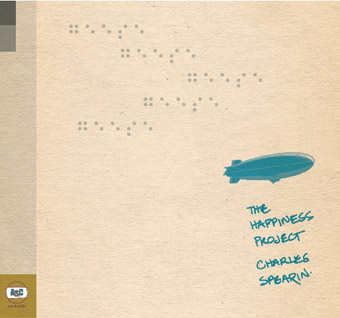
My friend, Charles Spearin, has released an innovative CD he calls “The Happiness Project“. The gist of it is that he began to interview his neighbours and recorded their conversations. Attuned to the tonality of how people expressed themselves he got the idea to replace the voices of his interviewee’s with musical instruments which mimicked each person’s voice pattern. The result is a unique (and very approachable) experiment which weaves voice, instrumentation, and environmental background sounds (birds, etc..). You may know Charles’ other projects, namely Broken Social Scene or Do Make Say Think. If you’re interested, please check out the site for “The Happiness Project” and see what he’s up to.

Share