I had a lovely interview with Ellen Moorhouse from the Toronto Star about my low-fi photo project, Conversations With Abandoned Chairs. It’s now online, so please have a look if you’re interested.
More posts coming soon, I swear!
Matt Cahill's blog
I had a lovely interview with Ellen Moorhouse from the Toronto Star about my low-fi photo project, Conversations With Abandoned Chairs. It’s now online, so please have a look if you’re interested.
More posts coming soon, I swear!

I’m not sure why it hasn’t occurred to me to post this here yet, but perhaps this gives an indication of how stretched my resources are at the moment. Over the last year, whenever I’ve come across an abandoned chair on the side of the road, I’ve taken a picture: a photo which does the abandoned chair justice. This has grown into a small collection of photos (with people submitting their own finds recently). I thought I would share. You can see the collection on my (ugh) Flickr site – just follow this link to see the set Conversations With Abandoned Chairs.

So we went on a trip, an idea first posited by Ingrid which we polished (oh who am I kidding, she polished – I was just a witness) into an eleven-day, three-city, three-country vacation at the end of 2009.
London was the primary location seeing as our friend Shannon (member of the Z-Rays and now a music teacher) had moved there a couple of years ago – it’s always easier when you have a friend in a strange town, especially when it’s a massive place like London. Ingrid had gone there for a visit in late-Spring (it was during this time that we bought our first house…without her ever having walked into it). In the summer, Shannon came over and stayed with us while we renovated and had the electrical pulled out. It only seemed natural that she be the person we see to end the year (and decade) and since I’d never been to London, it was the perfect choice.
Thing is, it was also an opportunity for me to visit relatives in Holland – and when I say “relatives”, I specifically mean my second cousin who lives outside the city of Leiden (notable, aside from its aged beauty, for its university – the second oldest in Europe).
Seeing as how the Eurostar train made its way from England to the continent via Brussels, Belgium, it occurred to me that it would be an excellent reason to check out a city I’d always wanted to investigate: Antwerp. Why Antwerp? Well…it’s between London and Leiden and neither Ingrid nor I had ever been there, with the exception of a couple of instances in past visits when I had to switch trains at Antwerpen Centraal station. The city always looked like a gothic gem from the station, which is quite a complement seeing as Antwerpen Centraal is one of the most beautiful train stations in the world – seriously, it’s dubbed “The Railway Cathedral” and worth the trip, if only just as a stopover.
The plan was set. And, regardless of the various chaotic things happening around (thankfully not to) us (the halted airline terrorist attack on Christmas, the stranded Eurostar trains just before then, a snowstorm in the UK just as we were leaving) it all went remarkably well, save for one missed train to The Hague.
Antwerp is a wonderful place to visit, with a mind-blowing mix of architectural styles, including some stunning Art Deco neighbourhoods. We stayed at the Mabuhay Lodgings, a conveniently located and very comfortable B&B with two very gracious hosts (and their two very cute cats). It’s a gorgeous city with much to offer and I look forward to spending more time there. I tried speaking Dutch, but between my elementary knowledge of the language and the dialect spoken in Antwerp, it was easier just speaking English.
Leiden, in the province of South Holland, is a spiritual home-away-from-home for me. 15 years ago I had stayed with my cousin and her husband, just outside of Leiden (in the village of Zoeterwoude), after I’d graduated from college. Like Antwerp, we were a little rushed for time (the aim was to celebrate New Year’s with our friend in London), but it was great to see the city again and spend time with my cousin (not to mention introducing Ingrid to her and her friends in the neighbourhood). We both look forward to returning, particularly when it’s warmer. If there was one drawback to our trip, it’s that it was unseasonably cold at times (and one can only flex one’s Canadian-ness in the cold so often before you just want to wimp out and stay inside all day).
London surprised me. It was the one place I had no ideas or preconceptions about – I never had anything against it, but alternately never had much of an understanding about it beyond the clichés. It’s a big, bustling, maze-like place which still somehow retains a convivial vibe; facing colder-than-normal temperatures while we navigated from place to place, I never felt the “silent sneer” you get from people in Toronto. I loved the pubs, I loved the beer, I loved Brick Lane (which reminds me of Kensington Market), I loved (again) the architecture, and was happy to have visited the Tate Modern (which had – coincidentally – curated a retrospective of artist Theo van Doesburg at the Stedelijk Museum in Leiden while we were there) as well as other sites and sights of interest. And yes, we even managed to hop onto one of the few remaining Routemaster buses in operation. We also met some of Shannon’s friends and enjoyed a lovely Sunday roast with them at the Carpenter’s Arms (a pub the notorious Kray brothers had bought for their mother). So much more to say, but that’s it in a nutshell.
Not bad for eleven days (mind you, at least one full day was spent travelling). Photos to follow…
“Celebrities are not superlatives in our field of expertise. If celebrities that are schnoring in on our field started out trying to do what we do and were held to the standards we started out upholding, a great many of them would’ve never made it.”
– Billy West, voice actor (“Futurama”) on the use
of celebrity voice work in animated films.
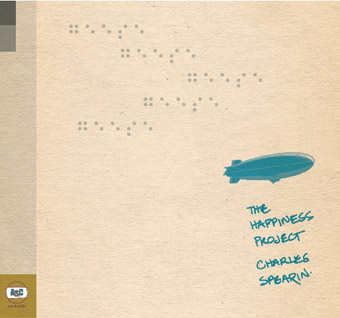
My friend, Charles Spearin, has released an innovative CD he calls “The Happiness Project“. The gist of it is that he began to interview his neighbours and recorded their conversations. Attuned to the tonality of how people expressed themselves he got the idea to replace the voices of his interviewee’s with musical instruments which mimicked each person’s voice pattern. The result is a unique (and very approachable) experiment which weaves voice, instrumentation, and environmental background sounds (birds, etc..). You may know Charles’ other projects, namely Broken Social Scene or Do Make Say Think. If you’re interested, please check out the site for “The Happiness Project” and see what he’s up to.
I just wanted to point out that Ingrid’s photo/horoscope art project, Unbought Stuffed Dogs, has drawn to a close. She has a wonderful summary of the “point” and the experience of the process. Such things should not go unnoticed.

Ingrid is having an art piece presented as part of the Gladstone Hotel’s 3rd Annual “Hard Twist” show. Opening night is November 7th (this Friday). She put a lot of time, energy, and commitment into this work and I hope it is received well. For all of you local visitors to this blog (or out-of-towners who find themselves in Toronto this weekend – hey, you never know), I encourage everyone to make it out.
You should also check out her unique photo blog, Unbought Stuffed Dogs.
Go, Ingrid!
As reported in the news over the weekend, spilling into the papers this week, American novelist/essayist David Foster Wallace took his life. He had hung himself in his home, only to be discovered later by his wife.
To be honest, I’ve only read one piece by Wallace – an essay in an issue of Harper’s almost ten years ago on the release of the revised Oxford English Dictionary – and yet it left an indelible impression on me. It made me laugh out loud with its quirky honesty and his style was unique and strong; in short, it made me take notice of writing and writers at a time when it simply was not on my radar (for various reasons). I always swore I would read one of his books, but the prospects of picking up the one he is best known for, Infinite Jest, all 1,000 pages of it, was intimidating. It still is, but that has more to do with the fact that I’m in the middle (or, factually, just past the middle) of War & Peace with Joyce’s Ulysses staring at me from the bookshelf longingly.
Wallace’s suicide is the second in the last few years by an artist who’s work I’d kept an eye on. The first was that of American humorist and performer, Spalding Gray, who – it is assumed – leapt from a ferry into the Hudson River and drowned. I saw him at Massey Hall (one of the most venerable venues in Toronto) many years ago. As with Wallace’s essay, I remember crying with laughter during Gray’s droll monologue.
Which brings us to the question of artists and suicide.
Someone on Bookninja had this to say in reaction to the story:
In my work (psychiatry) I’ve seen so many creative people who are so tortured inside. I’ve often wondered if, given the choice, they’d choose peace over creativity. Maybe suicide is exercising that choice.
I thought about this. I wanted to respond, because I had something to say, but in the end I decided it would only be a tangent and while tangents are allowable in most online situations, an obituary is not exactly the place for one.
The answer is that artists do not want peace, or at least an artificial peace. To do so would be to abandon the tension which is inherent in art (and science, for that matter). In their art, over the course of their lives, artists attempt to resolve this tension; to articulate what it is that is at the centre of a storm which motivates them to create. The tension is the artist. Them against an outside world which does not work. Art becomes a philosophical expression of an existential dilemma. With this as the case, how many artists would willingly barter peace for creativity if such a trade were even possible? Not many, I would wager. What is peace when art allows you to reach higher than ever before, to touch the cookie jar of euphoria with your fingertips?
Like Wallace and Gray, I too suffer from depression. Their passing gives me pause, to put it lightly. Last night over dinner, Ingrid and I had a long talk about this – Wallace, Gray, art, and suicide – and she used a quote from Wallace that she’d read in one of the obituaries, that suicide happens very slowly. He is right. It is not, as commonly portrayed, an impulsive decision, but rather something which gestates very gradually within the mind of the sufferer. The danger is that this internalized dialogue, over the course of years, may eventually lead to the rationalization or acceptance of suicide as a logical option or self-fulfilling prophecy.
Art, however, is not depression, and depression should not be construed as something which only afflicts those in the arts. When you are depressed, anything can inflame the situation. Both the fire and the water used to douse it. It is for this reason that I take a moment to bring this up. So that people may understand what is, for lack of a better term, a mental illness. Allow me to suggest a wonderful series in the Globe and Mail, perhaps the best collection of stories and first-person recollections on the subject to be found in any newspaper.
I tip my hat to Wallace, to Gray. I mourn for the grief experienced by their loved ones.
Writing programs, whether they be of the one-day or the week-long-getaway variety, can be good or bad things. In particular, I think anyone who is a closeted writer (ie. short stories and poetry hidden on your computer like pornography) and feels the need to affirm (or reaffirm) their direction should consider – at least as an option – a writing program. Provided you do some research and find a good course, a writing program allows you to unload your craft in front of others, receive honest feedback, and illuminate your shortcomings as well as your strengths.
Of course, there are always risks. Your teacher/mentor may not get along with you at all, for stylistic or personality-related reasons. You could be a poet in a room full of prose writers. You may find your peers to be full of themselves. You may find yourself an unintentional participant in a Self-Congratulations Society, where no one will accept or voice constructive criticism.
I lucked out, to put it briefly
Many years ago, I hooked up with a Toronto-based group, headed by someone who ran a web-based forum for local writers. It was ok. It wasn’t what I wanted then, though of course I can articulate it perfectly now. The person coordinating the meeting I attended (and as an aside, being someone who coordinates a couple of groups now, it can be a thankless, dispiriting job) was not, at least on the surface, someone focused on the art or spirit of writing. She seemed more interested in writing events (contests and the like) rather than writing itself. This, I contend, is not wrong, but rather – being the sensitive philosophical type I am – it simply didn’t jive with what I wanted. But even this is good, because the more you investigate the more you learn about what you need versus want. As a result of trial-by-error, your desires become less metaphysical and more concrete.
Fast-forward years later…my then-fiancée, Ingrid, who works in publishing, recommended the Humber College School for Writers’ Summer Workshop. I had a novel. I didn’t know whether it was good or bad, and it wasn’t helped that I had no writer friends to bounce it off of for feedback. I looked into the program and decided to attend (financed by American Express). I ended up spending a week in a classroom of eight, with poet/novelist DM Thomas (The White Hotel) as our mentor. It was perfect. I could not have asked for a more seminal experience. Everything clicked. I walked away at the end, having attended seminars, Q&A’s, and forums, with a much more evolved viewpoint of both the art and business of writing.
That week I learned to love and respect the art of revising/editing, something I’d always treated like poison. I met some great people who, for the first time, I could actually talk to about writing without having to explain what writing was in order to help them understand me. I was publicly confronted with a then-serious illness (habitually using it’s when I should’ve been using its). I was flattered by the positive feedback I received but not stung or made sullen by honest critiques either.
As a result of that single week, my outlook, philosophy, and activity in writing was immensely deepened. I started a monthly writers’ group – the very same sort of group I was searching for in vain before – which carries on successfully to this day (we celebrate our 3rd “birthaversary” this summer, in fact). The novel which had consumed so much of my time back then has since been shelved, having realised that it needed so much work that it was better for me to start from scratch and return to it later (under the axiom, “if you love someone set them free”). Now, of course, I have a new novel which I’m very happy with (along with a nice collection of short stories).
I write this because sometimes – particularly when you are an artist, alone, in an environment seemingly bereft of people who can empathize with what you do – it’s important to look outside for that next important step: getting involved so as to help yourself. As writers, we can’t allow ourselves to fall into the trap of thinking we are failures if we do not wake up at 5am, complete four chapters by lunch, followed by spending the afternoon staring solemnly out of our 3rd storey “writing nook” windows while we wait for the absinthe to kick in. That’s mythology.
I should also mention an extremely good (short) book, called Art & Fear: Observations on the Perils (and Rewards) of Artmaking, by David Bayles and Ted Orland [ISBN: 0961454733]. I recommend it to anyone from any artistic background who is looking for some objective advice, written by people who truly understand. Lastly, even though I mention this book and provide a link to the Humber College course previously, it’s just as important for people to discover what’s right for themselves – there are many options out there. Please do your research.

